
Grammar

Ingrained or Engrained: What’s the Difference?

Ingrained or Engrained: What’s the Difference?

If you’ve ever paused over ingrained and engrained, you’re not alone. The two spellings look almost identical, sound the same in ordinary speech, and appear in contexts involving habits, beliefs, attitudes, and things that become deeply fixed. That similarity creates an obvious question: Is ingrained or engrained the correct spelling? The short answer is that […]

Ingrained or Engrained: What’s the Difference? Read More »
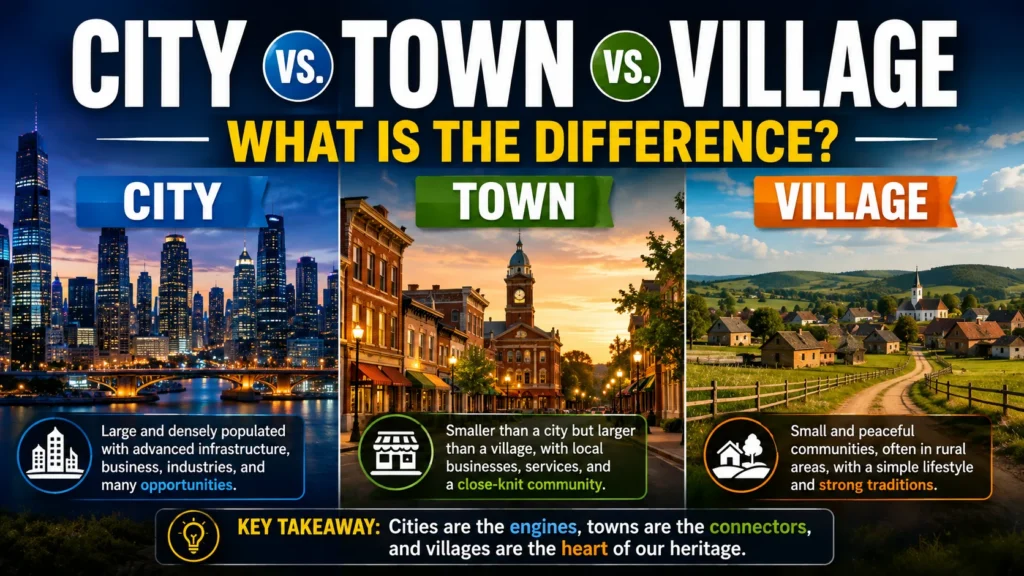
City vs. Town vs. Village. What Is the Difference?

City vs. Town vs. Village. What Is the Difference?

When people compare a city, town, and village, they often assume the difference is simply population: a city is large, a town is smaller, and a village is smaller still. While that is a useful starting point, it is not the complete picture. The real differences involve population, density, infrastructure, public services, transportation, economic activity,

City vs. Town vs. Village. What Is the Difference? Read More »

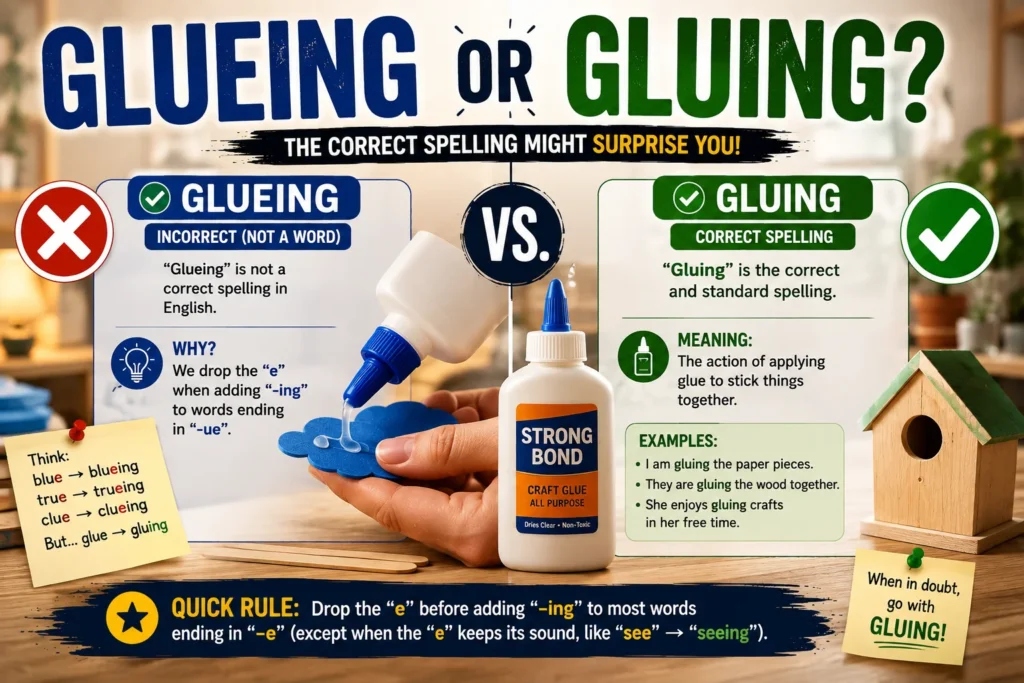
Glueing or Glueing

Glueing or Glueing

If you’ve ever paused over glueing and glueing, you’re not alone. The two spellings look almost identical, sound the same, and refer to the same basic action: joining something with glue. Yet modern dictionaries do not treat the two forms in the same way. Oxford lists gluing as an -ing form and also records glueing

Glueing or Glueing Read More »

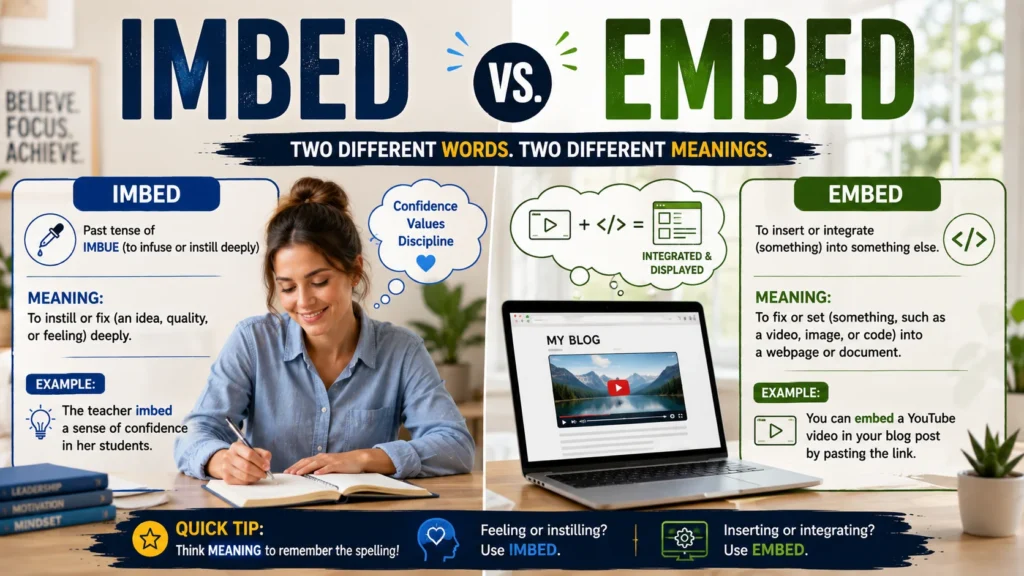
Imbed vs. Embed

Imbed vs. Embed

Imbed and embed look almost identical, and that small spelling difference raises a surprisingly common English-language question: Are they different words, or simply two spellings of the same word? The short answer is straightforward: they have the same core meaning. Modern dictionaries treat imbed as a variant or less common spelling of embed. Merriam-Webster specifically

Imbed vs. Embed Read More »

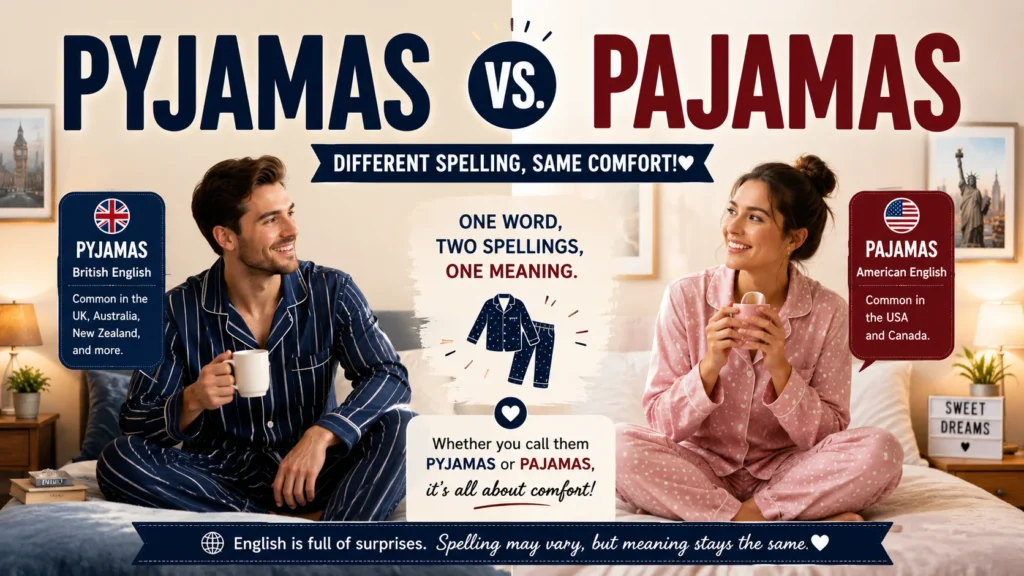
pyjamas-vs-pyjamas

Pyjamas vs. Pyjamas

If you’ve ever wondered whether pyjamas and pyjamas describe different clothes, the answer is surprisingly simple: they mean the same thing. The difference is mainly a matter of regional spelling. Pyjamas is the standard form in American English, while pyjamas is the usual British English spelling. Cambridge Dictionaries explicitly identify pyjamas as the U.S. spelling

Pyjamas vs. Pyjamas Read More »