Grammar

What Does Soft Guy Era Drizzle Drizzle Mean? Meaning, Origin, and TikTok Slang Explained

What Does Soft Guy Era Drizzle Drizzle Mean? Origin, and TikTok Slang Explained

If you’ve seen “Soft Guy Era Drizzle Drizzle” on TikTok, you may have wondered whether it describes a real lifestyle, a dating philosophy, or simply another internet joke. The answer depends heavily on context. In its original viral form, the phrase was mainly part of a satirical TikTok trend that flipped traditional dating expectations and

What Does Soft Guy Era Drizzle Drizzle Mean? Origin, and TikTok Slang Explained Read More »

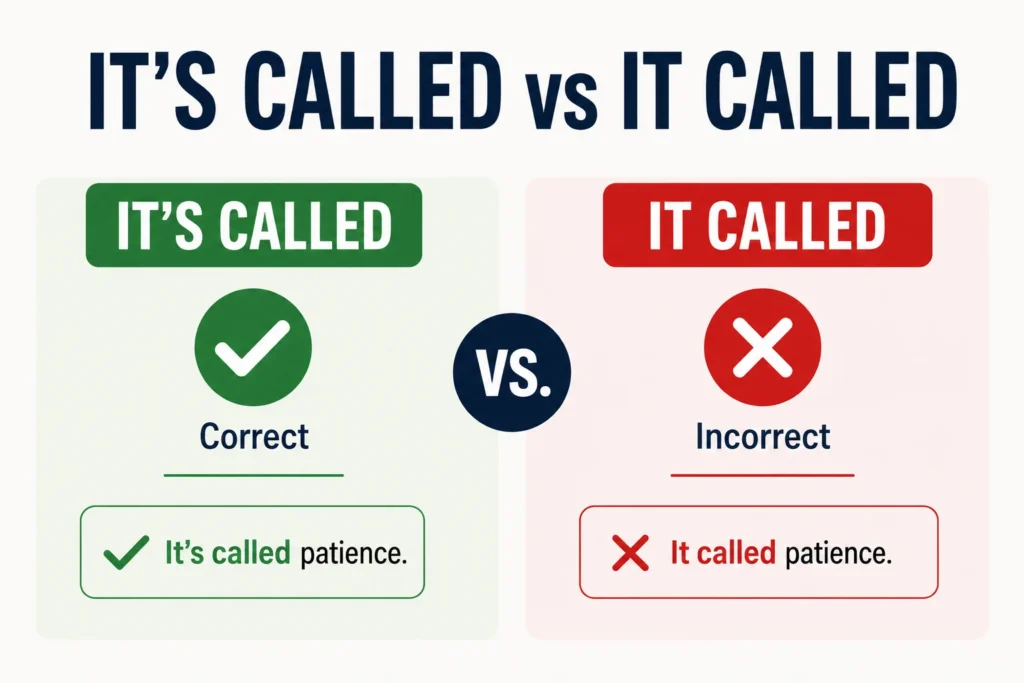
It’s Called vs It Called: The Difference in English Grammar

It’s Called vs It Called: The Difference in English Grammar

If you’ve ever paused over “it’s called” and “it called,” you’re dealing with a small spelling difference that creates a big grammatical change. The two expressions share the word called, but they do not perform the same job in a sentence. When you’re giving something a name, the standard expression is “it’s called,” which means

It’s Called vs It Called: The Difference in English Grammar Read More »

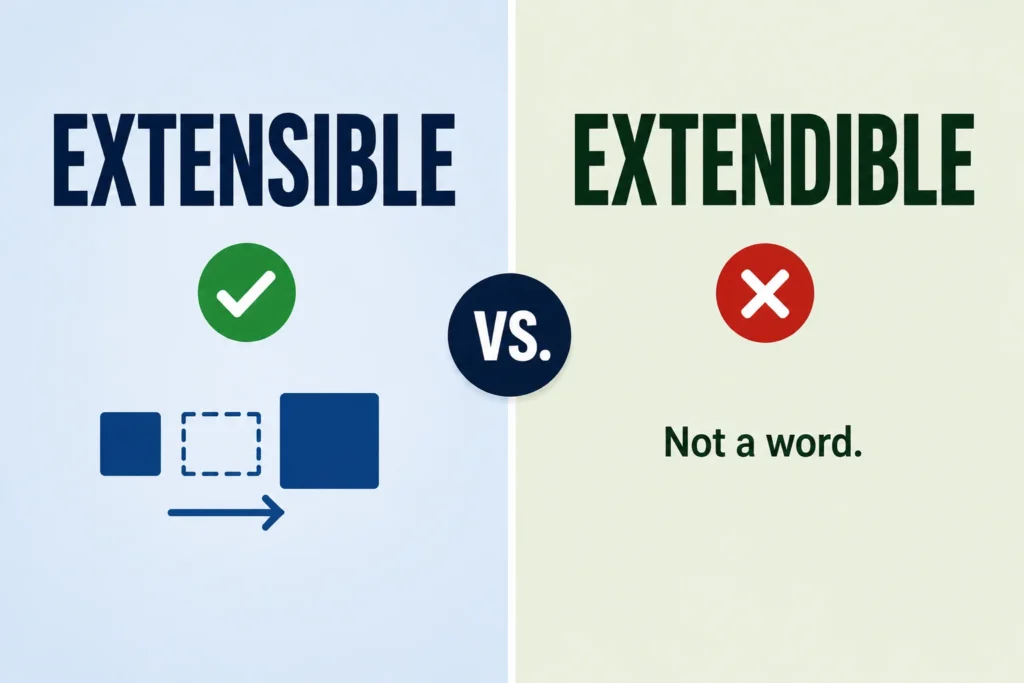
Extensible vs Extendible – What’s the Difference?

Extensible vs Extendible – What’s the Difference?

Extensible and extendible look almost interchangeable. Both describe something that can be extended, yet English speakers often use them in different contexts. The distinction becomes especially important in technical writing, where extensible has a well-established meaning related to software, systems, and future functionality. Extendible, meanwhile, commonly describes something that can be made longer, larger, or

Extensible vs Extendible – What’s the Difference? Read More »

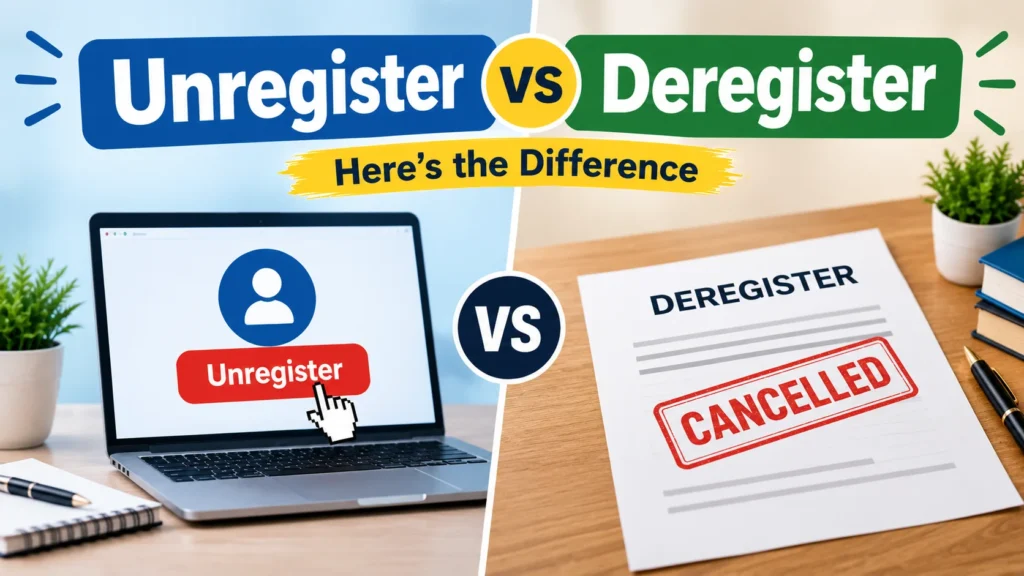
Unregister vs Deregister – Here’s the Difference

Unregister vs Deregister – Here’s the Difference

When you come across unregister vs. deregister, the two words can look almost interchangeable. Both describe removing something from a registration, but the situation often determines which word sounds right. Unregister commonly appears in everyday and technical settings, such as websites, apps, accounts, devices, and online services. Deregister, meanwhile, often points to a more formal

Unregister vs Deregister – Here’s the Difference Read More »

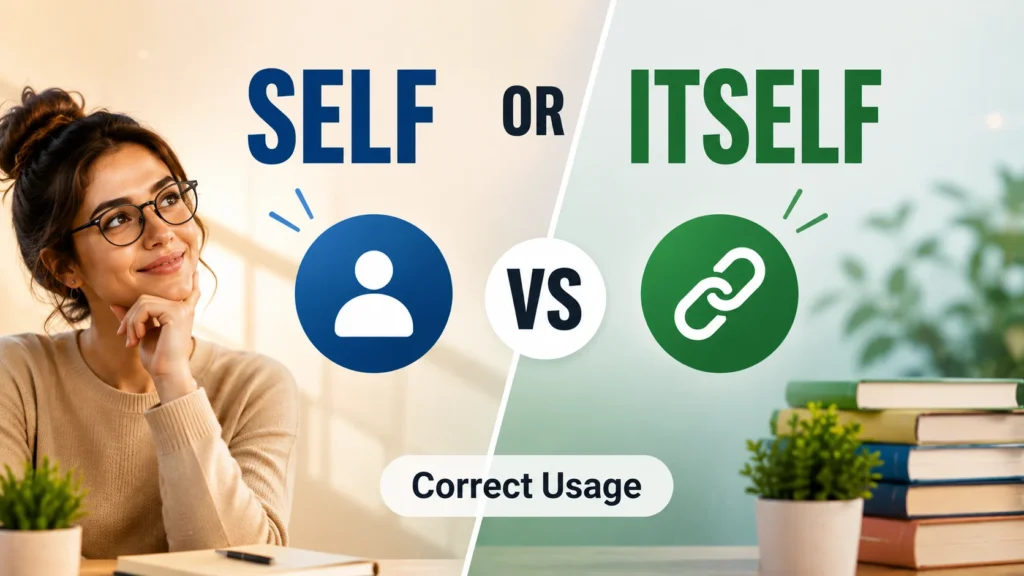
Is It Self or Itself? Understanding the Correct Usage

Is It Self or Itself? Understanding the Correct Usage

Quick Answer: Is It “Its Self” or “Itself”? Itself is usually the correct form when you need the reflexive pronoun related to it. The word itself is written as one word, not “its self,” in ordinary modern English. For example, “The computer restarted itself” means the computer restarted without someone directly restarting it. By contrast,

Is It Self or Itself? Understanding the Correct Usage Read More »

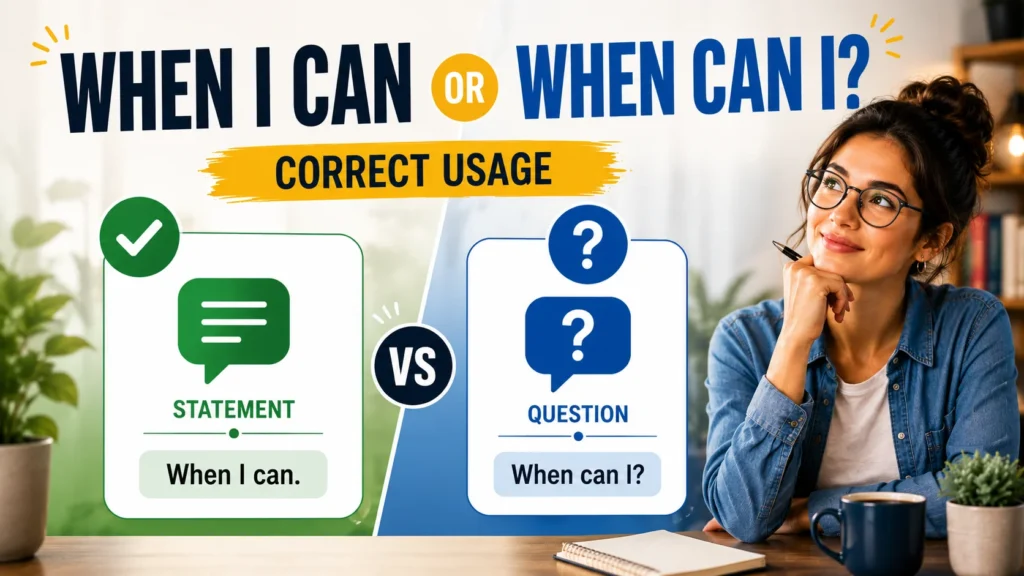
When I Can or When Can I? Understanding the Correct Usage

When I Can or When Can I? Understanding the Correct Usage

If you’ve ever paused over “when I can” and “when can I,” you’re not alone. These phrases contain the same words, yet their word order changes their grammatical role and meaning. The key is simple: “When can I…?” typically introduces a direct question, whereas “when I can…” usually appears within a statement or another clause.

When I Can or When Can I? Understanding the Correct Usage Read More »