Bilal

Hastle and Hassle

Hastle or Hassle? Which Is Correct? Meaning, Spelling, and Usage

If you’ve ever paused over “hastle or hassle”, you’re not alone. The two spellings look remarkably similar, and the extra s in hassle can be easy to overlook when you’re typing quickly. However, there’s an important distinction: hassle is the standard English spelling, while hastle is not the correct spelling for the word meaning trouble,

Hastle or Hassle? Which Is Correct? Meaning, Spelling, and Usage Read More »

Ingrained or Engrained

Ingrained or Engrained – What Is the Difference?

Have you ever wondered whether the correct spelling is ingrained or engrained? You’re not alone. These two forms look remarkably similar, sound nearly identical, and often cause confusion in everyday writing. However, there’s an important difference between them. Ingrained is the standard and widely accepted spelling when you mean something that has become deeply established,

Ingrained or Engrained – What Is the Difference? Read More »

Accent vs. Ascent vs. Assent

Accent vs. Ascent vs. Assent: What’s the Difference?

Accent, ascent, and assent look remarkably similar on the page, yet they point to three very different ideas. That small difference in spelling can change an entire sentence. Accent usually relates to pronunciation, emphasis, or a written mark. Ascent refers to moving upward, climbing, or rising to a higher position. Assent means agreement or official

Accent vs. Ascent vs. Assent: What’s the Difference? Read More »

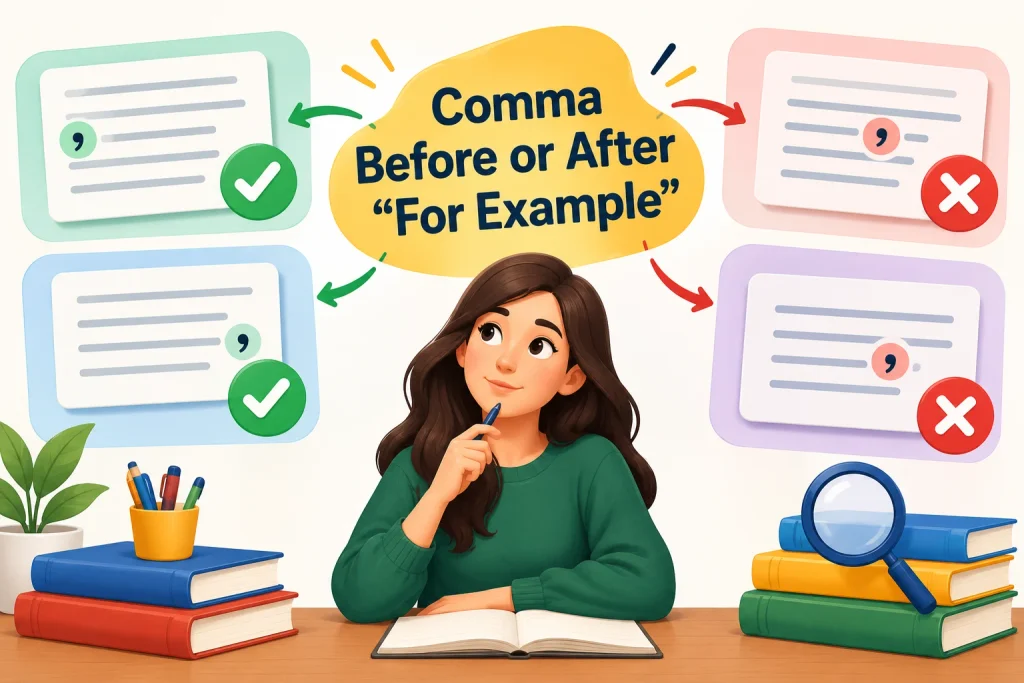
Comma Before or After

Comma Before or After “For Example”? Complete Guide

Understanding where to put a comma before or after “for example” becomes much easier once you stop treating the phrase as a fixed punctuation formula. Its punctuation depends on where the phrase appears, what job it performs, and how closely it connects to the surrounding words. “For example” is commonly used to introduce an illustration,

Comma Before or After “For Example”? Complete Guide Read More »

Pajamas vs. Pyjamas

Pajamas vs. Pyjamas: What’s the Difference?

If you’ve ever wondered whether pajamas and pyjamas mean different things, the answer is refreshingly simple: they usually mean the same thing. The real difference is regional spelling. American English generally uses pajamas, while British English uses pyjamas. Dictionaries such as Cambridge explicitly identify “pajamas” as the US spelling and “pyjamas” as the UK spelling.

Pajamas vs. Pyjamas: What’s the Difference? Read More »