

The difference between separate and separate is simple: separate is the correct spelling, while separate is a common spelling mistake. Many writers confuse these two words because their pronunciation can make the middle vowel sound unclear. However, when it comes to standard English writing, only one spelling belongs in dictionaries, professional documents, academic work, and everyday communication.
The correct word is:
| Word | Correct Spelling | Meaning | Example |
| Separate | ✅ Correct | To divide, keep apart, or exist independently | “Please keep the documents in separate folders.” |
| Seperate | ❌ Incorrect | A misspelling of separate | “Seperate files” is incorrect. |
The confusion happens because English spelling and pronunciation do not always match perfectly. A person may hear the word separate and naturally assume the second vowel is an e instead of an a. This small mistake can appear harmless, but correct spelling matters when you want your writing to look polished and trustworthy.
For example:
- Correct: The teacher asked students to separate into groups.
- Incorrect: The teacher asked students to separate into groups.
The meaning stays understandable in both examples, but the second version contains a spelling error.
Which Spelling Is Correct: Separate or Seperate?
The correct spelling is separate. It contains two a letters:
S-E-P-A-R-A-T-E
The incorrect version, separate, replaces the second a with an e:
S-E-P-E-R-A-T-E
That single letter difference creates one of the most common spelling mistakes in modern English.
The word separate has been used in English for centuries. It comes from the Latin word separare, which means “to divide” or “to set apart.” The spelling developed through French and Latin influences before becoming part of modern English.
Understanding the origin helps explain why the spelling uses an a. The original structure of the word has always been connected with separation and division.
Quick Memory Comparison
| Correct | Incorrect |
| Separate | Seperate |
| Contains two “a” letters | Uses the wrong middle vowel |
| Found in dictionaries | Not accepted as standard English |
| Used in formal and informal writing | A common spelling error |
A useful way to remember it is:
Separate has “a part” inside it.
The word separate contains the idea of being apart. The a can remind you of apart, making the correct spelling easier to recall.
Is “Seperate” Ever a Real Word?
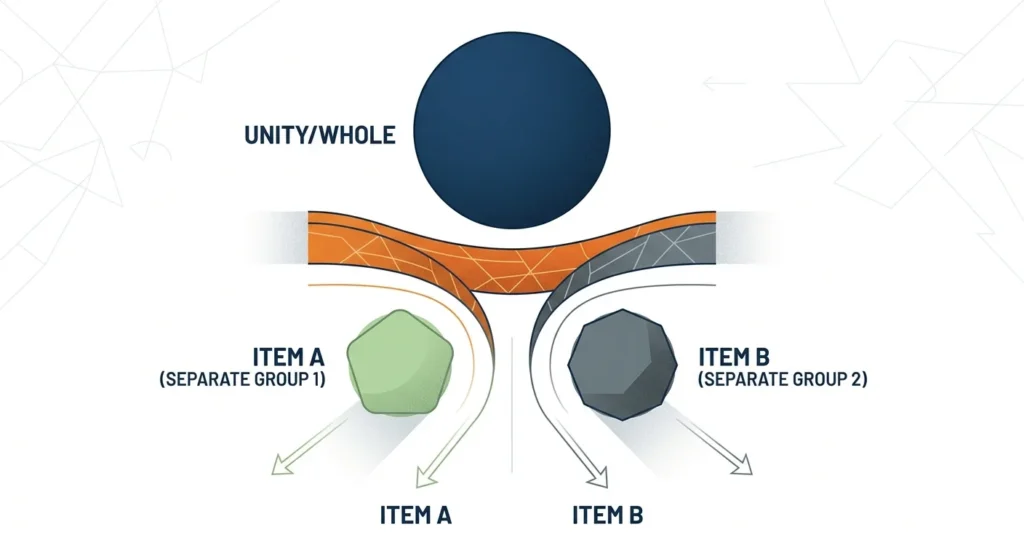
No. Seperate is not considered a correct English word in standard dictionaries. It appears frequently online because many people make the same mistake, but frequent use does not make a spelling correct.
This happens with many English words. A mistake can spread because people copy what they see on websites, social media posts, messages, or informal writing. Over time, the incorrect spelling becomes familiar, which makes it feel acceptable.
However, familiarity does not equal correctness.
For example, many people recognize these incorrect spellings:
- Definately → Definitely
- Recieve → Receive
- Occured → Occurred
- Seperate → Separate
These errors continue because English contains many spelling patterns that require memorization rather than simple pronunciation rules.
Why “Seperate” Looks Correct to Many People
The human brain does not always process spelling letter by letter. Instead, it often recognizes the overall shape of a word. When a familiar-looking word appears, the brain quickly fills in missing details.
This is helpful when reading quickly, but it can create spelling mistakes.
The word separate creates confusion because:
- The second a is not strongly pronounced in many accents.
- The word has multiple syllables.
- The spelling pattern feels unusual.
- Many similar words use e sounds in the middle.
For example:
- separate
- desperate
- temperate
- delegate
Because these words share similar sound patterns, writers may accidentally replace the a in separate with an e.
Why Pronunciation Causes the Separate Spelling Mistake
English contains many words where pronunciation changes depending on speed, accent, or sentence position. Separate is one of those words.
The word can be pronounced in two common ways:
- SEP-uh-rate (verb form)
- SEP-rit or SEP-uh-rut (adjective form in casual speech)
When people hear the softer pronunciation, they may not notice the middle a. As a result, they write what they hear instead of what they know.
This difference between sound and spelling creates what language experts call a pronunciation-spelling mismatch.
A similar issue appears with words like:
| Sound Confusion | Correct Spelling |
| accomodate | accommodate |
| definately | definitely |
| seperate | separate |
| recieve | receive |
Learning correct spelling requires knowing that spoken English does not always provide every written clue.
The Correct Form Explained Clearly
The word separate has several meanings depending on how it appears in a sentence. It can work as a verb, adjective, and occasionally a noun.
Separate as a Verb
As a verb, separate means to divide something into different parts or move things apart.
Examples:
- “Please separate the white clothes from the colored clothes.”
- “The river separates the two regions.”
- “The manager decided to separate the teams.”
In these examples, the action involves creating distance or distinction.
Separate as an Adjective
As an adjective, separate describes things that are different, independent, or not connected.
Examples:
- “Each employee has a separate workspace.”
- “The company created separate accounts for different departments.”
- “They live in separate houses.”
Here, separate does not describe an action. It explains the condition of something being apart.
Separate as a Noun
The noun use of separate is less common but still exists. It usually refers to an individual item or a garment sold separately.
Example:
- “The store sells jacket separates.”
This usage appears more often in specific industries such as fashion.
How to Remember the Correct Spelling of Separate
Many people try to memorize spelling rules, but simple memory connections often work better.
The “A Means Apart” Trick
Remember:
Separate = Stay Apart
The letter A in separate connects with the idea of being apart.
When you write the word, think:
“Separate things are apart, so separate needs an A.”
Break the Word Into Parts
Instead of trying to remember the entire word at once, divide it:
Sep + ar + ate
The middle section ar contains the important a.
This technique works because smaller pieces are easier for the brain to remember.
Visual Memory Method
Picture the word:
SEP A RATE
The middle A stands out. With repetition, the correct spelling becomes automatic.
A simple practice method:
- Write separate five times.
- Say the spelling while writing.
- Use it in a sentence.
- Review it later.
Small repetition builds strong memory.
As Different Parts of Speech
Understanding how separate works in a sentence makes the spelling easier to remember. Many spelling mistakes happen because people learn a word only by appearance and not by meaning or usage. When you understand how a word functions, your brain creates stronger connections.
The word separate can act as different parts of speech, especially as a verb and an adjective. Each use has its own purpose, but the spelling remains the same.
| Part of Speech | Meaning | Example |
| Verb | To divide, split, or move things apart | “Please separate the documents before filing them.” |
| Adjective | Different, independent, or not joined | “The two companies operate as separate businesses.” |
| Noun | A separate item or individual piece | “The designer sells the jacket and pants as separates.” |
Knowing these differences helps you avoid writing separate because you begin to associate the spelling with the word’s actual role in communication.
Separate as a Verb
When separate works as a verb, it describes an action. It means someone or something creates distance between people, objects, ideas, or groups.
The action can be physical:
- “The fence separates the backyard from the street.”
- “The teacher separated the students into smaller groups.”
- “The machine separates recyclable materials.”
It can also describe an emotional or abstract division:
- “Time can separate people who once worked closely together.”
- “Good research separates facts from opinions.”
- “Experience separates beginners from experts.”
In each example, something is being divided or distinguished.
Common Verb Forms of Separate
| Form | Example |
| Base form: separate | “We need to separate the files.” |
| Third person: separates | “This feature separates the product from competitors.” |
| Past tense: separated | “The groups separated after the meeting.” |
| Present participle: separating | “The workers are separating the materials.” |
A useful writing tip: when you see separate describing an action, imagine the movement of creating space. That mental image reinforces both the meaning and spelling.
Separate as an Adjective
As an adjective, separate describes something that exists independently or remains apart from something else.
Examples include:
- “The project requires a separate budget.”
- “Please use a separate email address for business communication.”
- “The apartment has separate entrances.”
- “Each department has separate responsibilities.”
In these examples, separate does not show an action. Instead, it explains that two or more things are not combined.
This use appears frequently in everyday writing because people often need to describe differences, categories, or independent items.
Common Situations Where You Use “Separate”
You will often see separate used with:
- Separate account
- Separate room
- Separate category
- Separate issue
- Separate document
- Separate process
- Separate opinion
- Separate location
Examples:
| Phrase | Meaning |
| Separate account | An independent account not combined with another |
| Separate issue | A different matter requiring its own attention |
| Separate process | A distinct method or procedure |
| Separate category | A different classification |
Real-Life Usage Examples of Separate
The word separate appears in almost every area of life. From personal conversations to professional documents, people use it whenever they need to describe division or independence.
Everyday Conversations
In daily communication, separate helps people explain boundaries and differences.
Examples:
- “Let’s keep our personal and work lives separate.”
- “The children have separate bedrooms.”
- “I keep my savings in a separate account.”
These sentences show how the word helps describe organization and personal choices.
Academic Writing
Students and researchers frequently use separate when discussing categories, theories, methods, and results.
Examples:
- “The study examined separate groups of participants.”
- “Researchers analyzed each variable separately.”
- “The experiment included separate testing phases.”
Academic writing requires precision. Using the correct spelling shows attention to detail and improves credibility.
Workplace Communication
Professional environments often rely on clear communication. A spelling mistake in an important document can distract readers from the actual message.
Examples:
- “Please submit separate reports for each department.”
- “The company maintains separate records for financial and operational data.”
- “These responsibilities belong to separate teams.”
Correct spelling supports a professional image.
Digital Communication
Online writing moves quickly, which makes mistakes more common. Messages, comments, and posts often spread rapidly, so incorrect spellings can become familiar.
Examples:
- “Please upload the files separately.”
- “Keep personal information separate from public posts.”
- “Create a separate folder for project materials.”
Although informal messages allow some flexibility, using correct spelling builds better habits.
Why “Seperate” Keeps Spreading Online
The misspelling seperate continues to appear because digital communication allows mistakes to travel quickly. When people see an incorrect spelling repeatedly, they may assume it is acceptable.
This is called familiarity bias. The brain often prefers information it recognizes. A word seen many times can feel correct even when it is wrong.
Several factors contribute to the spread of separate:
| Reason | Explanation |
| Pronunciation confusion | The middle vowel sound is often unclear |
| Copying mistakes | People repeat spellings they see online |
| Fast typing | Quick messages encourage errors |
| Weak spelling memory | People rely on sound instead of rules |
Social Media and Search Behavior
Search engines record what people type, including mistakes. Because many users search for separate vs separate, the incorrect spelling receives attention online.
However, search popularity does not change grammar rules.
A useful comparison:
A wrong road sign can still be seen by thousands of drivers, but it does not make the sign correct.
The same idea applies to spelling.
Why Spellcheck Does Not Always Prevent the Mistake
Many writers assume digital tools will catch every spelling mistake. However, technology has limits.
Basic spellcheck systems usually compare words against a dictionary. They work well when a word is completely incorrect, but they may struggle with errors that resemble real words.
For example:
- “seperate” may be recognized as a possible mistake.
- A grammar tool may suggest “separate.”
- Some systems may miss it depending on settings or context.
Other tools can help, but human review remains important.
Better Ways to Catch Spelling Errors
Use these methods together:
- Read your writing slowly before publishing.
- Use a dictionary when unsure.
- Turn on advanced grammar checking.
- Learn commonly confused words.
- Review important documents after a short break.
A fresh look often catches mistakes that your brain ignored during the first draft.
Pronunciation vs. Spelling: The Real Conflict
The biggest challenge with separate is not meaning. Most people understand the word. The challenge is matching the sound with the correct letters.
English contains many words where pronunciation changes over time while spelling stays connected to history.
Examples:
| Word | Common Pronunciation Challenge |
| Separate | Middle vowel may sound unclear |
| Wednesday | Written letters are not fully pronounced |
| Colonel | Pronunciation differs greatly from spelling |
| Receipt | Silent letters create confusion |
The lesson is simple: pronunciation can guide spelling, but it cannot always control it.
Pronunciation vs. Spelling: The Real Conflict Behind “Separate”
The confusion between separate and separate does not come from the meaning of the word. Most people already understand what separate means. The problem appears when the sound of the word does not clearly match the letters on the page.
English developed from several languages, including Latin, French, and Germanic languages. Because of this history, English spelling often keeps older letter patterns even when pronunciation changes over time.
The word separate is a good example. Many speakers pronounce it quickly, causing the middle vowel sound to become weaker. When the sound becomes unclear, writers often guess the spelling.
For example:
- Spoken quickly: sep-rit
- Written correctly: separate
The missing sound does not mean the letter disappears. The spelling remains the same.
Why Pronunciation Misleads You
Many spelling mistakes happen because people write words exactly as they hear them. This method works for some words, but English has many exceptions.
The word separate contains a hidden challenge: the second a is not always strongly pronounced.
Compare these examples:
| Word | Sound | Correct Spelling |
| Separate | SEP-uh-rate | Separate |
| Desperate | DES-puh-rate | Desperate |
| Accurate | AK-yuh-rut | Accurate |
Because these words share similar sounds, people may unconsciously replace the a in separate with an e.
This is why learning spelling through meaning and visual memory often works better than depending only on pronunciation.
Silent Distortion Effect in English Spelling
A silent distortion happens when the way a word sounds changes how people imagine its spelling.
The brain tries to create a shortcut:
- Hear the word.
- Recognize the sound.
- Predict the spelling.
- Write the word.
The problem appears when step three produces the wrong prediction.
With separate, the brain may create:
❌ SEP-E-RATE
instead of:
✅ SEP-A-RATE
This small difference creates one of the most common spelling errors in English.
Speaking Correctly but Writing Incorrectly
A person can pronounce a word correctly and still spell it incorrectly. Speaking and writing use different skills.
Speaking depends on:
- Memory of sounds
- Mouth movement
- Listening patterns
- Language environment
Writing depends on:
- Visual memory
- Spelling rules
- Reading experience
- Practice
Someone might say:
“Keep the two files separate.”
They understand the word perfectly. However, when writing quickly, they may type:
“Keep the two files separate.”
The mistake does not show a lack of understanding. It shows that spelling memory needs reinforcement.
Practical Examples of “Separate” in Real Contexts
The best way to remember a word is to see how people actually use it. The word separate appears in conversations, workplaces, education, technology, and everyday decisions.
Seeing the word repeatedly in meaningful situations helps build a stronger connection between spelling and meaning.
Separate in Everyday Conversation
People use separate when discussing personal boundaries, organization, and differences.
Examples:
- “I keep my personal and professional lives separate.”
- “Please put the dirty clothes in a separate basket.”
- “The children have separate responsibilities at home.”
- “We should look at these as two separate problems.”
In daily life, the word often helps people explain that things should not be mixed.
Common Everyday Expressions With Separate
| Expression | Meaning |
| Separate ways | People going in different directions |
| Separate issue | A different matter |
| Separate room | An independent space |
| Separate account | A different financial account |
| Separate identity | A unique or independent character |
These phrases appear frequently in conversations and writing.
Separate in Academic Writing
Students, teachers, researchers, and professionals use separate because academic communication requires accuracy.
Examples:
- “The researchers studied separate groups.”
- “The report includes separate sections for each topic.”
- “The experiment used separate control and test groups.”
Academic writing often depends on clear distinctions. When a writer explains different categories, methods, or results, separate becomes an important word.
Why Spelling Matters in Education
A spelling mistake may not change the meaning, but repeated errors can affect how readers view written work.
Correct spelling helps communicate:
- Attention to detail
- Strong language skills
- Professional effort
- Clear thinking
A well-written assignment is easier to trust because the presentation supports the information.
Separate in Workplace Communication
Professional writing requires precision. A single incorrect spelling in an email, report, or presentation can distract readers.
Examples:
- “Please create separate invoices for each client.”
- “The departments operate under separate management structures.”
- “We need separate documents for each agreement.”
Businesses often use separate when organizing:
- Files
- Accounts
- Teams
- Projects
- Responsibilities
- Budgets
Clear communication prevents confusion.
Separate in Digital Communication
Modern communication happens quickly through messages, emails, comments, and online platforms. Speed often increases spelling mistakes.
Examples:
- “Save the images in separate folders.”
- “Use a separate password for each account.”
- “Keep personal and business information separate.”
Digital tools can help correct mistakes, but understanding the word yourself creates better long-term spelling habits.
Why Correct Spelling Matters in Real Communication
Some people wonder whether spelling mistakes really matter if readers understand the message. In casual conversations, a typo may not create a serious problem. However, spelling affects how people judge written communication.
A correctly spelled word shows care.
A misspelled word can create questions:
- Was the information checked?
- Is the writer paying attention?
- Are other details accurate?
This does not mean one mistake defines someone’s ability. It simply shows why accuracy matters when communicating important ideas.
First Impressions Matter
Written words create impressions before people meet you. A resume, business email, article, or academic paper represents your attention to detail.
For example:
A hiring manager reading a resume may notice spelling mistakes because professional documents reflect communication skills.
A customer reading a company email may feel more confident when the message looks polished.
Small details often influence trust.
Small Errors, Big Impact
A single spelling mistake may seem minor, but repeated errors can reduce clarity and professionalism.
Consider these situations:
| Situation | Impact of Misspelling |
| Job application | May appear careless |
| Academic paper | Can reduce quality perception |
| Business proposal | May affect credibility |
| Website content | Can reduce reader trust |
Correct spelling supports strong communication.
Synonyms and Related Words for Separate
The word separate is useful because it describes many situations where things are divided, independent, or different. However, English offers several related words that carry slightly different meanings. Choosing the right alternative helps make your writing more accurate.
For example, separate, divide, split, and isolate may appear similar, but they are not always interchangeable.
A writer who understands these differences can choose words that match the exact situation.
| Word | Meaning | Example |
| Separate | Keep things apart or make them independent | “The company created separate departments.” |
| Divide | Break something into parts or sections | “The teacher divided the class into groups.” |
| Split | Divide into smaller pieces or groups | “They split the bill after dinner.” |
| Isolate | Keep something completely away from others | “The scientist isolated the sample.” |
| Distinguish | Show the difference between things | “The test helps distinguish between two conditions.” |
| Detach | Remove something that was connected | “Detach the cable before moving the device.” |
When to Use Each Alternative
Using synonyms correctly depends on the purpose of the sentence. Although these words share ideas of distance or difference, each one creates a different image.
Separate vs. Divide
Both words involve creating parts, but divide focuses on breaking something into sections.
Examples:
- “The manager separated the teams.”
→ The teams were kept apart. - “The manager divided the project into stages.”
→ The project was broken into smaller parts.
A useful way to remember:
Separate creates distance. Divide creates parts.
Separate vs. Split
The word split often suggests a stronger or more sudden division.
Examples:
- “The couple decided to separate.”
- “The company split into two organizations.”
Separate sounds more neutral, while split can suggest a major change or a complete break.
Separate vs. Isolate
The word isolate means keeping something completely alone or away from outside contact.
Examples:
- “The patient was isolated to prevent infection.”
- “The researcher isolated the chemical compound.”
A separate item does not always stand alone. It simply remains different or apart.
Separate vs. Distinguish
The word distinguish focuses on recognizing differences rather than physically moving things apart.
Examples:
- “It is difficult to distinguish between the two designs.”
- “The features separate this product from competitors.”
Both words involve differences, but their purpose changes.
Important Note About Using Synonyms
Replacing separate with another word does not always keep the same meaning. A synonym should match the context.
For example:
❌ “Please isolate these documents into different folders.”
This sounds incorrect because documents can be separated, but they are not necessarily isolated.
✅ “Please separate these documents into different folders.”
The correct word creates a clearer message.
Tools That Help You Avoid the “Separate” Mistake
Modern writing tools can reduce spelling mistakes, but they work best when combined with human understanding. Technology assists, but it does not replace learning.
Many people rely on automatic correction without understanding why a word is wrong. Building spelling knowledge makes it easier to catch errors before publishing.
Spellcheck Tools
Most modern devices include built-in spellcheck features. These tools compare written words against known dictionaries and suggest corrections.
Common examples include:
| Tool Type | Purpose |
| Word processor spellcheck | Finds basic spelling errors |
| Browser correction tools | Helps while typing online |
| Mobile keyboard suggestions | Corrects quick messages |
| Writing assistants | Checks spelling and grammar |
When you type separate, many tools will suggest:
Did you mean separate?
However, spellcheck is not perfect.
Browser Extensions and Writing Assistants
Browser-based writing tools help people identify mistakes while creating online content, emails, and documents.
They can help with:
- Spelling correction
- Grammar suggestions
- Sentence improvement
- Word choice recommendations
- Reading clarity
These tools are especially useful for:
- Bloggers
- Students
- Business professionals
- Content writers
However, writers should still understand the suggestions. A tool can identify an issue, but knowledge helps you make the right decision.
Why Human Review Still Matters
Even advanced software can miss mistakes because language depends on context.
For example:
A grammar tool may recognize that separate is correct, but it may not understand the purpose of your sentence or whether a different word fits better.
Human proofreading helps identify:
- Incorrect word choices
- Awkward sentences
- Missing information
- Meaning problems
A useful proofreading method:
- Finish your first draft.
- Take a short break.
- Read the text slowly.
- Check important words separately.
Distance helps your brain notice mistakes.
Commonly Confused English Words You Should Watch Next
The mistake between separate and separate belongs to a larger group of English spelling challenges. Many words look or sound similar but have different meanings.
Learning these pairs improves overall writing accuracy.
Apologize vs. Apologise
Both spellings are correct depending on the type of English used.
- Apologize is common in American English.
- Apologise is common in British English.
Example:
American English:
- “I apologize for the delay.”
British English:
- “I apologise for the delay.”
Unlike separate, both forms are accepted.
Heel vs. Heal
These words sound the same but have different meanings.
| Word | Meaning | Example |
| Heel | Back part of the foot | “My shoe damaged my heel.” |
| Heal | Become healthy again | “The injury will heal soon.” |
Formulae vs. Formulas
Both words can be correct.
- Formulae is traditionally used as the plural form in Latin-based academic contexts.
- Formulas is widely used in modern English.
Example:
- “The scientist created several formulas.”
- “The textbook explains mathematical formulae.”
Many of Who vs. Many of Whom
This confusion involves grammar rather than spelling.
Correct examples:
- “Many of whom attended the meeting.”
- “Many of who attended the meeting.” ❌
The word whom works as the object of the sentence.
Parole vs. Parol
These words have different meanings.
| Word | Meaning |
| Parole | Conditional release from prison |
| Parol | A spoken agreement or word-based expression |
Example:
- “The prisoner received parole.”
- “The contract was based on a parol agreement.”
Stank vs. Stunk
Both relate to the verb stink, but they are used differently.
Examples:
- “The garbage stank yesterday.”
- “The room had stunk for hours.”
Understanding these differences prevents confusion in writing.
Quick Practice Section to Lock the Rule in Memory
Learning the correct spelling of separate becomes easier when you practice using it. Reading the rule once may help temporarily, but active practice creates stronger memory. When you repeatedly recognize, write, and correct the word, your brain begins to store the correct spelling automatically.
The goal is simple: whenever you see separate or seperate, you should immediately recognize which one belongs in standard English.
Remember:
✅ Separate = Correct
❌ Seperate = Incorrect
Fill in the Blank Practice
Complete each sentence by choosing the correct spelling.
- Please keep your personal and professional accounts ______.
- The teacher asked students to ______ into two groups.
- These files belong in a ______ folder.
- The company created ______ departments for sales and marketing.
- Scientists must ______ different materials during testing.
Answers
- Separate
- Separate
- Separate
- Separate
- Separate
Each sentence uses the same spelling because the word does not change depending on its meaning. Whether it acts as a verb or adjective, the correct form remains separate.
Spot the Mistake Exercise
Find the incorrect spelling in each sentence and replace it with the correct word.
Sentence Examples
❌ “The manager created separate teams for each project.”
✅ “The manager created separate teams for each project.”
❌ “Please store these documents in separate locations.”
✅ “Please store these documents in separate locations.”
❌ “The two ideas should remain separate.”
✅ “The two ideas should remain separate.”
Common Pattern
Notice the mistake:
Seperate
The incorrect spelling always changes the middle a into an e.
Correct:
Sep-a-rate
Incorrect:
Sep-e-rate
That single letter is the key difference.
Mini Test
Choose the correct answer.
Question One
Which spelling is correct?
A) Seperate
B) Separate
Answer: B) Separate
Question Two
Complete the sentence:
“The two departments work in ______ offices.”
A) separate
B) separate
Answer: A) separate
Question Three
Which sentence is written correctly?
A) “Please separate the documents by category.”
B) “Please separate the documents by category.”
Answer: B) “Please separate the documents by category.”
A Simple Memory Checklist for Separate
Before writing the word, remember these points:
| Check | Reminder |
| Correct spelling | Separate |
| Incorrect spelling | Seperate |
| Important letter | The second “a” |
| Meaning | Divide, keep apart, or remain independent |
| Common mistake | Replacing “a” with “e” |
A quick mental question can help:
“Does this word mean keeping things apart?”
If the answer is yes, write separate.
How to Build Long-Term Spelling Confidence
Correct spelling comes from repeated exposure and practical use. Instead of memorizing hundreds of isolated rules, focus on understanding patterns.
Helpful habits include:
- Reading regularly.
- Writing complete sentences.
- Reviewing commonly misspelled words.
- Checking unfamiliar words.
- Practicing words in real situations.
For separate, the most effective habit is connecting spelling with meaning:
Separate things stay apart. Separate has an A.
This short connection makes the correct spelling easier to recall.
Using Separate Correctly in Everyday Writing
The word appears in many areas of communication, so learning it improves more than spelling. It helps you express ideas clearly.
Examples:
Personal communication:
- “We have separate opinions about the decision.”
Professional communication:
- “Please submit separate reports for each department.”
Academic communication:
- “The researchers analyzed separate groups.”
Digital communication:
- “Create a separate folder for important files.”
In every situation, the meaning stays connected: things are different, divided, or independent.
Final Practice Challenge
Write five sentences using separate in different ways:
- One sentence using it as a verb.
- One sentence using it as an adjective.
- One sentence about work.
- One sentence about school.
- One sentence about daily life.
Example:
“Good writers separate facts from assumptions.”
Practicing the word in different contexts strengthens both vocabulary and spelling memory.
Conclusion About What’s the Difference?
Understanding the difference between separate and separate comes down to one simple rule: separate is always the correct spelling. Although the incorrect version appears often online, it does not belong in standard English writing. The easiest way to remember the right form is to connect separate with the idea of keeping things apart. The letter a in the word can remind you of that connection. Whether you are writing an email, assignment, report, or everyday message, using the correct spelling helps your communication look clear and professional. English spelling can be tricky because pronunciation does not always reveal every letter. Once you understand the meaning, usage, and spelling pattern of separate, avoiding this common mistake becomes much easier.
FAQs
Is separate the correct spelling, or isseparatee acceptable?
Separate is the correct spelling in standard English. Seperate is a common misspelling and is not accepted in dictionaries as a correct word. Although many people type it by mistake, it should be replaced with separate in formal and everyday writing.
Why do people spell separate as separate?
People often write separate because the middle vowel sound in separate can become unclear during normal speech. The brain may hear an “e” sound instead of recognizing the written “a.” This pronunciation confusion makes the spelling mistake very common.
What does the word separate mean?
Separate means to divide, keep apart, or exist independently. It can describe physical objects, people, ideas, or categories. For example, separate rooms are different spaces, while separate opinions are different viewpoints.
How can I remember the spelling of separate?
A helpful memory trick is to connect separate with the word apart. Think: things that are separate stay apart. The letter “a” in both words can help you remember that separate uses the correct spelling.
Is separate ever correct in British English?
No. British English and American English both use separate as the correct spelling. The spelling difference between regions does not apply to this word. Seperate remains an error in both forms of English.
How do you use separate in a sentence?
You can use separate as a verb or adjective. Examples include “Please separate the papers” as a verb and “They have separate offices” as an adjective. The spelling stays the same in both uses.
What is the difference between separate and divide?
Separate focuses on keeping things apart or making them independent, while divide usually means breaking something into parts. For example, you separate two groups, but you divide a cake into slices.
Can spellcheck detect the word separate?
Many spellcheck tools can detect separate and suggest separate, but technology is not perfect. Some tools may miss errors depending on settings or context. Understanding the correct spelling remains the best way to avoid mistakes.
Why does correct spelling matter?
Correct spelling improves clarity and creates a stronger impression on readers. In professional, academic, and online communication, accurate spelling shows attention to detail and helps your message appear more trustworthy.
What are some other commonly misspelled English words?
Commonly misspelled words include definitely, receive, accommodate, and separate. Many spelling errors happen because pronunciation, memory, and English spelling rules do not always match perfectly.
Meta Description
What’s the Difference? Learn correct spelling, meaning, and usage with simple tips that make English writing clear.