
Grammar

Who to Contact or Whom to Contact? Unveiling the Correct Version

Who to Contact or Whom to Contact? Unveiling the Correct Version

The phrase “who to contact” or “whom to contact” often creates confusion because both versions appear in modern English. The traditional grammar rule says “whom to contact” is the more accurate choice because the person receiving the action of contact functions as the object in the sentence. However, “who to contact” has become widely accepted […]

Who to Contact or Whom to Contact? Unveiling the Correct Version Read More »

Is “Looking Forward to Working With You” Correct? Meaning and Professional Usage

Is “Looking Forward to Working With You” Correct? Meaning and Professional Usage

Quick Answer: Is “Looking Forward to Working With You” Grammatically Correct? Yes, “Looking Forward to Working With You” is grammatically correct and commonly used in professional emails, workplace messages, and business conversations. The complete sentence is “I am looking forward to working with you,” but English speakers often shorten it when writing email closings or

Is “Looking Forward to Working With You” Correct? Meaning and Professional Usage Read More »

Bespeckled vs. Bespectacled: Which Is Correct? A Quick Answer and Key Difference

Bespeckled vs. Bespectacled: Which Is Correct? A Quick Answer and Key Difference

The difference between bespeckled and bespectacled comes down to what you are describing. Bespeckled means something has specks, spots, or scattered marks on its surface. Bespectacled describes a person who is wearing spectacles or glasses. These two words look almost identical, but they point to completely different ideas. A simple way to remember them is:

Bespeckled vs. Bespectacled: Which Is Correct? A Quick Answer and Key Difference Read More »

Is "Well Wishes" Grammatically Correct? Meaning, Usage, Examples, and Better Alternatives

Is “Well Wishes” Grammatically Correct? Meaning, Usage, Examples, and Better Alternatives

Have you ever written “well wishes” in a greeting card, email, or social media post and then stopped to wonder whether it was actually correct? If so, you’re in good company. Many English speakers hesitate because “best wishes” appears much more often in conversations and writing. That difference in popularity leads people to believe that

Is “Well Wishes” Grammatically Correct? Meaning, Usage, Examples, and Better Alternatives Read More »

Any Problem or Any Problems – Which Is Correct? Grammar Rules, Real Usage, and Examples

TITLE: Learn when to use Any Problem or Any Problems correctly with simple grammar rules, real examples, and natural English usage. Learning English often feels like solving a puzzle. One small word can completely change the meaning of a sentence. A common example is the choice between “any problem” and “any problems.” Both forms appear

Any Problem or Any Problems – Which Is Correct? Grammar Rules, Real Usage, and Examples Read More »

Reorder or Re-Order? Understanding the Hyphen Rule in American English

Reorder or Re-Order? Understanding the Hyphen Rule in American English

Have you ever paused while writing and wondered whether you should use reorder or re-order? It seems like a tiny punctuation choice, yet it can make many writers hesitate. The good news is that the answer is straightforward once you understand how the re- prefix works in modern American English. Most dictionaries, editors, and style

Reorder or Re-Order? Understanding the Hyphen Rule in American English Read More »

What Does Soft Guy Era Drizzle Drizzle Mean? A Complete Guide to the Viral TikTok Trend

The internet has a way of turning simple words into viral phrases almost overnight. One of the newest expressions making waves across TikTok and other social media platforms is “Soft Guy Era Drizzle Drizzle.” If you’ve seen it in comments, captions, or videos, you may have wondered what it actually means. At first, it sounds

What Does Soft Guy Era Drizzle Drizzle Mean? A Complete Guide to the Viral TikTok Trend Read More »

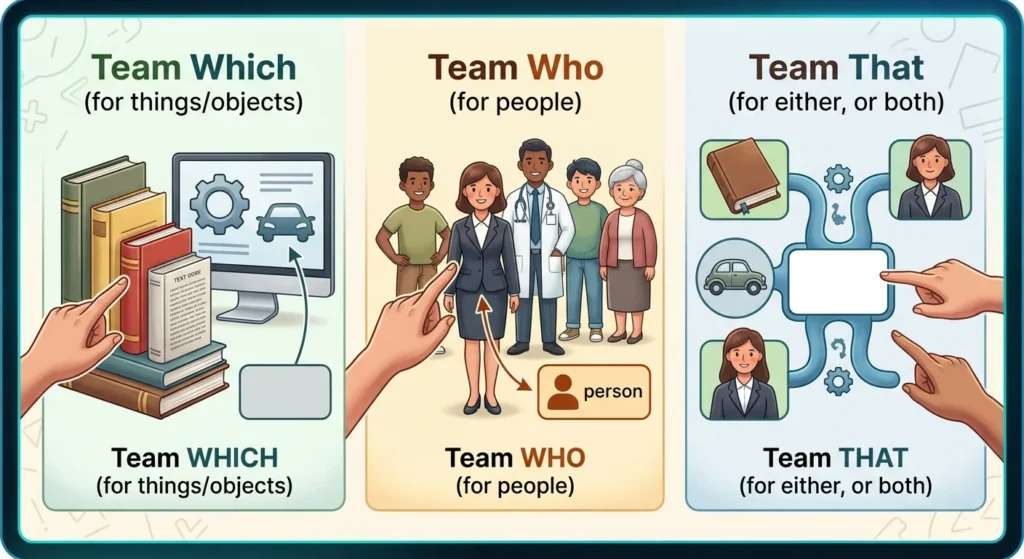
Team Which, Team Who, or Team That: Examples, Grammar Rules, and Real Usage

Choosing between team who, team that, and team which seems like a small grammar decision, yet it often leaves writers second-guessing themselves. You’ll see all three forms online, in newspapers, in sports articles, and even in business documents. That makes it easy to wonder whether they’re all correct or if one is clearly better than

Team Which, Team Who, or Team That: Examples, Grammar Rules, and Real Usage Read More »