
Introduction
Have you ever bought something, looked at the price, and thought, “That’s daylight robbery!”? People use this expression when they believe a price is outrageously high or a deal is so unfair that it feels like being robbed. You might hear it when someone pays too much for parking, discovers an expensive restaurant bill, or sees an unexpectedly high charge for an everyday service.
The phrase daylight robbery is a colorful English idiom that expresses frustration about excessive prices. Although it uses the word robbery, it usually has nothing to do with an actual crime. Instead, it compares an unfair or unreasonable charge to the experience of having money taken from you.
Understanding the daylight robbery meaning helps you recognize the phrase in conversations, films, online reviews, and everyday discussions about money. You’ll also learn when to use it, how it differs from similar expressions, and how to include it naturally in a sentence.
What Does Daylight Robbery Mean?
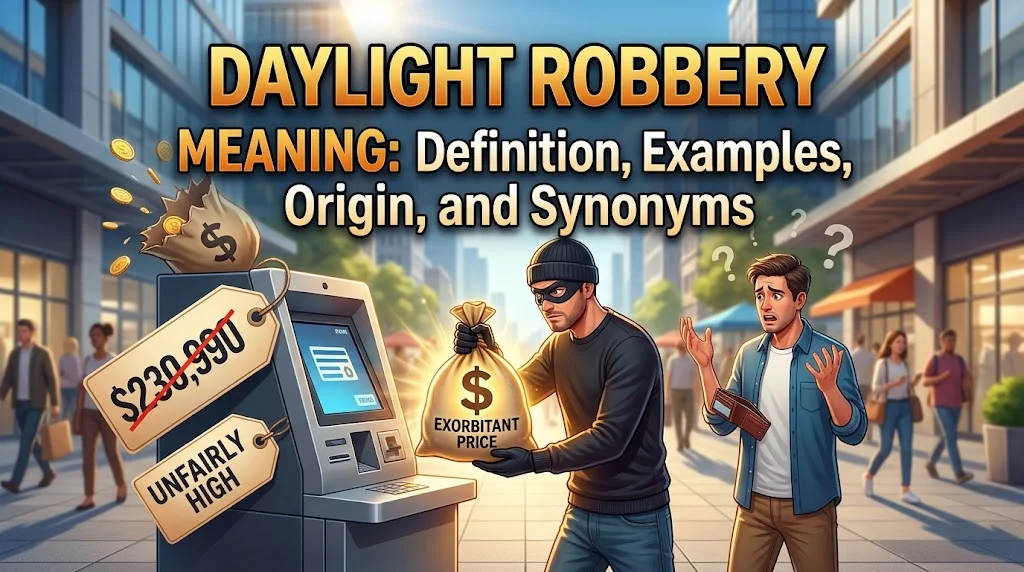
Daylight robbery means a price, fee, or deal that seems extremely expensive, unreasonable, or unfair. People often use it to complain about being charged much more than they think something is worth.
For example, imagine paying a surprisingly high amount for a small bottle of water at a tourist attraction. You might say, “That’s daylight robbery!” You are not accusing the seller of literally stealing the money. You are expressing the opinion that the price is excessive.
The expression can also describe charges for services, tickets, repairs, accommodation, and other purchases. Its meaning depends on the situation and the speaker’s judgment of what counts as fair.
Consider these examples:
- “Ten pounds for a basic sandwich? That’s daylight robbery!”
- “The hotel charged us extra for every little service. It felt like daylight robbery.”
- “I think those concert ticket prices are daylight robbery.”
In each example, the speaker believes the cost is unfairly high. The phrase is often emotional and exaggerated, which makes it effective in informal conversation.
It is important to distinguish the expression from literal robbery. A high price is not automatically illegal, and calling it daylight robbery does not prove that a business has done anything unlawful. The phrase communicates a strong opinion about value, not a legal conclusion.
Daylight Robbery Meaning in Simple English
In simple English, daylight robbery means charging someone far too much money for something. The price may feel unreasonable, excessive, or unfair compared with what the person receives in return.
Think of it this way: you expect to pay a reasonable amount for a product or service, but the final price is so high that you feel cheated. You might react by saying, “That’s daylight robbery!”
For example, suppose a small café charges an unusually high price for a basic cup of coffee. You might describe the price as daylight robbery because you believe the drink is not worth that amount.
Here are a few everyday situations that explain the expression:
- Expensive food: “That tiny sandwich cost me £12. What daylight robbery!”
- High parking fees: “They charged me almost as much for parking as I paid for lunch. It’s daylight robbery.”
- Overpriced tickets: “Those concert tickets are daylight robbery.”
- Unreasonable service charges: “The mechanic charged a fortune for a simple repair. That sounds like daylight robbery.”
The expression is usually informal and expresses disapproval. It can be used seriously when someone feels exploited or humorously when a price seems surprisingly high. The tone and context help listeners understand how strongly the speaker feels.
One important detail is that daylight robbery describes a person’s perception of unfair pricing. It does not automatically mean that a seller has broken the law. A product can be expensive because of its quality, location, rarity, or demand. The idiom communicates the speaker’s opinion that the amount being charged is excessive.
Daylight Robbery Examples in Everyday English
You are most likely to hear daylight robbery in conversations about purchases, bills, travel, entertainment, and services. It is a vivid way to complain about prices without giving a long explanation.
Shopping and Everyday Purchases
Imagine visiting a shop and finding that an ordinary household item costs much more than you expected. You might say:
“I paid £8 for a basic phone cable. That’s daylight robbery!”
The speaker is emphasizing that the price seems unreasonable for such a simple item. The same expression can apply to clothes, groceries, accessories, and other everyday purchases.
Restaurants and Cafés
Food prices can also inspire the expression, particularly when the portion is small or the quality does not seem to justify the cost.
“Twenty dollars for two ordinary sandwiches? That’s daylight robbery!”
Here, the speaker is not claiming that the restaurant has committed theft. Instead, the comment shows disappointment with the value offered for the money.
Travel and Accommodation
Travelers sometimes use the idiom when hotels, tourist attractions, transport services, or airport shops charge prices they consider excessive.
“The hotel wanted an extra £40 for a late checkout. I thought that was daylight robbery.”
Whether the charge is fair depends on the circumstances, but the expression clearly conveys the speaker’s frustration.
Entertainment and Events
Concerts, sporting events, cinemas, and other entertainment venues can also become subjects of this complaint.
“Charging that much for a seat at the back of the stadium is daylight robbery.”
The speaker believes the price is too high for the experience provided. In casual conversation, the phrase can add emphasis and make the complaint sound more expressive.
Repairs and Professional Services
The expression is not limited to products. It can also describe the cost of labor or services when the customer believes the charge is excessive.
“The plumber quoted me an enormous amount to fix a small leak. That feels like daylight robbery.”
In this situation, the customer may want to compare quotes or ask for a breakdown of the work before deciding whether the charge is genuinely unreasonable.
These examples show that daylight robbery can describe almost any price or charge that someone considers outrageously high. The phrase is especially useful in everyday conversation because it communicates strong disapproval in just a few words.
Daylight Robbery in Sentences
The phrase generally functions as a noun phrase. You can use it after a linking verb, within a longer sentence, or as an emphatic reaction to an expensive price.
Here are natural examples showing how it works in context.
- “Charging £15 for a basic breakfast is daylight robbery.”
- “My sister called the parking fee daylight robbery.”
- “Those souvenir prices are nothing short of daylight robbery.”
- “I refuse to pay that much for a phone case; it’s daylight robbery.”
- “The customers complained that the new service charges amounted to daylight robbery.”
- “We thought the ticket prices were daylight robbery, so we decided not to go.”
- “Isn’t it daylight robbery to charge extra for something that was advertised as free?”
- “The restaurant’s prices seemed like daylight robbery compared with those of nearby cafés.”
- “He laughed and said, ‘That’s daylight robbery!’ when he saw the bill.”
- “Some visitors described the cost of refreshments at the attraction as daylight robbery.”
Using “It’s Daylight Robbery”
One of the most common patterns is “It’s daylight robbery.” The word it refers to the price, fee, deal, or situation being discussed.
For example:
“Thirty dollars for a basic parking space? It’s daylight robbery!”
You can also strengthen the statement with words such as sheer, absolute, or pure:
- “That fee is sheer daylight robbery.”
- “Paying extra for every small service feels like absolute daylight robbery.”
- “Those prices are pure daylight robbery.”
These combinations make the speaker’s disapproval more emphatic. They are particularly common in informal conversations, although they may also appear in opinion pieces, reviews, and public criticism.
Using “Call Something Daylight Robbery”
Another useful structure is “call something daylight robbery.” It means to describe a price or charge as outrageously high.
For example:
“Many customers called the new delivery fees daylight robbery.”
This structure is useful when reporting other people’s opinions rather than expressing your own. It also allows writers to discuss reactions to pricing without presenting those reactions as proven facts.
Is “Daylight Robbery” Singular or Plural?
When the phrase refers to the general idea of blatant overcharging, it is normally used as an uncountable noun phrase. You would naturally say, “That is daylight robbery,” rather than “That is a daylight robbery.”
However, a daylight robbery can be grammatically correct when the words refer to a specific, literal incident of robbery committed during the day. In that case, the meaning is different: it describes an actual robbery, not merely an overpriced product or service.
This distinction matters because the same words can be used literally or figuratively. In everyday complaints about prices, the uncountable idiomatic use is the usual choice.
Why the Expression Is So Effective
The phrase works because it creates a strong comparison. Actual robbery involves taking something that belongs to another person. When someone believes a seller is demanding far too much money, the phrase suggests that the transaction feels similarly unfair.
That comparison makes the expression more forceful than simply saying expensive or overpriced. For example, “The coffee is expensive” communicates a fact or observation, while “That coffee is daylight robbery” adds a clear sense of outrage.
Still, the phrase is subjective. One person might consider a price unreasonable, while another might accept it because of the product’s quality, convenience, or location. Using the idiom expresses an opinion rather than establishing an objective standard for fair pricing.
Origin and History of the Phrase Daylight Robbery
The phrase daylight robbery has a vivid meaning rooted in the idea of being robbed openly, in broad daylight. In modern English, however, it is generally used figuratively to describe prices or charges that seem outrageously high.
The expression is especially associated with British English, where people commonly use it to complain about expensive products, services, and fees. Its wording creates a striking comparison: just as a robbery involves an unfair loss, an excessive price can make a customer feel that too much money has been taken in exchange for too little value.
Although the phrase sounds as though it must refer to a specific historical crime, that interpretation should not be assumed. The exact historical development of an idiom can be difficult to establish without reliable dated evidence. It is better to distinguish the phrase’s modern meaning from stories about its supposed origin that may not be well documented.
Why Does the Phrase Use the Word “Daylight”?
The word daylight emphasizes that something happens openly rather than secretly. A robbery is traditionally associated with a sudden, unlawful taking, while daylight suggests visibility and exposure.
Together, the words create a memorable image of an act so brazen that it seems to happen in plain sight. When someone calls a price daylight robbery, they are using that image to express disbelief or anger about what they consider an unfair charge.
For example:
“The gift shop wanted £25 for a simple key ring. That’s daylight robbery!”
The speaker does not mean that the shop has literally robbed anyone. The phrase conveys the feeling that the price is so excessive that it resembles taking money unfairly.
Has Daylight Robbery Always Meant Overcharging?
The expression’s modern idiomatic meaning concerns excessive prices and unfair charges. However, the words can also appear in a literal context describing a robbery committed during the daytime.
Context determines which meaning applies. In a conversation about shopping, restaurant bills, or parking fees, the figurative meaning is usually intended. In a police report describing an actual crime, the phrase may have a literal interpretation.
When writing about the history of the idiom, avoid claiming a precise date, inventor, or historical incident unless a trustworthy source supports that detail.
Is Daylight Robbery an Idiom?
Yes. Daylight robbery is an idiom when it describes something that is unreasonably expensive or unfairly priced.
An idiom is an expression whose intended meaning cannot always be understood by interpreting each word literally. In this case, the phrase does not usually describe an actual robbery. Instead, it communicates the speaker’s opinion that a price or charge is excessive.
Consider this example:
“The amusement park charged a fortune for parking. It was daylight robbery.”
A literal reading might suggest that a crime occurred, but the surrounding context makes the intended meaning clear: the speaker believes the parking fee was far too high.
How Is the Idiomatic Meaning Different From the Literal Meaning?
The difference depends on whether the phrase describes a real event or expresses an opinion about a price.
Figurative use:
“Charging $18 for a small bowl of soup is daylight robbery.”
Here, the speaker is criticizing the price. No actual theft is being alleged.
Literal use:
“A robbery took place in broad daylight outside the bank.”
Here, the sentence describes an actual criminal event that occurred during the day. It does not use daylight robbery as the usual idiom for overcharging.
Recognizing this distinction helps readers understand the expression accurately. It also prevents confusion when the same words appear in news reports, fiction, or everyday conversation.
Why Do People Use This Idiom Instead of Simply Saying “Expensive”?
The word expensive describes a high price, but it does not necessarily express disapproval. Something expensive may still be worth the cost because of its quality, rarity, or features.
By contrast, calling something daylight robbery suggests that the speaker believes the price is unjustifiably high.
Compare these sentences:
- “The hotel is expensive.” This describes the cost without necessarily criticizing it.
- “The hotel’s prices are daylight robbery.” This expresses a strong negative judgment about the cost.
The idiom is particularly effective in casual conversation because it combines criticism, emotion, and emphasis in a short expression.
Is Daylight Robbery British or American English?
Daylight robbery is especially common in British English. British speakers frequently use it to criticize prices they consider excessive, whether they are discussing food, transportation, entertainment, or everyday purchases.
For example:
“£9 for a sandwich at the station? That’s daylight robbery!”
The expression is also understandable in other English-speaking regions, including the United States. However, American speakers may be more likely to use alternatives such as highway robbery, a rip-off, or a total rip-off in comparable situations.
These are general tendencies rather than strict rules. English speakers in different countries can understand and use expressions associated with other varieties of English, particularly through films, books, social media, and international communication.
How Is Daylight Robbery Used in British English?
In British English, the phrase is a familiar informal complaint about an unreasonable price. It can sound serious, but it is also frequently used humorously or with exaggeration.
For example:
- “The train fare was daylight robbery.”
- “Those prices in the tourist shop are daylight robbery.”
- “They charged us £20 just to park for an hour. What daylight robbery!”
The expression works well in everyday discussions because it allows speakers to show frustration without making a lengthy argument about the cost.
It can also appear in written commentary, product reviews, and discussions of consumer prices. In these settings, the phrase often communicates a strong personal reaction rather than a measured assessment of whether the charge is objectively unfair.
Do Americans Understand Daylight Robbery?
Many American English speakers can understand the phrase from its wording and context, even if they do not use it as frequently as British speakers.
An American might say:
“Thirty dollars for a basic T-shirt? That’s a rip-off!”
A British speaker could express a similar reaction by saying:
“Thirty pounds for a basic T-shirt? That’s daylight robbery!”
Both expressions communicate the belief that the price is unreasonable. The main difference is regional preference, not a completely different meaning.
Which Expression Should You Use?
Choose the expression that sounds natural for your audience and situation.
- Daylight robbery: Particularly familiar in British English; a strong complaint about excessive pricing.
- Rip-off: Widely used in both British and American English to describe something considered unfairly priced or poor value.
- Highway robbery: Another established expression for an excessive price, widely understood in American English as well.
If you are writing for a broad international audience, you can introduce daylight robbery and explain its meaning on first use. That approach preserves the idiom while helping readers who may be less familiar with British English.
Synonyms and Alternatives to Daylight Robbery
If you want to express frustration about an excessive price, several English expressions can communicate a similar idea to daylight robbery. However, each alternative has its own tone and usage, so the best choice depends on what you want to say.
Rip-Off
A rip-off is something that you believe is overpriced, unfair, or not worth the money. It can refer to a product, service, or transaction.
Example: “That phone case cost $50. What a rip-off!”
This is one of the most versatile alternatives to daylight robbery. It is widely understood in British and American English and works naturally in everyday conversation.
Highway Robbery
Highway robbery is an expression used figuratively to describe an extremely high or unreasonable price. Like daylight robbery, it compares an unfair charge to the idea of being robbed.
Example: “Charging that much for a basic repair is highway robbery.”
The two expressions are similar, although regional preferences may influence which one a speaker chooses.
Overpriced
Overpriced is a straightforward adjective describing something that costs more than you believe it should.
Example: “The restaurant was overpriced, so we decided to eat somewhere else.”
Unlike daylight robbery, this word is relatively neutral. It can be used in casual conversation, professional reviews, and more formal writing.
A Rip-Off
Although it is closely related to rip-off, the phrase a rip-off is especially useful when identifying a specific purchase or service that seems unfairly priced.
Example: “The souvenir was a complete rip-off.”
The phrase communicates dissatisfaction with the value received for the money spent. However, it expresses an opinion and does not automatically prove that a seller acted dishonestly.
A Fortune
The phrase cost a fortune means that something is very expensive. It does not necessarily suggest that the price is unfair.
Example: “Those concert tickets cost a fortune.”
This is a useful alternative when you want to emphasize the amount of money involved without directly accusing a business of overcharging.
Extortionate
Extortionate describes a price, fee, or demand that seems excessively high. It sounds more formal than daylight robbery and is suitable for written criticism.
Example: “The company introduced extortionate delivery charges.”
The word expresses strong disapproval, but it should not automatically be interpreted as a legal allegation of extortion.
A Scandalous Price
Calling a price scandalous suggests that it is shockingly high or unacceptable.
Example: “The ticket seller was asking a scandalous price for an ordinary seat.”
This phrase is emphatic and can work well in opinion writing or conversation when you want to express strong criticism.
Which Synonym Should You Choose?
Use rip-off for a familiar, conversational alternative; overpriced for a neutral description; cost a fortune when emphasizing expense; and extortionate when you want a stronger, more formal-sounding criticism.
Daylight robbery is particularly effective when you want your reaction to sound vivid and emphatic. The best expression depends on your audience, tone, and the strength of your complaint.
Daylight Robbery vs. Highway Robbery
Daylight robbery and highway robbery can both describe a price that seems outrageously high. In figurative use, the expressions are close in meaning, and speakers may use either to complain about an unreasonable charge.
For example:
- “That parking fee is daylight robbery.”
- “That parking fee is highway robbery.”
Both sentences suggest that the speaker believes the parking fee is excessive.
The Main Difference
The main difference is often regional preference and personal style rather than meaning. Daylight robbery is particularly associated with British English, while highway robbery is also familiar in American English.
The expressions use different images. Daylight robbery evokes the idea of a theft happening openly, while highway robbery recalls robbery on a road. In modern figurative use, however, both can communicate the same basic complaint about excessive pricing.
Examples in Context
Daylight robbery:
“The gift shop charged £18 for a small magnet. That’s daylight robbery!”
Highway robbery:
“The hotel charged $60 for overnight parking. That’s highway robbery!”
In both examples, the speaker believes the price is unreasonable. Neither sentence proves that an actual crime has taken place.
Are the Two Expressions Interchangeable?
In many conversations about prices, yes. You can generally replace one with the other without changing the main point.
However, your audience may find one expression more familiar than the other. If you are writing specifically for British readers, daylight robbery may feel especially natural. For a broad international audience, you can explain the phrase or use a more widely recognized alternative such as rip-off.
Daylight Robbery vs. Price Gouging
Although daylight robbery and price gouging both involve criticism of high prices, they do not mean exactly the same thing.
Daylight robbery is an informal expression that reflects someone’s opinion that a price is unfairly high. Price gouging is a more specific term commonly used when sellers charge excessively high prices, particularly during emergencies or situations in which customers have limited alternatives.
What Does Price Gouging Mean?
Price gouging generally refers to sharply increasing prices for essential goods or services in circumstances such as natural disasters, shortages, or emergencies. The term is often discussed in consumer protection and legal contexts.
For example, if a seller dramatically raises the price of bottled water during a severe water shortage, customers might accuse the seller of price gouging.
Whether the conduct violates a particular law depends on the jurisdiction, circumstances, product, and applicable regulations.
What Does Daylight Robbery Mean in Comparison?
Daylight robbery is broader and more informal. Someone might use it to complain about expensive restaurant meals, concert tickets, parking fees, or ordinary household products.
For example:
“Charging $25 for a simple sandwich is daylight robbery.”
The speaker is expressing a judgment about the price. The situation does not necessarily involve an emergency, a shortage, or a legal violation.
Key Differences
| Feature | Daylight robbery | Price gouging |
| Main meaning | A price considered outrageously high or unfair | Excessive price increases, often in specific market circumstances |
| Tone | Informal and expressive | More technical or consumer-protection focused |
| Typical setting | Everyday conversations and complaints | Shortages, emergencies, consumer disputes, and policy discussions |
| Legal meaning | Not inherently a legal accusation | May be regulated or prohibited under applicable laws |
| Example | “That parking fee is daylight robbery.” | “The seller sharply increased water prices during the emergency.” |
Can a Price Be Both Daylight Robbery and Price Gouging?
Yes, depending on the circumstances. A customer might describe an excessive price during an emergency as daylight robbery, while also suspecting price gouging. However, the expressions serve different purposes: one communicates a strong personal reaction, while the other identifies a more specific pricing practice.
It is best not to use the terms as exact synonyms in formal writing. If you are discussing a possible legal violation, explain the facts and consult the relevant rules rather than relying on an idiom.
How to Use Daylight Robbery Correctly
To use daylight robbery naturally, connect it to a price, fee, purchase, or situation that you believe is unreasonably expensive. The phrase is most common in informal conversation, but it can also appear in reviews, commentary, and other writing that uses a conversational tone.
Use It to Express Disapproval of a Price
The most common use is to complain about something that costs much more than expected.
Example: “£7 for a small cup of coffee is daylight robbery.”
The sentence makes the speaker’s opinion clear. It does not establish that the price is objectively unfair; it shows that the speaker considers it excessive.
Use It in a Reaction
The phrase can stand alone as a short, emphatic response.
Example:
A: “The museum charged me $30 for parking.”
B: “That’s daylight robbery!”
This exchange sounds natural because the expression responds directly to a surprisingly high charge.
Use It When Reporting Someone Else’s Opinion
You can also use the phrase to describe another person’s reaction.
Example: “Several visitors called the new admission fees daylight robbery.”
This construction is useful in articles and reviews because it attributes the criticism to the people expressing it rather than presenting the judgment as an undisputed fact.
Avoid Treating It as Proof of a Crime
Because the idiom contains the word robbery, it can sound accusatory. In ordinary conversation, people generally understand it as figurative language. In a formal complaint, business report, or legal discussion, it is usually clearer to describe the actual issue.
For example, instead of writing, “The company committed daylight robbery,” you could write, “The customer argued that the company’s charges were excessive and poorly explained.”
The second version identifies the concern without implying that a crime has been established.
Is Daylight Robbery Formal or Informal?
Daylight robbery is primarily an informal expression. It is especially suitable for everyday conversations, casual reviews, personal comments, and opinion-based writing.
The phrase is vivid and expressive, which makes it effective when you want to show surprise or frustration. However, its exaggerated tone may be less suitable for formal business correspondence, academic writing, or documents that require objective language.
Informal Examples
- “Those cinema snacks are daylight robbery!”
- “I paid a fortune for parking. It’s daylight robbery.”
- “That shop is charging daylight robbery prices.”
These examples communicate a personal reaction in a natural, conversational way.
More Formal Alternatives
In professional writing, consider expressions such as:
- “The price appears excessive.”
- “The fee seems disproportionate to the service provided.”
- “The product is considerably overpriced.”
- “The charges may be unreasonable.”
- “The pricing warrants further explanation.”
For example, rather than writing, “The new service fee is daylight robbery,” in a formal email, you could write, “The new service fee appears excessive compared with the service provided. Could you please explain how it was calculated?”
This wording sounds measured and makes it easier to request a practical response.
Can You Use Daylight Robbery in an Article?
Yes. The expression can work well in a blog post, product review, editorial, or consumer-focused article when the tone is conversational. If you are writing a factual report, make it clear whose opinion is being expressed and support any objective claims with evidence.
Choosing the right tone helps you communicate your point without making the writing sound unnecessarily emotional or confrontational.
Common Mistakes When Using Daylight Robbery
Although daylight robbery is easy to understand, a few common mistakes can make your sentences sound unnatural or give readers the wrong impression. Learning these distinctions will help you use the idiom confidently.
Confusing High Prices With Actual Robbery
The most common mistake is treating the idiom as a literal accusation. In everyday English, calling something daylight robbery usually means that its price seems unfairly high.
Incorrect interpretation: “The shop charged too much, so the owner must have committed robbery.”
Better understanding: “The shop charged more than I think the product is worth.”
An expensive item does not automatically involve dishonesty or illegal conduct. Use the expression to communicate your opinion, and describe specific evidence if you want to make a factual complaint.
Using the Phrase for Every Expensive Purchase
Not everything expensive deserves to be called daylight robbery. A costly item may offer excellent quality, long-lasting performance, or features that justify its price.
For example, saying “This laptop is expensive” does not necessarily mean it is overpriced. Calling it daylight robbery suggests that you believe the cost is unreasonable for what you receive.
Choose the expression when you want to criticize the price, not simply when you want to say that something costs a lot.
Using It in Overly Formal Writing
Daylight robbery is an informal, expressive idiom. It works naturally in conversation, reviews, and opinion-based articles, but it may sound too emotional in a formal business report.
Instead of writing, “The supplier’s new charges are daylight robbery,” you could write, “The supplier’s new charges appear excessive and require further explanation.”
The second version is more suitable when you need a professional, objective tone.
Assuming It Has the Same Meaning as Price Gouging
Daylight robbery and price gouging overlap in some situations, but they are not exact synonyms. Daylight robbery is a general expression for a price considered unfairly high. Price gouging usually refers to excessive pricing under particular market conditions, often during emergencies or shortages.
For instance, complaining that a cinema charges too much for popcorn is a typical use of daylight robbery. Discussing unusually high prices for essential supplies during a natural disaster may involve concerns about price gouging.
Forgetting the Importance of Context
Context helps listeners determine whether the expression is serious, humorous, or exaggerated.
If a friend says, “Ten dollars for a cup of coffee? That’s daylight robbery!” they may simply be joking about the price. In another situation, a customer might use the same words to express genuine frustration.
Pay attention to the speaker’s tone and the surrounding conversation before interpreting the phrase too literally.
A Real-Life-Style Case Study: Is an Expensive Parking Fee Daylight Robbery?
Imagine that Maya drives into a busy city center for a family lunch. She parks in a privately operated car park and later discovers that the fee is much higher than she expected. She feels frustrated because the parking space offered no special services, and the total cost is more than she usually pays.
Maya turns to her brother and says, “That parking fee is daylight robbery!”
Her comment expresses a clear opinion: she believes the charge is unreasonable for the service she received.
What Makes the Fee Seem Unfair?
Several factors may influence Maya’s reaction:
- Unexpected cost: She did not realize the parking fee would be so high.
- Limited value: The car park offered a basic space without additional services.
- Comparison with alternatives: Nearby facilities may charge considerably less.
- Lack of clear information: The pricing terms may not have been obvious when she entered.
These factors explain why Maya feels that the fee is excessive. However, her reaction alone does not prove that the car park has acted improperly.
Is It Really Daylight Robbery?
The answer depends on the circumstances and Maya’s judgment of the price. If the fee is significantly higher than she reasonably expected, she may naturally describe it as daylight robbery.
However, the car park might be in a central location where space is limited, or its prices might have been clearly displayed at the entrance. Those details could help explain the cost, even if Maya still considers it too high.
The phrase communicates her dissatisfaction rather than providing a final assessment of whether the charge is justified.
What Could Maya Do Next?
Instead of only complaining, Maya could check the displayed rates, review the payment receipt, and compare the fee with nearby parking options. If the price differs from the advertised rate, she could contact the operator and request clarification.
This example demonstrates an important distinction: daylight robbery describes how unfair a price feels to someone, not necessarily whether the price is unlawful or objectively unjustified.
The same reasoning applies to restaurant bills, hotel fees, repair costs, event tickets, and other purchases. The idiom is useful for expressing frustration, while a fair assessment requires looking at the actual circumstances.
How to Respond When Someone Says “That’s Daylight Robbery!”
When someone calls a price daylight robbery, they are usually expressing surprise, frustration, or disapproval. Your response should depend on whether you agree, disagree, or want to understand why the price seems unreasonable.
If You Agree With Them
You can show agreement with a short, natural response:
- “Absolutely! That price is ridiculous.”
- “I know. It costs far more than I expected.”
- “You’re right. It doesn’t seem worth that much.”
- “I thought the same thing when I saw the bill.”
These responses work well in casual conversations about shopping, food, travel, or services.
If You Partly Agree
Sometimes a price seems high, but you understand why the seller charges it. In that case, you can acknowledge the concern without completely agreeing.
For example:
“I agree that it’s expensive, although the location probably affects the price.”
Or:
“It does seem steep, but at least the service includes delivery.”
These replies recognize the other person’s frustration while introducing another perspective.
If You Disagree Politely
You may believe that the price is reasonable because of the product’s quality, convenience, or other benefits.
You could say:
- “I can see why you think that, but the quality is excellent.”
- “It is expensive, although similar places charge about the same.”
- “The price is high, but I think the extra features justify it.”
Such responses keep the conversation respectful. You do not need to dismiss someone’s opinion simply because you see the value differently.
If You Want More Information
If the complaint is unclear, ask a question that encourages the person to explain their reasoning.
For example:
“Which part of the charge do you think is unreasonable?”
This response is useful when discussing service bills, subscription fees, or unexpected expenses. It shifts the conversation from a general complaint to the specific reason the person feels overcharged.
Final Tips for Using Daylight Robbery Naturally
To use the expression well, remember a few practical points:
- Use it when a price or charge seems outrageously high or unfair.
- Remember that it is especially associated with British English, although speakers elsewhere may understand it.
- Treat it as an informal idiom rather than a technical or legal term.
- Use alternatives such as rip-off, overpriced, or extortionate when they better fit your tone.
- Consider the context before assuming that an expensive price is genuinely unfair.
- In professional communication, describe the specific concern instead of relying on an emotional expression.
With these guidelines in mind, you can recognize daylight robbery in everyday conversations and use it naturally when discussing prices, fees, and value for money.
Conclusion
The phrase daylight robbery is a colorful English idiom used to describe a price or charge that seems outrageously high or unfair. Particularly familiar in British English, it appears in everyday conversations about shopping, parking, restaurants, travel, and other expenses. Although the expression compares an excessive price to robbery, it usually describes a person’s opinion rather than an actual crime.
Understanding the daylight robbery meaning also helps you distinguish it from related expressions such as highway robbery, rip-off, and price gouging. These alternatives overlap, but they do not always carry the same tone or implications. Use daylight robbery when you want to express strong disapproval in an informal, conversational way. In professional writing, a phrase such as unreasonably expensive may be more appropriate. Above all, remember that calling a price daylight robbery communicates how unfair it feels to you; the circumstances determine whether the charge is genuinely unreasonable.
FAQs
What does daylight robbery mean?
Daylight robbery means charging an amount that someone considers outrageously high or unfair. It is usually a figurative expression rather than a claim that an actual crime has occurred. For example, if a café charges an unexpectedly high price for a basic sandwich, a customer might say, “That’s daylight robbery!” to express frustration about the cost.
Is daylight robbery an idiom?
Yes, daylight robbery is an idiom when it describes an excessive or unreasonable price. The expression uses the image of robbery to emphasize how unfair a charge feels. It is common in informal English, particularly British English. Context determines whether the phrase is being used figuratively to criticize a price or literally to describe a robbery during the day.
Is daylight robbery British or American English?
Daylight robbery is especially associated with British English, where it is a familiar way to complain about excessive prices. American English speakers may use alternatives such as highway robbery or rip-off more often in similar situations. Nevertheless, daylight robbery is understandable beyond Britain, and regional preferences do not prevent speakers from using expressions associated with other varieties of English.
What is a synonym for daylight robbery?
Common alternatives include rip-off, highway robbery, overpriced, and extortionate. The best choice depends on your intended meaning. Rip-off is informal and widely understood, while overpriced is more neutral. Extortionate conveys strong disapproval and often suits written criticism. Although these expressions overlap, they differ in tone and should not always be treated as exact equivalents.
What is the difference between daylight robbery and highway robbery?
Both expressions can describe a price that seems outrageously high or unfair. Daylight robbery is particularly familiar in British English, while highway robbery is also widely understood in American English. In figurative use, their meanings are very similar. The choice often depends on regional preference, personal style, and which expression sounds more natural to the speaker.
Is daylight robbery the same as price gouging?
No. Daylight robbery is an informal expression for a price considered unfairly high. Price gouging more specifically refers to excessive pricing in certain circumstances, often during emergencies or shortages. A customer might call an expensive restaurant meal daylight robbery, but that situation does not automatically involve price gouging. Whether a pricing practice violates the law depends on the applicable rules and circumstances.
Can I use daylight robbery in a sentence?
Yes. You can use daylight robbery after a linking verb or as a direct reaction to an expensive price. For example, “The parking fee was daylight robbery,” or “Ten dollars for a basic coffee? That’s daylight robbery!” Both sentences express the speaker’s belief that the amount charged is unreasonable rather than making a literal accusation of theft.
Is daylight robbery formal or informal?
Daylight robbery is primarily informal and works well in conversations, casual reviews, and opinion-based writing. It conveys a strong emotional reaction, so it may sound too expressive in formal reports or professional complaints. In those situations, alternatives such as excessive pricing, an unreasonable charge, or a disproportionately high fee can communicate the concern in a more neutral and professional tone.
What is the origin of the phrase daylight robbery?
The phrase uses the image of a robbery occurring openly in daylight to emphasize the boldness of an apparently unfair charge. Its modern idiomatic meaning concerns excessive pricing. However, a precise historical origin should not be claimed without reliable evidence. The literal words can also describe an actual robbery committed during the day, so context is important when interpreting the expression.
What should I say when someone calls a price daylight robbery?
You can agree, disagree politely, or ask what makes the price seem unreasonable. For example, you might respond, “I know, it’s far too expensive,” or “It is pricey, but the quality is excellent.” If you want more information, ask, “Which part of the charge seems unfair?” Your response should reflect your own opinion and the circumstances of the purchase.