

Have you ever felt excited about something going well but hesitated to say it out loud? Perhaps your team is winning, your job interview went smoothly, or you’re finally receiving the good news you’ve been waiting for. In these moments, you might say, “Let’s not jinx it.”
This common expression captures a familiar feeling: you want things to continue going well, but you don’t want to celebrate too early or tempt fate. It’s often used playfully, although it can also communicate genuine caution.
However, “Let’s not jinx it” isn’t the only way to express this idea. Depending on the situation, you might say “Let’s wait and see,” “Let’s not speak too soon,” or “Let’s stay cautiously optimistic.” Each alternative conveys a slightly different attitude toward uncertainty.
In this guide, you’ll discover 16 natural alternatives to “Let’s not jinx it,” learn what each expression means, and see how to use them in everyday conversations and professional settings.
What Does “Let’s Not Jinx It” Mean?
“Let’s not jinx it” means that you hope something good will continue to happen and don’t want to risk ruining the moment by talking too confidently about it. People commonly use the phrase when an outcome looks promising but hasn’t been fully secured.
The word jinx refers to something believed to bring bad luck or cause an unfortunate outcome. In everyday English, however, people usually use it figuratively rather than literally. They might joke that talking about their good fortune could somehow make it disappear.
For example, imagine that your favorite team has won four games in a row. You might tell a friend:
“ We’re on a winning streak. Let’s not jinx it!”
You’re expressing excitement while acknowledging that the next game could still go either way. You don’t necessarily believe that discussing the streak will cause a loss. You’re simply being playful and cautious.
Here are a few more examples:
- At work: “The project is finally running smoothly. Let’s not jinx it by celebrating before launch.”
- Before an exam: “I think I did well, but let’s not jinx it until the results come out.”
- While waiting for good news: “The interview went really well. Let’s not jinx it, though.”
- In everyday life: “The baby has been sleeping through the night all week. Let’s not jinx it!”
In each example, the speaker wants a positive situation to continue. The phrase combines hope with a little uncertainty.
Is “Jinxing It” Literal or Figurative?
In most modern conversations, “jinxing it” is figurative. People use the expression to acknowledge that something could go wrong, even when the situation looks promising.
The phrase can also reflect personal or cultural superstitions. Some people genuinely prefer not to discuss good fortune because they believe doing so might attract bad luck. Others use it purely as a joke.
The context usually makes the meaning clear. If a friend says, “Don’t jinx it!” while watching a close basketball game, they’re probably expressing nervous excitement. If a colleague says the same thing about a business deal, they may simply mean that the deal isn’t finalized yet.
Understanding this distinction helps you choose an alternative that matches your intention. Some expressions preserve the playful idea of tempting fate, while others focus on patience, realistic expectations, or waiting for confirmation.
When Do People Say “Let’s Not Jinx It”?
People use “let’s not jinx it” when something positive is happening but the final outcome remains uncertain. It fits situations where you feel hopeful yet recognize that circumstances can change.
Although the phrase is common in casual conversation, its meaning can shift slightly depending on the situation.
When Something Is Finally Going Well
You might use the expression after a difficult period begins to improve. Perhaps your business is attracting more customers, your daily routine is becoming manageable, or a long-running problem appears to be resolving itself.
Example:
“We’ve had three successful launches in a row. Let’s not jinx it before the next one.”
Here, the speaker recognizes the progress but avoids assuming that future success is guaranteed.
When Waiting for Good News
The phrase also works when you’re waiting for an important decision or result. You might be expecting a job offer, university admission, a financial approval, or news about a personal matter.
Example:
“The hiring manager seemed impressed with my answers. Let’s not jinx it until I hear back.”
The speaker feels encouraged but understands that the final decision hasn’t been made.
During a Game or Competition
Sports fans frequently use the phrase when their team is performing well. It allows them to express excitement without acting as though victory is already certain.
Example:
“We’re ahead by two goals with ten minutes left. Don’t jinx it!”
The remark is usually lighthearted. The speaker wants to enjoy the moment without celebrating before the game ends.
When a Plan Has Not Been Finalized
The expression can also apply to travel arrangements, business agreements, event planning, or other situations where several details still need to fall into place.
Example:
“The client likes our proposal, but let’s not jinx it until the contract is signed.”
In this context, the phrase means that enthusiasm should not replace confirmation.
In Relationships and Personal Life
People sometimes use the expression when a new relationship is going well, a family situation is improving, or a personal goal finally seems achievable.
Example:
“We’ve been getting along so well lately. Let’s not jinx it!”
Depending on the relationship, the comment might sound affectionate, humorous, or cautiously hopeful.
Across these situations, the central idea remains the same: enjoy the positive moment without assuming the outcome is guaranteed.
Is “Let’s Not Jinx It” Professional or Polite?
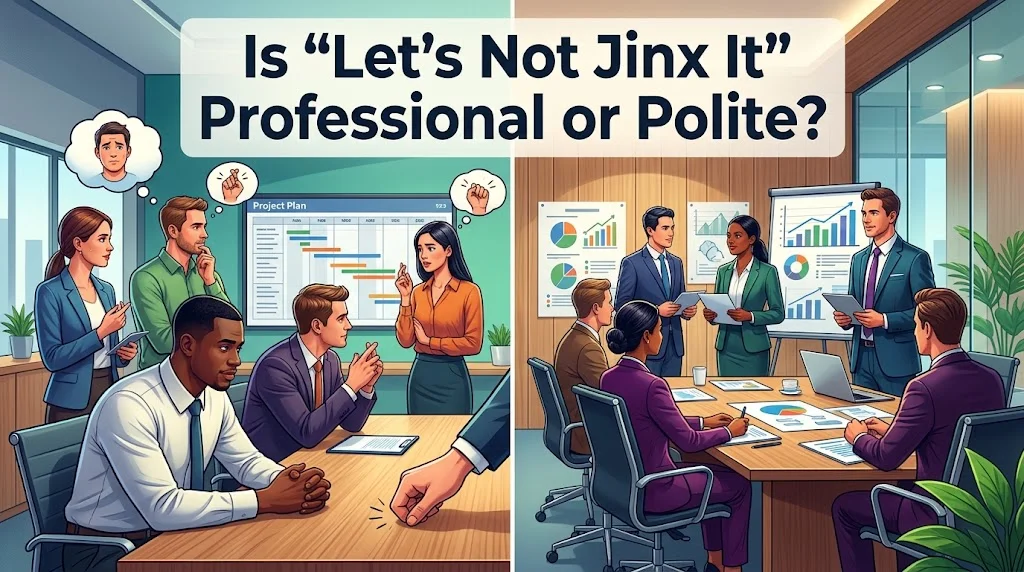
Yes, “let’s not jinx it” can be polite and appropriate in professional conversations, particularly when colleagues share a friendly working relationship. However, it’s informal and may not be the best choice for every business setting.
The phrase often works well in relaxed team meetings, workplace chats, and conversations with colleagues you know. For example, if a project is progressing smoothly, you might say:
“Everything is on schedule so far. Let’s not jinx it before the final review.”
This sounds natural in a friendly workplace. It communicates optimism while reminding everyone that the project still needs attention.
However, the expression may sound too casual in a formal report, an executive presentation, or communication with an unfamiliar client. In those settings, a more direct alternative can sound clearer and more professional.
More Professional Alternatives
Consider these expressions when you want to communicate caution without relying on superstition or an informal idiom.
| Alternative | Best situation | Example |
| Let’s remain cautiously optimistic. | Project updates and planning meetings | “The initial results are promising, so let’s remain cautiously optimistic.” |
| Let’s wait for confirmation. | Pending decisions or approvals | “The proposal looks strong, but let’s wait for confirmation.” |
| Let’s avoid making assumptions. | Decisions involving uncertainty | “We have encouraging feedback, but let’s avoid making assumptions.” |
| Let’s see how things develop. | Situations with an uncertain outcome | “The early response is positive. Let’s see how things develop.” |
| Let’s not consider it final yet. | Contracts, deals, and formal decisions | “The client has expressed interest, but let’s not consider it final yet.” |
These alternatives preserve the practical message behind “let’s not jinx it” while sounding more precise in professional communication.
When Should You Avoid the Phrase?
Avoid using “let’s not jinx it” when the conversation calls for a clear statement of risk, a confirmed status, or a specific next step. In a formal business context, explaining what remains uncertain is often more useful than making a playful reference to bad luck.
For example, instead of saying, “Let’s not jinx it,” in a project report, you could write:
“The project remains on schedule, although final approval is still pending.”
This version identifies the current status and the remaining uncertainty. It gives readers useful information without relying on an informal expression.
The best choice depends on your audience, purpose, and tone. In casual conversations, “let’s not jinx it” is natural and friendly. In formal settings, phrases such as “let’s wait for confirmation” or “let’s remain cautiously optimistic” are usually more suitable.
Advantages and Disadvantages of Saying “Let’s Not Jinx It”
“Let’s not jinx it” is a useful expression when you want to acknowledge good news without assuming everything will go perfectly. It adds a touch of humor to uncertain situations and helps people express cautious optimism. However, its suitability depends on the audience and context.
Advantages
It expresses cautious optimism. The phrase lets you show excitement while recognizing that the outcome isn’t guaranteed. You can appreciate progress without assuming success is certain.
Example: “Our sales have improved this month. Let’s not jinx it!”
It makes conversations feel natural. In casual conversations, the expression can help people share nervous excitement. It often sounds warmer and more relaxed than a serious warning.
Example: “The weather looks perfect for our trip. Let’s not jinx it!”
It can add humor. People often use the phrase jokingly when something is going unusually well. This can make a conversation more engaging without requiring a lengthy explanation.
Example: “I’ve made it through the entire week without missing a deadline. Let’s not jinx it!”
It reminds people that circumstances can change. The expression encourages you to enjoy a promising situation while remaining aware that the final outcome may still be uncertain.
Example: “The client likes our proposal, but let’s not jinx it until the agreement is signed.”
Disadvantages
It may sound superstitious. Some people interpret the phrase as a genuine belief that talking about success can bring bad luck. That interpretation may not suit every audience.
It can sound unnecessarily pessimistic. If someone shares an achievement, responding with “Let’s not jinx it” may seem as though you’re reluctant to celebrate their progress.
It may be too informal for professional settings. The phrase works well in friendly workplace conversations, but a formal report or business presentation usually benefits from more precise wording.
It can distract from practical action. Avoiding a jinx doesn’t protect a project from actual risks. When a result depends on preparation, deadlines, or decisions, discussing those factors is more useful than relying on a playful expression.
For these reasons, alternatives can help you communicate the same general idea with a more appropriate tone.
16 Natural Alternatives to “Let’s Not Jinx It”
The best alternative depends on what you want to communicate. Sometimes you want to avoid celebrating too early. In other situations, you want to express hope, encourage patience, or remind someone that an outcome isn’t final.
The following expressions cover these different intentions. Each includes its meaning, example sentences, and guidance on when to use it.
1. Let’s Not Get Ahead of Ourselves
Meaning: This expression means you shouldn’t make assumptions or become too confident before you have enough information.
It’s one of the most versatile alternatives to “let’s not jinx it.” However, the emphasis is slightly different. While “let’s not jinx it” often suggests a playful fear of tempting fate, “let’s not get ahead of ourselves” encourages realistic expectations.
You can use it when a situation looks promising but still requires work, confirmation, or a final decision.
Example sentences:
- “The interview went well, but let’s not get ahead of ourselves until they make an offer.”
- “We’ve received positive feedback on the product. Let’s not get ahead of ourselves before launch.”
- “Our team has won the first two games, but let’s not get ahead of ourselves.”
Best use: Choose this phrase when someone is making assumptions about an outcome that hasn’t happened yet. It works in casual conversations, workplace discussions, and planning meetings.
Tone: Practical, measured, and sometimes gently cautionary.
2. Let’s Not Count Our Chickens Before They Hatch
Meaning: This traditional idiom means you shouldn’t assume that something will happen before it actually does.
The expression comes from the idea that eggs may not all hatch successfully. Counting the future chicks before they hatch would mean treating an uncertain result as though it were already guaranteed.
It’s particularly useful when someone is already celebrating an expected result. Unlike “let’s not jinx it,” this idiom focuses more directly on premature assumptions.
Example sentences:
- “You think we’ve won the contract? Let’s not count our chickens before they hatch.”
- “I might get the promotion, but I’m not counting my chickens before they hatch.”
- “The tickets could sell out, but let’s not count our chickens before they hatch.”
Best use: Use this expression when someone is treating a possible outcome as a certainty. It works well in everyday conversation, especially when a decision, payment, offer, or result is still pending.
Tone: Conversational, traditional, and mildly cautionary. Because it’s an idiom, it may sound less direct than a straightforward statement.
3. Let’s Keep Our Fingers Crossed
Meaning: This phrase expresses hope that something will turn out well. It’s commonly used when you’re waiting for a positive result but have little control over the outcome.
For example, you might use it before a job interview, while waiting for exam results, or when hoping for good weather. It focuses more on hope than on avoiding bad luck.
Although it can serve as an alternative to “let’s not jinx it,” the two expressions aren’t identical. “Let’s keep our fingers crossed” is more openly hopeful, while “let’s not jinx it” often includes a hint of nervous caution.
Example sentences:
- “I think the interview went well. Let’s keep our fingers crossed!”
- “The forecast looks better for Saturday. Let’s keep our fingers crossed.”
- “We should hear back from the university tomorrow. Let’s keep our fingers crossed.”
Best use: Choose this expression when you want to encourage optimism while acknowledging that the outcome remains uncertain.
Tone: Friendly, hopeful, and encouraging. It works well with friends, family, and colleagues in informal conversations.
4. Let’s Wait and See
Meaning: This expression means you should wait for more information before deciding what will happen.
It’s a straightforward alternative when you don’t want to make predictions too early. Unlike “let’s not jinx it,” it doesn’t suggest that talking about success might bring bad luck. Instead, it emphasizes patience and observation.
You can use it when the outcome depends on future events, other people’s decisions, or circumstances that haven’t become clear yet.
Example sentences:
- “The weather might improve by the weekend. Let’s wait and see.”
- “The company seems interested in your application. Let’s wait and see what they say.”
- “We’ve made some changes to the campaign. Let’s wait and see how customers respond.”
Best use: Use this phrase when you want to avoid speculation and allow events to unfold naturally. It suits casual conversations and many professional situations.
Tone: Neutral, patient, and practical. Depending on your delivery, it can also sound slightly reserved.
5. Let’s Stay Cautiously Optimistic
Meaning: This expression means you can feel hopeful about a situation while remaining aware of possible difficulties.
It’s especially useful when you want to sound positive without making promises or assuming success. Rather than focusing on superstition, it encourages a balanced view of the available evidence.
For instance, a project may be progressing well, but a few important tasks might remain. Staying cautiously optimistic means recognizing the progress without overlooking those uncertainties.
Example sentences:
- “The early test results are encouraging. Let’s stay cautiously optimistic until we receive the final report.”
- “Our proposal has made it to the next stage, so let’s stay cautiously optimistic.”
- “The negotiations are going well. Let’s stay cautiously optimistic until the agreement is finalized.”
Best use: This phrase works particularly well in business meetings, project updates, planning discussions, and conversations about uncertain outcomes.
Tone: Professional, balanced, and thoughtful. It’s more formal than “let’s not jinx it” and often sounds appropriate in workplace communication.
6. Let’s Not Celebrate Just Yet
Meaning: This expression means you shouldn’t celebrate a success before it’s confirmed or complete.
It’s a direct alternative when you’re close to achieving something but still have obstacles to overcome. The word yet makes the distinction important: you’re not saying that celebration is impossible, only that the timing may be premature.
Compared with “let’s not jinx it,” this phrase places greater emphasis on waiting until success is certain.
Example sentences:
- “We’re leading the match, but let’s not celebrate just yet.”
- “The client has approved the initial proposal. Let’s not celebrate just yet; the contract still needs a signature.”
- “I think I passed the exam, but let’s not celebrate just yet.”
Best use: Use this phrase when a positive result appears close but isn’t final. It works well in sports, business negotiations, competitions, and everyday conversations.
Tone: Cautious and direct. It can sound playful among friends but firm when used to manage expectations at work.
7. Let’s Not Assume It’s a Done Deal
Meaning: This expression means you shouldn’t treat an agreement, decision, or outcome as final until it has been confirmed.
A done deal is something that has been settled or finalized. If you say, “Let’s not assume it’s a done deal,” you’re reminding others that progress doesn’t necessarily guarantee completion.
This alternative is especially useful in professional settings, where decisions may depend on approvals, signatures, budgets, or other requirements.
Example sentences:
- “The client likes our offer, but let’s not assume it’s a done deal until the paperwork is complete.”
- “The manager sounded positive about my promotion, but let’s not assume it’s a done deal.”
- “We’re ahead in the negotiations, but let’s not assume it’s a done deal yet.”
Best use: Choose this phrase when discussing contracts, sales, job offers, promotions, partnerships, or any situation where formal confirmation matters.
Tone: Practical, direct, and businesslike. It’s generally more specific than “let’s not jinx it” because it identifies the risk of treating an uncertain outcome as final.
8. Let’s See How It Plays Out
Meaning: This expression means you should allow a situation to develop before deciding what will happen. It encourages patience when the outcome depends on events that haven’t unfolded yet.
Unlike “let’s not jinx it,” which can suggest a playful fear of tempting fate, “let’s see how it plays out” focuses on observing what happens next. It’s useful when you have some encouraging signs but not enough information to predict the final result.
For example, a new marketing campaign might attract promising early interest. Rather than assuming it will succeed, you can wait to see how customers respond over time.
Example sentences:
- “The new strategy looks promising. Let’s see how it plays out over the next few weeks.”
- “They seem interested in our proposal, but let’s see how it plays out.”
- “The first half went well. Let’s see how it plays out before we celebrate.”
Best use: Use this expression when you want to remain open-minded and avoid making premature judgments. It works in workplace discussions, casual conversations, sports, and situations involving uncertain plans.
Tone: Calm, conversational, and patient. It can sound neutral or cautiously hopeful, depending on the context.
9. Let’s Hope It Keeps Going This Way
Meaning: This phrase expresses the hope that a positive situation will continue. It acknowledges that things are going well without assuming they will stay that way.
It’s a natural alternative to “let’s not jinx it” when you want to emphasize optimism rather than worry about bad luck. The wording recognizes that circumstances may change, but it keeps attention on the good things happening now.
You might use it when a project is progressing smoothly, a team is performing well, or a personal situation has improved after a difficult period.
Example sentences:
- “Our sales have been excellent this month. Let’s hope it keeps going this way.”
- “The weather has been perfect all week. Let’s hope it keeps going this way.”
- “We’ve finally settled into a good routine. Let’s hope it keeps going this way.”
Best use: Choose this expression when you want to acknowledge progress and encourage a positive outlook. It works well with friends, coworkers, and family members.
Tone: Warm, hopeful, and conversational. It sounds more positive than expressions that focus mainly on caution.
10. Let’s Not Take Anything for Granted
Meaning: This expression means you shouldn’t assume that a good situation, opportunity, or advantage will always remain available.
It encourages appreciation and awareness rather than complacency. While “let’s not jinx it” often suggests that you hope a good outcome won’t be disrupted, “let’s not take anything for granted” reminds you to value what you have and recognize that circumstances can change.
For example, a business might be enjoying strong customer loyalty. The team shouldn’t assume customers will remain satisfied without continued effort.
Example sentences:
- “We’ve had a successful year, but let’s not take anything for granted.”
- “Our customers have been very supportive. Let’s not take that for granted.”
- “Things are going well in our relationship, and I don’t want us to take that for granted.”
Best use: Use this expression when discussing success, relationships, opportunities, health, or other valuable things that require appreciation and care.
Tone: Thoughtful, serious, and sometimes reflective. It’s appropriate in both personal and professional conversations.
11. Let’s Keep Our Expectations in Check
Meaning: This phrase means you should maintain realistic expectations instead of becoming overly confident about a possible outcome.
It’s useful when excitement begins to grow faster than the available evidence supports. Rather than suggesting that good fortune might disappear because you mentioned it, the expression encourages a balanced assessment of what is likely to happen.
For instance, a company may receive encouraging feedback about a new product. However, customer interest doesn’t automatically guarantee strong sales.
Example sentences:
- “The early reviews are positive, but let’s keep our expectations in check until the product launches.”
- “I think I did well in the interview. Still, I’ll keep my expectations in check until I hear back.”
- “The team has made real progress, but let’s keep our expectations in check before setting new targets.”
Best use: Choose this phrase when someone is becoming overly optimistic or making predictions without enough supporting information. It can be useful in planning, budgeting, recruitment, and project management.
Tone: Measured, practical, and somewhat serious. Depending on how you say it, the phrase may sound reassuring or like a gentle warning against excessive confidence.
12. Let’s Hold Off on Celebrating
Meaning: This expression means you should postpone celebrating until the desired outcome is confirmed or completed.
The phrase hold off means to delay or wait before doing something. In this case, it suggests that celebration is appropriate but premature.
This alternative is similar to “let’s not celebrate just yet,” although “let’s hold off on celebrating” can sound more like a practical recommendation. It works particularly well when there is a clear milestone still to reach.
Example sentences:
- “We’ve reached the final round, but let’s hold off on celebrating until we win.”
- “The client has verbally agreed, but let’s hold off on celebrating until the contract is signed.”
- “The results look encouraging. Let’s hold off on celebrating until the official announcement.”
Best use: Use this expression when you’re close to achieving a goal but still need confirmation, approval, or completion. It suits workplace projects, competitions, negotiations, and personal milestones.
Tone: Direct, sensible, and cautiously optimistic. It’s suitable for casual conversations and many professional settings.
13. Let’s Wait Until It’s Official
Meaning: This phrase means you should wait for an authoritative confirmation before treating something as true or final.
It’s particularly useful when information is unofficial, incomplete, or based on rumors. Unlike “let’s not jinx it,” this expression doesn’t focus on the possibility of bringing bad luck. Instead, it emphasizes the importance of reliable confirmation.
For example, you might hear that you’ve been selected for a new position. Until the employer formally confirms the offer, it’s sensible to wait before making major plans.
Example sentences:
- “I’ve heard that the promotion is likely, but let’s wait until it’s official.”
- “The company may announce the new partnership soon. Let’s wait until it’s official.”
- “People are saying the event will be postponed, but let’s wait until it’s official.”
Best use: Choose this phrase when dealing with job offers, promotions, public announcements, event changes, business agreements, or other matters that require formal confirmation.
Tone: Clear, practical, and composed. It’s more precise than “let’s not jinx it” when the main concern is whether information has been confirmed.
14. Let’s Stay Hopeful but Realistic
Meaning: This expression means you can remain positive while acknowledging genuine challenges or uncertainty.
It encourages a balance between optimism and practical thinking. Instead of assuming the worst or expecting everything to work out perfectly, you recognize the positive signs while preparing for different possibilities.
This makes it a useful alternative to “let’s not jinx it” when you want to encourage someone without making unrealistic promises.
For example, a job applicant may have had a strong interview but still be competing with other candidates. Staying hopeful but realistic means recognizing the encouraging signs while understanding that the decision remains uncertain.
Example sentences:
- “The doctors are encouraged by the progress, so let’s stay hopeful but realistic about the recovery.”
- “Our proposal has received positive feedback. Let’s stay hopeful but realistic until the final decision.”
- “You’ve prepared thoroughly for the competition. Stay hopeful but realistic, and focus on doing your best.”
Best use: Use this expression when discussing uncertain goals, challenging circumstances, professional plans, or personal situations that call for encouragement and honest expectations.
Tone: Supportive, balanced, and thoughtful. It works in both personal and professional communication, especially when the situation requires sensitivity.
15. Let’s Not Speak Too Soon
Meaning: This expression means you shouldn’t make a confident statement about an outcome before you know what will happen.
It’s closely related to “let’s not jinx it” because both phrases can be used when people worry that celebrating or predicting success too early might tempt fate. However, “let’s not speak too soon” places more emphasis on what someone says before an event is finished.
Imagine watching a close basketball game. If your team takes the lead with only a few minutes remaining, declaring victory too early might seem premature. You could say, “Let’s not speak too soon.”
Example sentences:
- “We’re almost finished with the project, but let’s not speak too soon.”
- “The team is ahead by one point. Let’s not speak too soon!”
- “I think I’ve finally fixed the problem, but let’s not speak too soon.”
Best use: Choose this phrase when someone predicts success before the situation has fully unfolded. It works particularly well in sports, competitions, projects, and casual conversations.
Tone: Conversational, cautious, and sometimes playful. It can also sound like a gentle reminder to avoid premature confidence.
16. Knock on Wood
Meaning: “Knock on wood” is an expression people use to express hope that good fortune will continue or that something bad won’t happen.
In many English-speaking communities, people say it after mentioning a positive situation they hope will last. Some physically knock on a wooden surface, while others simply say the words.
For example, if you haven’t been sick all year, you might say, “I haven’t caught a cold this winter, knock on wood.”
The expression is related to “let’s not jinx it,” but the two are used differently. “Let’s not jinx it” directly suggests avoiding a comment or action that might spoil a promising situation. “Knock on wood” is more like a traditional good-luck expression added to a statement.
Example sentences:
- “Our team hasn’t missed a deadline this quarter, knock on wood.”
- “The car has been running perfectly for months. Knock on wood!”
- “I’ve never had a problem with this software, knock on wood.”
Best use: Use this expression in casual conversations when you mention good luck or a positive situation you hope will continue. It’s common in everyday speech but generally less suitable for formal business writing.
Tone: Informal, playful, and sometimes superstitious. It usually adds a lighthearted touch rather than expressing serious concern.
Quick Comparison: Which Alternative Should You Use?

Not every alternative to “let’s not jinx it” communicates exactly the same idea. Some emphasize hope, while others encourage patience or remind people that a result is not final. Choosing the right expression helps you communicate your intention more clearly.
| Alternative | Main purpose | Tone | Best situation |
| Let’s not get ahead of ourselves | Avoid premature assumptions | Practical | Early success or promising developments |
| Let’s not count our chickens before they hatch | Avoid treating a possible outcome as certain | Conversational | Pending results or expected rewards |
| Let’s keep our fingers crossed | Express hope | Friendly | Waiting for good news |
| Let’s wait and see | Allow events to unfold | Neutral | Uncertain outcomes |
| Let’s stay cautiously optimistic | Balance hope with caution | Professional | Work updates and planning |
| Let’s not celebrate just yet | Delay celebration | Direct | Success that isn’t confirmed |
| Let’s not assume it’s a done deal | Recognize that a decision isn’t final | Businesslike | Deals, offers, and negotiations |
| Let’s see how it plays out | Observe what happens next | Relaxed | Developing situations |
| Let’s hope it keeps going this way | Express hope for continued success | Positive | Ongoing progress |
| Let’s not take anything for granted | Appreciate what you have | Reflective | Success, relationships, and opportunities |
| Let’s keep our expectations in check | Maintain realistic expectations | Measured | Managing excitement |
| Let’s hold off on celebrating | Postpone celebration | Practical | Waiting for completion |
| Let’s wait until it’s official | Seek formal confirmation | Clear | Announcements and decisions |
| Let’s stay hopeful but realistic | Balance optimism with realism | Supportive | Uncertain or challenging circumstances |
| Let’s not speak too soon | Avoid premature predictions | Playful or cautious | Sports, competitions, and unfinished projects |
| Knock on wood | Express hope that good fortune continues | Informal | Mentioning something that has gone well |
Best Alternatives for Casual Conversations
If you’re talking with friends, family, or teammates, choose expressions that sound natural and friendly.
- “Let’s keep our fingers crossed” when you hope for a positive outcome.
- “Let’s not speak too soon” when someone predicts success before the situation is settled.
- “Knock on wood” when you mention good fortune you hope will continue.
- “Let’s see how it plays out” when you prefer to wait and see what happens.
These options allow you to express hope or caution without making the conversation sound overly formal.
Best Alternatives for Professional Settings
In workplace communication, clear and specific language is often more effective than playful references to bad luck.
- “Let’s stay cautiously optimistic” when a project is progressing well but still has risks.
- “Let’s wait for confirmation” when a decision or approval is pending.
- “Let’s not assume it’s a done deal” when a contract or agreement hasn’t been finalized.
- “Let’s keep our expectations in check” when discussing forecasts or projected results.
For example, rather than telling your manager, “Let’s not jinx it,” you could say, “The initial results are encouraging, but let’s remain cautiously optimistic until the final review.”
This communicates the same general caution while maintaining a professional tone.
Examples of “Let’s Not Jinx It” Alternatives in Real Situations
Knowing alternative expressions is useful, but choosing the right one depends on the situation. A phrase that sounds natural among friends might feel too casual in a business meeting. Likewise, an expression that encourages patience may not communicate the excitement you want to share.
Here are practical examples showing how to use these alternatives in everyday conversations.
At Work or During a Project
Workplace situations often require a balance between enthusiasm and realistic expectations. You may be pleased with your team’s progress but still have deadlines, approvals, or final checks to complete.
Example conversation:
Alex: “The client loved our presentation, and they want to discuss the next steps.”
Jordan: “That’s encouraging! Let’s stay cautiously optimistic until they confirm their decision.”
In this conversation, Jordan acknowledges the positive feedback without assuming the project is secured.
You could also say:
- “The new campaign is performing well. Let’s see how it plays out over the next month.”
- “We’ve completed most of the project. Let’s hold off on celebrating until the final review.”
- “The client seems interested, but let’s not assume it’s a done deal.”
These expressions are useful because they identify the uncertainty without discouraging the team.
Before an Exam or Job Interview
Waiting for exam results or hearing back from an employer can make you feel hopeful and nervous at the same time. The right phrase can help you express that mixture without making assumptions.
Example conversation:
Maya: “I think I answered almost every interview question well. I might finally get the job!”
Liam: “I hope you do! Let’s keep our fingers crossed.”
Other natural alternatives include:
- “The interview went well, but let’s wait and see what they say.”
- “I feel good about the exam, but I don’t want to speak too soon.”
- “You’ve done your preparation. Stay hopeful but realistic until the results arrive.”
Use “let’s keep our fingers crossed” when you want to emphasize hope. Choose “let’s wait and see” when you want to focus on patience.
During a Sports Match
Sports are a classic setting for expressions about tempting fate. Fans often become excited when their team takes the lead, but they know the result can change before the game ends.
Example conversation:
Sam: “We’re winning by three goals. This match is ours!”
Chris: “Let’s not speak too soon. There’s still time left.”
You could also use:
- “We’re ahead, but let’s not celebrate just yet.”
- “Let’s hope it keeps going this way.”
- “We’re playing brilliantly today. Knock on wood!”
The best choice depends on your attitude. “Let’s not speak too soon” gently discourages premature confidence, while “knock on wood” adds a playful touch.
When Waiting for Good News
Sometimes you receive encouraging signs but still need an official decision. Perhaps you’re waiting for university admission, a business approval, a medical update, or a response to an important request.
Example conversation:
Nina: “The admissions office asked me to send my final documents. That sounds promising!”
Omar: “It does. Let’s wait until it’s official before making plans.”
Other options include:
- “I hope it works out. Let’s keep our fingers crossed.”
- “That’s a good sign, but let’s not get ahead of ourselves.”
- “Things look promising. Let’s see how it plays out.”
When the situation involves an official decision, “let’s wait until it’s official” is especially clear because it identifies what still needs to happen.
In Relationships and Personal Life
People also use these expressions when a personal situation improves. A relationship may feel more stable, a family problem may be getting resolved, or a new routine may finally be working.
Example conversation:
Ella: “We haven’t argued once this week. I think we’re finally communicating better.”
Grace: “That’s wonderful! Let’s hope it keeps going this way.”
Other examples include:
- “Things have been great between us. Let’s not speak too soon.”
- “We’re making real progress, and I don’t want us to take that for granted.”
- “I’m happy with how things are going. Let’s stay hopeful but realistic.”
These expressions can help you acknowledge progress without putting unnecessary pressure on a situation that is still developing.
When a Plan Seems Likely to Succeed
You might have a promising travel plan, a new business idea, or an opportunity that appears almost certain to work out. Even so, important details may remain unresolved.
Example conversation:
Ben: “The hotel has rooms available, and the flights are within our budget. Our vacation is practically booked!”
Sophie: “Almost! Let’s not get ahead of ourselves until we finish the reservations.”
You could also say:
- “Everything looks good so far. Let’s wait and see.”
- “We’re close, but let’s hold off on celebrating until everything is confirmed.”
- “The plan seems solid. Let’s keep our expectations in check until we finalize the details.”
These phrases are useful whenever enthusiasm needs to be balanced with practical planning.
Common Mistakes to Avoid
Although the alternatives to “let’s not jinx it” share a general connection to uncertainty, they aren’t interchangeable in every situation. Understanding their differences helps you choose wording that conveys the right message.
Treating Every Alternative as an Exact Synonym
Some expressions emphasize hope, while others focus on caution or confirmation.
For example, “let’s keep our fingers crossed” communicates hope for a favorable result. In contrast, “let’s wait until it’s official” emphasizes the need for confirmation.
Better approach: Identify what you want to communicate before selecting an alternative. If you want to express hope, choose an optimistic phrase. If you want to prevent premature assumptions, use a more cautionary expression.
Using “Knock on Wood” in the Wrong Context
“Knock on wood” is usually added after mentioning good fortune or something positive that you hope will continue. It doesn’t always work as a direct replacement for “let’s not jinx it.”
For example:
- Natural: “I haven’t had any computer problems this month, knock on wood.”
- Less suitable: “We need to finish the budget report, knock on wood.”
The second sentence doesn’t mention good fortune that the speaker hopes to preserve.
Better approach: Use “knock on wood” when referring to a positive situation you hope will last. Choose a phrase such as “let’s not get ahead of ourselves” when discussing an uncertain outcome.
Confusing Cautious Optimism With Pessimism
Being careful about an uncertain outcome doesn’t mean expecting failure. However, some expressions can sound discouraging if you use them at the wrong moment.
For example, responding to a colleague’s exciting achievement with “Let’s not celebrate just yet” may sound dismissive if the achievement is already complete.
Better approach: Acknowledge the positive news first. You might say, “That’s a great step forward! Let’s see how the final review goes.” This recognizes progress while keeping expectations realistic.
Using Informal Idioms in Formal Communication
Expressions such as “knock on wood” and “let’s not count our chickens before they hatch” are common in everyday English. However, they may sound too casual in formal reports, client proposals, or executive presentations.
Better approach: Choose direct, professional wording when clarity matters most. For instance, “Final approval is still pending” communicates uncertainty more precisely than “Let’s not jinx it.”
Repeating Cautionary Phrases Too Often
Constantly warning people not to celebrate too early can make you sound anxious or negative. It can also distract from the progress everyone has made.
Better approach: Use a cautionary expression when it adds value. Otherwise, acknowledge the achievement and focus on the next practical step.
How to Choose the Best Alternative to “Let’s Not Jinx It”
The best expression depends on your audience, the situation, and the message you want to convey. Before choosing one, consider whether you want to express hope, avoid premature assumptions, or wait for a final decision.
Consider Your Audience
With friends or family, informal expressions usually sound natural. You can say “let’s keep our fingers crossed,” “let’s not speak too soon,” or “knock on wood.”
At work, especially in formal communication, clearer alternatives may be more appropriate. “Let’s stay cautiously optimistic” works well when discussing a project, while “let’s wait for confirmation” is useful when a decision remains pending.
Match the Phrase to the Situation
Different circumstances call for different kinds of caution.
- When a result isn’t final: Say, “Let’s not assume it’s a done deal.”
- When you want to express hope: Say, “Let’s keep our fingers crossed.”
- When you want to avoid premature celebration: Say, “Let’s hold off on celebrating.”
- When you need official confirmation: Say, “Let’s wait until it’s official.”
- When you want a balanced outlook: Say, “Let’s stay hopeful but realistic.”
- When you prefer to observe events: Say, “Let’s see how it plays out.”
Matching the expression to your intention makes your message more precise and natural.
Decide Whether You Want to Express Hope, Caution, or Patience
Although these ideas overlap, they emphasize different attitudes.
Hope: “Let’s hope it keeps going this way” highlights your desire for continued success.
Caution: “Let’s not get ahead of ourselves” reminds everyone to avoid making assumptions.
Patience: “Let’s wait and see” encourages you to allow events to unfold before reaching a conclusion.
Realism: “Let’s keep our expectations in check” encourages a balanced assessment of what might happen.
Choosing the right emphasis helps you avoid sounding either overly confident or unnecessarily negative.
Choose Wording That Fits the Level of Formality
In casual conversation, a playful expression can make you sound friendly and relatable. In professional communication, direct wording often makes your message easier to understand.
For example, you might tell a friend, “The trip looks perfect. Knock on wood!” But when updating your manager, you could say, “The arrangements are progressing well, although a few details still need confirmation.”
Both statements express optimism with some caution. They simply suit different audiences.
Ultimately, the goal isn’t to avoid the phrase “let’s not jinx it.” It’s to understand its meaning and recognize when another expression communicates your thoughts more effectively.
Conclusion About 16 Other Ways to Say “Let’s Not Jinx It” (With Examples)
Knowing other ways to say “let’s not jinx it” helps you express hope, caution, and uncertainty more naturally. Although the phrase is popular in everyday conversations, the best alternative depends on what you want to communicate and who you’re talking to.
If you want to avoid celebrating too early, try “let’s not get ahead of ourselves” or “let’s hold off on celebrating.” When you want to express hope, “let’s keep our fingers crossed” is a friendly choice. In professional settings, “let’s stay cautiously optimistic” sounds clear and thoughtful. You can also say “let’s wait until it’s official” when a decision still needs confirmation.
Remember, these expressions don’t all mean exactly the same thing. Some focus on patience, others on realistic expectations, and a few carry a playful sense of superstition. Choose the wording that fits your situation, and you’ll communicate your thoughts with confidence while keeping your conversations natural and engaging.
FAQs
What does “Let’s Not Jinx It” mean?
“Let’s not jinx it” means you hope something good will continue and don’t want to risk spoiling the moment by assuming success too early. People often use it when a situation looks promising but isn’t certain. The phrase is usually playful or figurative, although some people use it because they believe talking about good fortune can bring bad luck.
What is another way to say “Let’s Not Jinx It”?
Common alternatives include “let’s not get ahead of ourselves,” “let’s not speak too soon,” and “let’s keep our fingers crossed.” The best choice depends on your intention. Use “let’s keep our fingers crossed” to express hope, or “let’s not get ahead of ourselves” when you want to avoid premature assumptions about an uncertain outcome.
Is “Let’s Not Jinx It” grammatically correct?
Yes, “let’s not jinx it” is grammatically correct and natural in everyday English. “Let’s” is a contraction of “let us,” and “not” makes the suggestion negative. The phrase is commonly used in casual conversations, workplace chats, and informal messages when people want a positive situation to continue without assuming that success is guaranteed.
Is “Let’s Not Jinx It” professional?
The phrase can be appropriate in friendly workplace conversations, especially when colleagues share an informal communication style. However, it may sound too casual in formal reports or client correspondence. More professional alternatives include “let’s remain cautiously optimistic,” “let’s wait for confirmation,” and “let’s avoid making assumptions.” Choose wording that suits your audience and situation.
What is the difference between “Let’s Not Jinx It” and “Let’s Not Speak Too Soon”?
Both expressions suggest avoiding premature confidence, but their emphasis differs slightly. “Let’s not jinx it” often carries a playful or superstitious suggestion that discussing good fortune could spoil it. “Let’s not speak too soon” focuses on avoiding predictions before the outcome is known. Both are common in conversations about sports, work, and personal goals.
Is “Knock on Wood” the same as “Let’s Not Jinx It”?
The expressions are related, but they aren’t identical. “Knock on wood” is commonly said after mentioning good fortune to express hope that it will continue. “Let’s not jinx it” suggests avoiding anything that might supposedly spoil a promising situation. Both are often playful and informal, and some speakers accompany “knock on wood” with a physical knocking gesture.
What can I say instead of “Let’s Not Jinx It” at work?
In professional settings, you can say “let’s stay cautiously optimistic,” “let’s wait for confirmation,” or “let’s not assume it’s a done deal.” These expressions communicate caution without relying on superstition. For example, if a client responds positively to a proposal, you might say, “The feedback is encouraging, but let’s wait for final approval before making plans.”
What does “Let’s Not Count Our Chickens Before They Hatch” mean?
This idiom means you shouldn’t assume that something will happen before it actually does. It’s often used when someone expects a reward, success, or positive result that hasn’t been confirmed. For example, if you expect to receive a job offer after a good interview, you might remind yourself not to count your chickens before they hatch.
How can I say “Let’s Not Jinx It” in a more positive way?
Try “let’s keep our fingers crossed,” “let’s hope it keeps going this way,” or “let’s stay hopeful but realistic.” These expressions preserve optimism while acknowledging uncertainty. They’re useful when you want to encourage someone without making guarantees. Choose the first for a friendly conversation and the last when a balanced, thoughtful tone is important.
Can I use “Let’s Not Jinx It” in a formal email?
You can use the phrase in a friendly, informal email to a colleague you know well. However, formal business communication usually benefits from more precise wording. Instead of writing “Let’s not jinx it,” consider “Let’s remain cautiously optimistic until the final results are available.” This wording communicates hope while making the remaining uncertainty clear.