
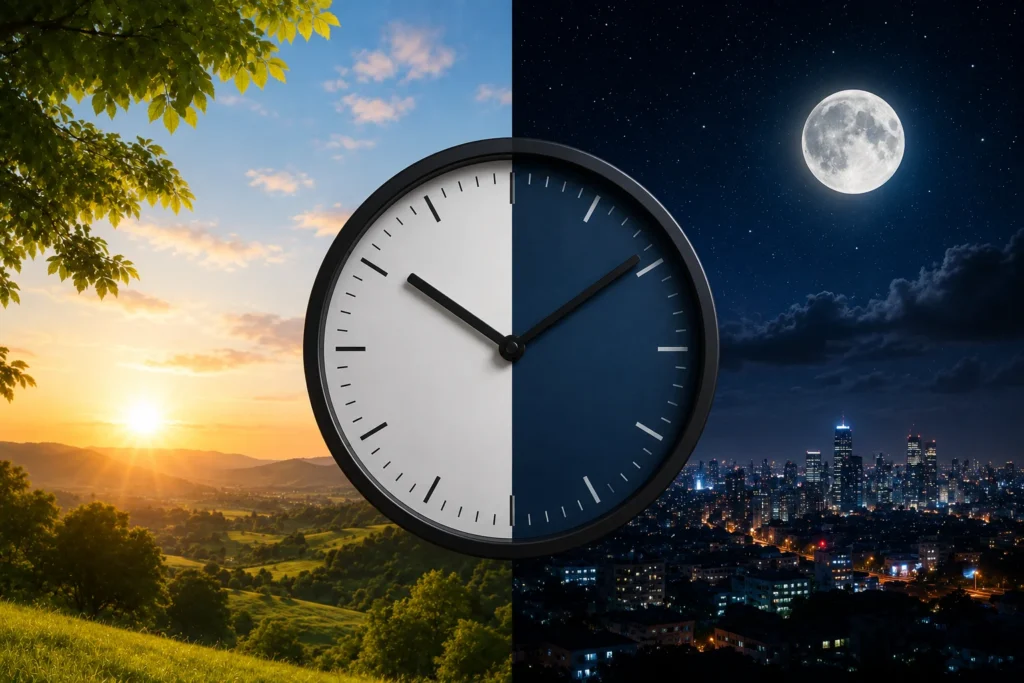
Whole Day vs. All Day: Meaning, Quick Difference, and Basic Usage
When English learners compare whole day vs. all day, the confusion usually comes from the fact that both phrases talk about a complete day. At first glance, they seem interchangeable. However, native speakers use them with slightly different purposes. The difference is not only about grammar. It is also about focus, emphasis, and the way you describe time.
The phrase “all day” usually describes an action, event, or situation that continues throughout the day. It focuses on the activity and shows that something happened during many hours. For example:
“I worked all day.”
This sentence tells the listener that work continued for most or all of the day. The focus is on the action of working.
On the other hand, “the whole day” focuses on the entire period of time. It highlights the day as one complete unit. For example:
“I spent the whole day organizing my house.”
Here, the speaker emphasizes that the complete day was used for organizing. The phrase creates a stronger feeling that the activity filled the entire day.
Understanding this small difference can make your English sound much more natural. Many learners translate expressions directly from their first language, but English often depends on patterns that native speakers use regularly.
What Does “All Day” Mean?
“All day” means from the beginning of the day until the end of the day or during a large part of the day. It describes something that happens continuously, repeatedly, or for an extended period.
The phrase does not always mean every single second of 24 hours. Instead, it usually means that something happened for a long time during normal waking hours.
For example:
- “She studied all day for her exam.”
- “The baby cried all day.”
- “I have been answering emails all day.”
- “It rained all day yesterday.”
In each example, the important point is the ongoing activity. The speaker wants to explain what continued over time.
The Grammar Pattern of “All Day”
The structure is simple:
Subject + verb + all day
Examples:
| Sentence | Meaning |
| I worked all day. | My work continued throughout the day. |
| They traveled all day. | Their travel lasted for many hours. |
| He complained all day. | His complaining continued repeatedly. |
| We waited all day. | The waiting lasted for a long period. |
Unlike some time expressions, “all day” does not need an article like “the.”
You say:
✅ “I was busy all day.”
❌ “I was busy the all day.”
This is one reason why many native speakers find “all day” easier and more natural in everyday conversations.
Why “All Day” Is Common in Everyday English

English speakers often prefer shorter expressions when the meaning is clear. “All day” is compact, familiar, and works smoothly in casual conversations.
Imagine someone asking:
“Where were you today?”
A natural answer would be:
“I was at work all day.”
Most speakers would not normally say:
“I was at work the whole day.”
The second sentence is grammatically possible, but it adds more emphasis. It sounds like the speaker wants to highlight how completely the day was occupied.
This difference appears often in daily conversations.
For example:
Casual conversation:
“I cleaned the house all day.”
The listener understands that cleaning took many hours.
Stronger emphasis:
“I spent the whole day cleaning the house.”
Now the speaker draws attention to the entire experience. It suggests that cleaning was the main event of the day.
What Does “The Whole Day” Mean?
“The whole day” means the complete day from start to finish. It emphasizes the total amount of time involved rather than only the activity.
The phrase often appears when someone wants to express:
- A strong feeling
- A complete experience
- A surprising amount of time
- A memorable event
For example:
“I waited for you the whole day.”
This sentence feels stronger than:
“I waited for you all day.”
Both sentences can be correct, but “the whole day” adds emotional weight. It suggests that the speaker wants you to notice the entire length of the waiting.
Another example:
“We spent the whole day at the beach.”
This creates an image of the entire day being dedicated to that experience.
The speaker is not only explaining duration. They are describing the day as a complete event.
Why “The” Matters in “The Whole Day”
A common mistake among English learners is saying:
“I stayed there whole day.”
Although people may understand the meaning, this sentence does not sound natural in standard English.
The better sentence is:
“I stayed there the whole day.”
The reason is grammar. The word “whole” usually comes before a singular countable noun with a determiner such as “the,” “my,” “this,” or “that.”
Examples:
✅ the whole day
✅ my whole day
✅ this whole week
✅ that whole year
Incorrect patterns:
❌ whole day
❌ whole week
❌ whole year
However, English has exceptions depending on the structure. For example:
- “Whole days were spent preparing for the event.”
Here, “whole days” works because it is plural and does not need the same article pattern.
Whole Day vs. All Day: The Main Difference
The easiest way to remember the difference is to think about action versus emphasis.
| Phrase | Main Focus | Example | Meaning |
| All day | Continuous action | I worked all day. | Work continued for many hours. |
| The whole day | Complete period | I spent the whole day working. | The entire day was dedicated to work. |
A simple memory trick:
All day = What happened for a long time?
The whole day = How much of the day was used?
For example:
“She talked on the phone all day.”
The focus is her talking.
“She spent the whole day on the phone.”
The focus is that the entire day disappeared into that activity.
Common Examples of “All Day” in Real Conversations
Native speakers use “all day” with many everyday verbs.
Work Examples
- “I’ve been in meetings all day.”
- “My manager has been busy all day.”
- “I worked on this project all day.”
School Examples
- “The students studied all day.”
- “I had classes all day.”
- “She prepared for the test all day.”
Daily Life Examples
- “The kids played outside all day.”
- “I cleaned all day.”
- “He watched movies all day.”
Weather Examples
- “It snowed all day.”
- “The sun was shining all day.”
- “It was windy all day.”
These examples show that “all day” naturally connects with actions, conditions, and repeated events.
Common Examples of “The Whole Day”
The phrase “the whole day” appears when speakers want to make the time period feel complete.
Examples:
- “I spent the whole day with my family.”
- “We walked around the city the whole day.”
- “She stayed home the whole day because she was sick.”
- “They discussed the problem the whole day.”
Notice how these sentences create a stronger picture. The phrase makes the day feel like a single experience.
Quick Rule for Choosing the Right Phrase
When you are unsure, use this guide:
| Situation | Better Choice |
| Talking casually | All day |
| Describing a continuous action | All day |
| Adding strong emphasis | The whole day |
| Highlighting the complete experience | The whole day |
| Everyday conversation | All day |
| Storytelling or emotional descriptions | The whole day |
Both expressions are useful. The choice depends on what you want your listener to notice.
If you want attention on the activity, choose “all day.” If you want attention on the complete stretch of time, choose “the whole day.” Learning this difference helps your English sound smoother because you begin choosing phrases the way native speakers naturally do.
Whole Day vs. All Day: Grammar Rules and When to Use Each
Understanding the Grammar Behind All Day and The Whole Day
When learning whole day vs. all day, grammar plays an important role because both phrases follow different patterns. Although they express similar ideas, English uses them in different ways. Understanding these patterns helps you avoid common mistakes and choose the phrase that sounds natural.
The phrase “all day” works as a time expression. It tells the listener how long an action continues. It does not describe the day as an object. Instead, it describes the duration of an activity.
Examples:
- “I worked all day.”
- “She practiced piano all day.”
- “They waited all day for the results.”
In these sentences, the focus stays on the action. The phrase answers the question:
How long did it happen?
The phrase “the whole day” works differently. It treats the day as a complete period. The speaker views the day as one full unit.
Examples:
- “I spent the whole day at the office.”
- “We stayed home the whole day.”
- “He was traveling the whole day.”
Here, the phrase answers a slightly different question:
How much of the day was involved?
This difference may seem small, but it changes the feeling of the sentence.
Why “All Day” Sounds More Natural
One reason “all day” sounds more natural is because English speakers use it constantly in everyday speech. It is short, flexible, and fits into many different sentence structures.
Native speakers often prefer simple expressions when the meaning is clear. Instead of describing the entire timeline of a day, they simply mention that something continued for a long time.
For example:
“I was busy all day.”
This sentence feels natural because the speaker only wants to explain their schedule.
Compare it with:
“I was busy the whole day.”
This is also correct, but it creates a stronger image. It suggests that the entire day was filled with activity and there was little or no free time.
The difference is similar to looking at a movie:
- All day focuses on the scenes happening throughout the movie.
- The whole day focuses on the fact that the entire movie was watched from beginning to end.
Both describe the same period, but the viewpoint changes.
When to Use All Day
Use “all day” when you talk about actions, habits, situations, or events that continue over time.
Use “All Day” for Continuous Actions
This is the most common use.
Examples:
- “She worked all day on the report.”
- “I cleaned the kitchen all day.”
- “The children played outside all day.”
The activity is the main focus. The listener understands that the action lasted for many hours.
Use “All Day” in Everyday Conversations
In casual conversations, “all day” usually sounds more relaxed and natural.
Example:
Friend: “What did you do today?”
Answer: “I studied all day.”
This response sounds normal because the speaker simply describes how they spent their time.
Another example:
Friend: “Why are you tired?”
Answer: “I was running errands all day.”
The phrase quickly communicates the reason without adding unnecessary detail.
Use “All Day” with Common Verbs
Certain verbs frequently appear with “all day.”
Common combinations include:
| Verb | Example |
| work | I worked all day. |
| wait | We waited all day. |
| study | She studied all day. |
| talk | They talked all day. |
| rain | It rained all day. |
| travel | He traveled all day. |
| search | I searched all day. |
These combinations sound natural because English speakers commonly describe repeated or ongoing activities this way.
When to Use The Whole Day
Use “the whole day” when you want to emphasize the complete amount of time.
The phrase often appears when the speaker wants the listener to understand that something took up the entire day.
Use It to Add Emphasis
Compare these examples:
“I waited all day.”
This gives duration information.
“I waited the whole day.”
This adds emotion. The speaker may feel frustrated, surprised, or disappointed.
The second sentence creates a stronger reaction because it highlights the complete experience.
More examples:
- “She spent the whole day preparing for the event.”
- “We searched the whole day for a solution.”
- “They talked about the problem the whole day.”
Use It When Describing Time Spent
When explaining how someone used their time, “the whole day” often works well.
Examples:
- “I spent the whole day organizing my files.”
- “He spent the whole day fixing his car.”
- “They spent the whole day exploring the city.”
The phrase makes the activity feel like the main event of the day.
Use It in Narrative Writing
Writers often choose “the whole day” because it creates a stronger story. It helps readers imagine a complete experience.
Example:
“The whole day felt different. The streets were quiet, the weather was perfect, and everyone enjoyed the festival.”
Here, the phrase does not only describe time. It creates a mood.
In personal stories, travel writing, and memories, “the whole day” can make descriptions feel more vivid.
Whole Day vs. Entire Day vs. Full Day
Many English learners also compare whole day, entire day, and full day. These phrases overlap, but each one has a different tone.
| Expression | Meaning | Common Use |
| All day | Throughout the day | Everyday actions |
| The whole day | The complete day | Emphasis and experiences |
| The entire day | The complete day | More formal writing |
| A full day | A complete amount of time | Schedules and planned activities |
All Day
“All day” sounds casual and conversational.
Example:
“I was busy all day.”
It focuses on ongoing activity.
The Whole Day
“The whole day” adds emotional or personal emphasis.
Example:
“I spent the whole day with my grandparents.”
It highlights the complete experience.
The Entire Day
“The entire day” sounds slightly more formal.
Examples:
- “The entire day was dedicated to training.”
- “The entire day was filled with meetings.”
You may see this phrase more often in reports, articles, or professional writing.
A Full Day
“A full day” usually refers to a complete schedule or amount of available time.
Examples:
- “We had a full day of activities.”
- “The workshop lasted a full day.”
It does not always mean something happened every moment. It often means the schedule was complete.
A Practical Comparison Example
Imagine someone visits a new city.
Using All Day:
“We walked around the city all day.”
The focus is on the activity of walking.
Using The Whole Day:
“We spent the whole day exploring the city.”
The focus is on the complete experience.
Using Entire Day:
“The entire day was dedicated to exploring the city.”
The tone sounds more formal.
Using Full Day:
“We planned a full day of sightseeing.”
The focus is on the schedule.
Each sentence is correct, but each phrase creates a different impression.
A Simple Decision Method
When choosing between all day vs. the whole day, ask yourself one question:
Am I talking about an action or the complete time period?
Choose all day if the action matters most:
- I worked all day.
- She studied all day.
- It rained all day.
Choose the whole day if the complete experience matters most:
- I spent the whole day at the beach.
- We stayed together the whole day.
- He dedicated the whole day to the project.
This small grammar choice can make a big difference in how natural your English sounds. Once you understand the focus behind each phrase, choosing the right one becomes much easier.
Whole Day vs. All Day Examples in Real-Life Situations
Using Whole Day vs. All Day in Everyday Conversations
The easiest way to understand whole day vs. all day is to see how people use these phrases in real situations. Grammar rules help, but real examples show how native speakers naturally choose one expression over another.
In daily conversations, “all day” appears more often because people usually talk about activities, routines, and things that continue for several hours. Meanwhile, “the whole day” appears when someone wants to emphasize the complete experience or show that something occupied their entire day.
For example:
“I watched TV all day.”
This tells us that watching TV continued for many hours.
“I spent the whole day watching TV.”
This creates a stronger picture. The speaker wants to highlight that the entire day was used for watching TV.
Both sentences are correct, but the focus changes.
A useful way to remember this difference:
- All day focuses on the activity.
- The whole day focuses on the complete time period.
Whole Day vs. All Day at Work
The workplace provides many examples where choosing the right phrase improves clarity.
People often use “all day” when describing busy schedules, repeated tasks, or ongoing responsibilities.
Examples:
- “I was answering emails all day.”
- “She attended meetings all day.”
- “The manager was working all day.”
- “We discussed the project all day.”
These sentences focus on the tasks that continued.
However, when someone wants to emphasize how much time they spent at work, “the whole day” can sound better.
Examples:
- “I spent the whole day preparing the presentation.”
- “He stayed at the office the whole day.”
- “The team worked on the problem the whole day.”
The second group creates a stronger impression that work filled the day.
Workplace Comparison Table
| Sentence | Main Focus | Feeling |
| I answered calls all day. | The activity continued. | Normal daily description |
| I spent the whole day answering calls. | The complete day was used. | Stronger emphasis |
| She attended meetings all day. | Repeated meetings. | Casual explanation |
| She spent the whole day in meetings. | Entire schedule was occupied. | Shows a very busy day |
In professional conversations, “all day” usually sounds more natural. However, “the whole day” works well when explaining workload, frustration, or a memorable situation.
Example:
“I was stuck in meetings all day.”
This sounds like a normal workplace complaint.
“I spent the whole day in meetings.”
This sounds stronger and suggests that meetings consumed the entire schedule.
Whole Day vs. All Day at School
Students and teachers often use these phrases when describing classes, studying, and school activities.
Examples Using “All Day”
- “I had classes all day.”
- “The students studied all day.”
- “She practiced for the competition all day.”
- “The teacher worked on lesson plans all day.”
These examples focus on actions that continued.
Examples Using “The Whole Day”
- “I spent the whole day studying for my exam.”
- “We stayed at school the whole day for the event.”
- “The students worked on the project the whole day.”
These sentences emphasize that the entire day was dedicated to one purpose.
Consider these two examples:
“I studied all day.”
This simply explains the activity.
“I studied the whole day.”
This sounds like the speaker wants to stress the amount of time spent studying.
Although both can communicate a similar idea, the second one carries more emotional weight. It may suggest tiredness, effort, or dedication.
Whole Day vs. All Day During Travel
Travel situations often create memorable experiences, which makes “the whole day” especially useful.
For everyday travel updates, people commonly say:
- “We traveled all day.”
- “We drove all day.”
- “We walked around all day.”
These sentences describe continuous movement.
However, when telling a story about a trip, people often choose:
- “We spent the whole day exploring the city.”
- “We spent the whole day at the beach.”
- “We spent the whole day visiting different places.”
The phrase “the whole day” helps create a picture of the experience.
Travel Example
Imagine someone describing a vacation:
“We walked around Paris all day.”
The listener understands that walking happened for many hours.
Now compare:
“We spent the whole day exploring Paris.”
This sounds more like a travel story. It highlights the complete adventure.
The difference is subtle, but it changes the emotional impact.
Whole Day vs. All Day at Home
Home situations are another common area where these phrases appear.
Examples with “all day”:
- “The baby slept all day.”
- “I cleaned the house all day.”
- “He played video games all day.”
- “She watched movies all day.”
These focus on activities.
Examples with “the whole day”:
- “We spent the whole day together.”
- “I stayed home the whole day.”
- “They relaxed the whole day.”
These focus on the experience or the complete period.
For example:
“I stayed home all day.”
This means you did not go out during the day.
“I stayed home the whole day.”
This emphasizes that the complete day was spent at home.
The difference is small, but the second sentence feels more intentional.
Whole Day vs. All Day in Family Life
Family conversations often use these phrases when describing special moments.
Examples:
- “We played games all day.”
- “The children laughed all day.”
- “Everyone talked all day.”
These sentences describe ongoing activities.
For stronger emotional meaning:
- “We spent the whole day celebrating my birthday.”
- “The whole day was filled with family activities.”
- “I enjoyed the whole day with my loved ones.”
Here, the speaker focuses on the complete experience rather than only the activity.
A Real-Life Case Study: Choosing Between All Day and The Whole Day
Imagine two friends discussing a weekend.
Friend A says:
“What did you do yesterday?”
Friend B replies:
“I cooked all day.”
This answer suggests that cooking was happening for many hours.
Now imagine Friend B says:
“I spent the whole day cooking.”
The listener receives a stronger message. Cooking was not just an activity. It completely occupied the day.
Another example:
“It rained all day.”
This is a weather report. It describes continuous rain.
“The whole day was rainy.”
This sounds more like a personal observation about the experience of the day.
The first sentence focuses on the weather event. The second focuses on the overall feeling of the day.
Common Patterns Native Speakers Follow
Native speakers often choose expressions automatically based on the situation.
They usually prefer:
All day + action
Examples:
- work all day
- study all day
- wait all day
- travel all day
- talk all day
They often prefer:
The whole day + experience or time spent
Examples:
- spend the whole day
- enjoy the whole day
- waste the whole day
- remember the whole day
- describe the whole day
These patterns are not strict rules, but they help English learners understand natural usage.
Quick Reference Table: Real-Life Usage
| Situation | Natural Choice | Example |
| Describing work activity | All day | I worked all day. |
| Explaining a busy schedule | The whole day | I spent the whole day at work. |
| Talking casually | All day | I studied all day. |
| Sharing a memorable event | The whole day | We enjoyed the whole day together. |
| Describing weather | All day | It rained all day. |
| Telling a story | The whole day | The whole day felt special. |
How Context Changes the Best Choice
The important thing to remember is that whole day vs. all day is not only a grammar question. It is a question of meaning and perspective.
If you want to tell someone what happened, “all day” often works best.
If you want someone to feel the importance of the time, “the whole day” is usually stronger.
For example:
“She smiled all day.”
This describes a continuous action.
“She smiled the whole day.”
This emphasizes that her happiness lasted through the entire day.
Both sentences are understandable. The difference comes from what the speaker wants the listener to notice.
Learning these small differences helps you move beyond basic grammar rules and develop a more natural understanding of English.
Whole Day vs. All Day: Common Mistakes and Simple Tricks to Choose the Right Phrase
Common Mistakes English Learners Make With Whole Day and All Day
Learning the difference between whole day vs. all day becomes easier when you understand the mistakes that many English learners make. Most errors happen because learners translate directly from their first language or assume that similar-looking phrases always work the same way in English.
English is not only about choosing correct words. It is also about choosing the expression that matches the situation and sounds natural to native speakers.
A sentence can be understandable but still feel unusual. For example:
❌ “I worked whole day.”
✅ “I worked all day.”
✅ “I worked the whole day.”
The first sentence has the right idea, but it misses an important grammar pattern. The better choice depends on the meaning you want to express.
Let’s look at the most common mistakes and how to avoid them.
Mistake 1: Forgetting “The” Before Whole Day
One of the most common problems is using “whole day” without an article.
Many learners write:
❌ “I stayed home whole day.”
A native speaker would usually say:
✅ “I stayed home the whole day.”
The reason is that “whole” usually comes before a singular countable noun with a determiner.
Examples:
| Incorrect | Correct |
| I waited whole day. | I waited the whole day. |
| She studied the whole day. | She studied the whole day. |
| We traveled the whole day. | We traveled the whole day. |
However, remember that “all day” does not need “the.”
Correct examples:
- I worked all day.
- She was busy all day.
- It rained all day.
This simple grammar difference solves many common mistakes.
Mistake 2: Using Whole Day in Every Sentence
Some learners discover “the whole day” and start using it everywhere. Although it is correct, it can sound unnatural when the situation only requires a simple duration expression.
Compare:
“I watched videos all day.”
This sounds like normal conversation.
Now:
“I watched videos the whole day.”
This is possible, but it gives extra emphasis. It sounds like the speaker wants to highlight that the entire day disappeared into that activity.
Native speakers usually choose the shorter option when they only want to describe duration.
Examples:
Natural:
- “He played football all day.”
- “She talked on the phone all day.”
- “They worked all day.”
More emphasized:
- “He spent the whole day playing football.”
- “She spent the whole day on the phone.”
- “They spent the whole day working.”
The phrase “spend the whole day” is especially common because it naturally connects with complete experiences.
Mistake 3: Translating Directly From Another Language
A major challenge for English learners is translating phrases word-for-word. Many languages have one expression that covers the meaning of both “all day” and “the whole day.”
English separates these ideas.
For example, a learner may think:
“My language uses one phrase for a complete day, so English must have one phrase too.”
However, English speakers consider the purpose behind the sentence.
Ask yourself:
- Am I describing an activity?
- Am I emphasizing the complete period?
If you describe an activity:
✅ “I studied all day.”
If you emphasize the entire experience:
✅ “I spent the whole day studying.”
The meaning overlaps, but the focus changes.
Mistake 4: Confusing Duration With Emphasis
This is one of the most important differences between all day and the whole day.
Duration answers:
“How long did something happen?”
Emphasis answers:
“How important or complete was that time period?”
Compare:
“The children played outside all day.”
The sentence focuses on the activity.
“The children spent the whole day outside.”
The sentence focuses on the complete amount of time.
Both sentences describe a similar situation, but the listener receives a different message.
Quick Comparison
| Expression | Main Idea | Example |
| All day | An activity continued | I worked all day. |
| The whole day | The entire time was used | I spent the whole day working. |
Simple Tricks to Remember the Difference
Remembering grammar rules can feel difficult, but a few simple tricks make whole day vs. all day much easier.
Think About the Focus
The fastest method is to ask:
What am I focusing on?
If the focus is the activity, choose all day.
Examples:
- I practiced all day.
- She cooked all day.
- He drove all day.
If the focus is the complete experience, choose the whole day.
Examples:
- I spent the whole day cooking.
- We enjoyed the whole day together.
- They stayed there the whole day.
A helpful image:
All day is like watching a clock while something happens.
The whole day is like looking at the entire calendar page.
One focuses on the action. The other focuses on the complete time period.
Another Helpful Shortcut
You can use this quick rule:
Choose “All Day” for Activities
Common combinations:
- work all day
- study all day
- wait all day
- talk all day
- travel all day
- rain all day
Examples:
“I answered questions all day.”
“It snowed all day.”
Choose “The Whole Day” for Experiences
Common combinations:
- spend the whole day
- enjoy the whole day
- remember the whole day
- waste the whole day
- describe the whole day
Examples:
“We spent the whole day exploring the city.”
“I remember the whole day clearly.”
These patterns appear frequently in natural English.
Whole Day vs. All Day: A Memory Formula
A simple formula:
All day = Action + Time
Examples:
- She worked + all day.
- They traveled + all day.
- He waited + all day.
The whole day = Complete Experience
Examples:
- She spent the whole day at home.
- They enjoyed the whole day together.
- He dedicated the whole day to learning.
This formula does not replace understanding, but it gives you a quick guide when speaking or writing.
Why Context Matters More Than Rules
Grammar rules are useful, but real communication depends on context. Two sentences can both be grammatically correct while creating different impressions.
Example:
“I stayed at the office all day.”
This sounds like a simple update.
“I stayed at the office the whole day.”
This sounds like the speaker wants to emphasize that the office took up their entire day.
The second sentence may suggest:
- The day felt long.
- The person had no free time.
- The situation was unusual.
The phrase changes the emotional meaning.
A Practical Checklist Before Choosing a Phrase
Before writing or speaking, ask:
| Question | Use |
| Am I describing something that continued? | All day |
| Am I talking casually? | All day |
| Do I want to emphasize the entire period? | The whole day |
| Am I telling a personal story? | The whole day |
| Am I describing a schedule or activity? | All day |
| Am I highlighting a memorable experience? | The whole day |
Expert Tip for Natural English
A useful way to improve your understanding is to listen for patterns instead of memorizing isolated rules.
Notice how native speakers naturally combine words:
- “I’ve been working all day.”
- “I spent the whole day with my family.”
- “It has been raining all day.”
- “The whole day was amazing.”
Over time, these patterns become familiar. You stop translating and start choosing phrases naturally.
The goal is not only to know that both expressions are correct. The goal is to understand why a speaker chooses one over the other. Once you recognize the difference between activity and emphasis, using whole day vs. all day becomes much simpler.
Whole Day vs. All Day: Comparison Guide, Practice, and Writing Tips
Whole Day vs. All Day: Quick Comparison Guide
Understanding whole day vs. all day becomes much easier when you compare their meanings side by side. Both expressions describe time, but they create different impressions. One focuses more on an ongoing activity, while the other highlights the complete experience of a day.
| Phrase | Meaning | Main Focus | Common Use | Example |
| All day | Throughout the day | Activity or action | Everyday conversations | I worked all day. |
| The whole day | The complete day | Entire experience | Emphasis and storytelling | I spent the whole day working. |
| The entire day | The complete period | Formal emphasis | Professional writing | The entire day was dedicated to training. |
| A full day | A complete amount of time | Schedule or duration | Plans and events | We had a full day of activities. |
The easiest distinction is simple:
All day describes what continues.
The whole day describes what fills the entire period.
For example:
“She studied all day.”
The sentence focuses on the studying activity.
“She spent the whole day studying.”
The sentence focuses on how completely studying occupied her day.
Both sentences communicate a similar idea, but the second one gives the listener a stronger sense of time.
Whole Day vs. All Day at a Glance
Here is a quick guide you can remember:
| If you want to say… | Use… | Example |
| Something continued for many hours | All day | It rained all day. |
| An activity happened repeatedly | All day | He talked all day. |
| Someone used the entire day for something | The whole day | She spent the whole day cleaning. |
| You want stronger emphasis | The whole day | I waited the whole day for your call. |
| You are speaking casually | All day | I was busy all day. |
| You are describing a memory or experience | The whole day | The whole day felt special. |
This comparison shows why native speakers often choose “all day” in normal conversations. It is shorter and usually communicates the meaning clearly.
However, “the whole day” has a special role. It adds weight to the sentence and makes the listener pay attention to the complete time period.
Practice Quiz: Test Your Understanding
The best way to master whole day vs. all day is to practice choosing the phrase based on context.
Fill in the blanks with:
- all day
- the whole day
Fill in the Blank
- I was working ______ because we had an important deadline.
- We spent ______ exploring the museum.
- It snowed ______ yesterday.
- She stayed at home ______ because she was feeling sick.
- They talked about the project ______.
- I enjoyed ______ with my family.
- He waited ______ for the package to arrive.
- We spent ______ preparing for the event.
Answer Key
- I was working all day because we had an important deadline.
- We spent the whole day exploring the museum.
- It snowed all day yesterday.
- She stayed at home the whole day because she was feeling sick.
- They talked about the project all day.
- I enjoyed the whole day with my family.
- He waited all day for the package to arrive.
- We spent the whole day preparing for the event.
Notice the pattern:
When the sentence highlights an activity, all day often fits naturally.
When the sentence highlights a complete experience, the whole day often sounds stronger.
Writing Tips for Using Whole Day and All Day Naturally
Choosing the right phrase can improve both speaking and writing. Small differences in time expressions can change how natural your English feels.
Use “All Day” for Simple Updates
In everyday writing, messages, and conversations, “all day” is usually the better choice.
Examples:
- “I’ve been working all day.”
- “The store was busy all day.”
- “She answered questions all day.”
These sentences are direct and easy to understand.
Use “The Whole Day” for Stronger Descriptions
When writing stories, personal experiences, or detailed descriptions, “the whole day” can create more impact.
Examples:
- “The whole day felt like a dream.”
- “We spent the whole day walking along the coast.”
- “The whole day was filled with laughter.”
This phrase helps readers imagine the complete experience.
Real-Life Writing Examples
Casual Message
Natural:
“Sorry I didn’t reply. I was busy all day.”
This sounds like a normal text message.
More emotional:
“Sorry I didn’t reply. I spent the whole day dealing with problems.”
This gives more detail and shows that the day was completely occupied.
Travel Story
Simple:
“We traveled all day.”
This explains the activity.
Descriptive:
“We spent the whole day traveling through small towns and discovering new places.”
This creates a stronger image for the reader.
Personal Memory
Simple:
“We talked all day.”
Descriptive:
“We spent the whole day talking about old memories.”
The second sentence feels more personal because it highlights the complete experience.
Case Study: How a Small Change Improves Meaning
Imagine someone writing about a family gathering.
Original sentence:
“We celebrated all day.”
This is correct. It tells readers that the celebration continued for many hours.
Improved sentence:
“We spent the whole day celebrating together.”
This version creates a warmer feeling. It shows that the entire day was dedicated to family, connection, and memories.
Another example:
Original:
“I worked all day on my project.”
Meaning: The work continued for many hours.
Alternative:
“I spent the whole day working on my project.”
Meaning: The project filled my day.
Neither sentence is wrong. The difference is the level of emphasis.
Common Questions About Whole Day vs. All Day
Is “Whole Day” Correct Without “The”?
Usually, no. In standard English, “the whole day” sounds more natural.
Correct:
- I stayed there the whole day.
- We waited the whole day.
Less natural:
- I stayed there whole day.
- We waited whole day.
Is “All Day” More Common Than “The Whole Day”?
Yes. In everyday conversation, native speakers usually choose “all day” because it is shorter and more common.
Examples:
- “I was busy all day.”
- “I worked all day.”
- “It rained all day.”
Can They Mean the Same Thing?
Sometimes, yes.
Example:
“I studied all day.”
“I studied the whole day.”
Both can mean that studying continued for a long time.
However, the second sentence places more attention on the complete length of time.
Final Writing Reminder
When deciding between whole day vs. all day, do not only look at grammar. Think about the message you want to send.
Choose all day when you describe an activity, routine, or event that continues.
Choose the whole day when you want to emphasize the complete experience, the amount of time spent, or the importance of that period.
A natural English speaker does not simply memorize the rule. They understand the feeling behind the phrase. Once you recognize whether your sentence focuses on the action or the entire day, choosing the right expression becomes much easier.
Conclusion About Whole Day or All Day – Which Is Correct?
Choosing between whole day vs. all day becomes much easier once you understand the focus behind each phrase. “All day” is the natural choice when you describe an activity that continues over time, such as working, studying, traveling, or waiting. “The whole day” works best when you want to emphasize the complete experience or show that something filled an entire day. Both expressions are correct, but they create slightly different feelings. English becomes more natural when you choose words based on meaning instead of direct translation. By paying attention to context, you can confidently use these phrases in conversations, writing, and everyday situations. Whether you are learning English or improving your communication skills, understanding this small difference can make your sentences sound clearer, smoother, and more like a native speaker.
FAQs
Is “whole day” grammatically correct in English?
“Whole day” is usually not natural when used alone in standard English. Most speakers say “the whole day” because the singular noun “day” normally needs an article before “whole.” However, “whole” can work differently in some plural structures.
What is the difference between all day and the whole day?
“All day” focuses on an activity continuing throughout the day, while “the whole day” emphasizes the complete period of time. Both can describe a similar situation, but the second phrase adds more focus and importance to the entire day.
Can I use whole day instead of all day?
Sometimes you can, but they are not always interchangeable. “All day” sounds more natural for everyday actions, while “the whole day” adds emphasis. Choosing the right phrase depends on whether you want to highlight the action or the complete experience.
Which phrase is more common: all day or the whole day?
“All day” is more common in casual English conversations because it is shorter and easier to use. Native speakers often choose it when they simply want to describe something that continued for many hours.
Should I say I worked all day or I worked the whole day?
Both sentences are correct, but they have slightly different meanings. “I worked all day” simply describes a long period of work. “I worked the whole day” emphasizes that the entire day was spent working.
Is all day used only for actions?
No, “all day” can describe actions, events, weather, and conditions. For example, people say “It rained all day,” “I felt tired all day,” and “She talked all day.” It describes something that continues over time.
When should I use the whole day?
Use “the whole day” when you want to highlight the complete amount of time spent on something. It works well for personal experiences, storytelling, emotional situations, and moments where the entire day feels important.
Are whole day and entire day the same?
“Whole day” and “entire day” have similar meanings, but “entire day” sounds more formal. “The whole day” is common in everyday speech, while “the entire day” often appears in professional writing or formal explanations.
What is the easiest way to remember all day vs. whole day?
Think about the focus. Use “all day” when the activity matters most. Use “the whole day” when the complete time period matters most. This simple idea helps you choose the natural phrase quickly.
Do Americans and British speakers use all day and whole day differently?
Both American and British English use these phrases in similar ways. “All day” is common in both varieties, while “the whole day” is used when speakers want stronger emphasis or a more descriptive tone.
Meta description:
Learn whole day vs all day with clear examples, grammar tips, and simple rules to use each phrase naturally in English conversations and writing.