
Extensible vs Extendible – What’s the Difference?
Choosing between extensible and extendible can be surprisingly difficult. At first glance, they seem like interchangeable words because both come from the verb extend. Yet in modern English, especially in technical writing and professional communication, each word has developed its own preferred use. Picking the right one makes your writing more accurate, whether you’re discussing software architecture, engineering, product design, or everyday objects.
This guide explains the difference in plain English. You’ll learn what each word means, where it’s commonly used, and why professionals often favor one over the other. Along the way, you’ll find practical examples, easy memory tricks, and real-world comparisons that make these commonly confused words much easier to remember.
What Is the Difference Between Extensible and Extendible?
The simplest way to understand these two words is to focus on how something grows.
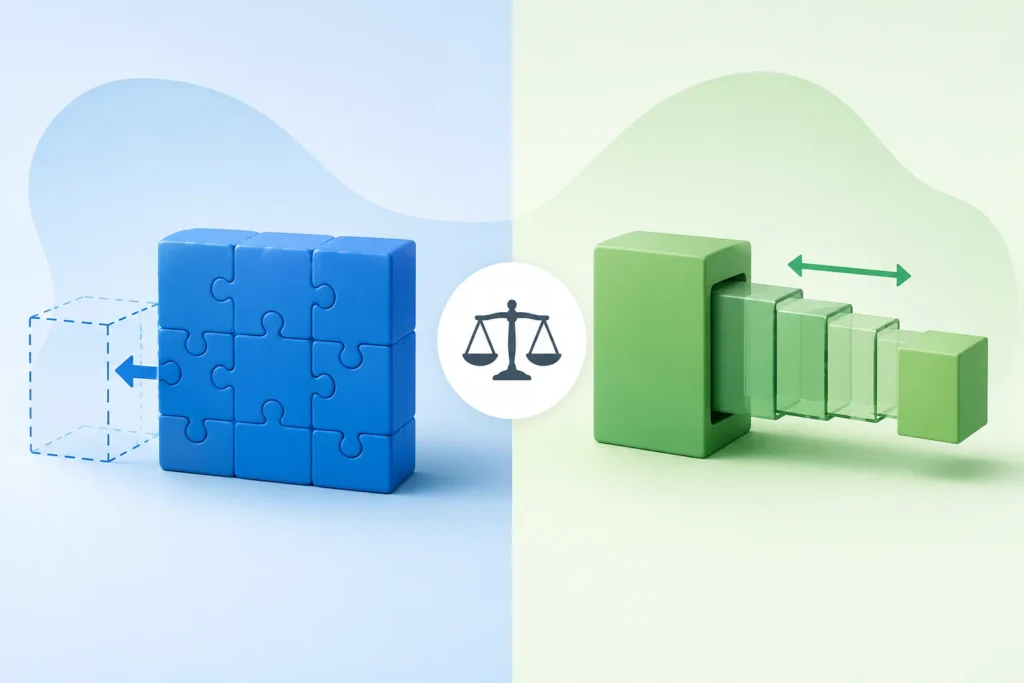
An extensible system grows by adding new functions or capabilities. It becomes more powerful without changing its original foundation. This meaning appears most often in software development, programming, engineering, and system design.
An extendible object grows by increasing its physical length or size. It performs the same job but stretches, expands, or reaches farther when needed. You’ll usually encounter this word when talking about furniture, tools, equipment, or other physical products.
Although dictionaries recognize both spellings, professional writers usually select the one that best matches the context instead of treating them as perfect synonyms.
The Simple Difference
Here’s a quick comparison.
| Word | Primary Meaning | Common Context | Example |
| Extensible | Can gain new features or functions | Software, technology, systems | An extensible platform supports plugins. |
| Extendible | Can become longer or larger | Physical products and objects | An extendible ladder reaches higher places. |
If you’re talking about new functionality, choose extensible.
If you’re talking about physical expansion, choose extendible.
That single distinction answers most questions people have about these words.
Why Do People Mix Up Extensible and Extendible?
The confusion starts with their shared origin.
Both adjectives come from the verb extend, so they naturally look and sound alike. Since English contains many words that have more than one accepted spelling or ending, it’s reasonable to assume these words always mean the same thing.
Real-world usage tells a different story.
Over the years, technical industries adopted extensible as the standard term for software and digital systems. Meanwhile, manufacturers, retailers, and product designers continued using extendible to describe objects that physically expand.
Because both words remain valid, dictionaries rarely mark either as incorrect. Instead, context determines which choice sounds natural.
For example:
- A developer creates an extensible framework that supports future plugins.
- A homeowner buys an extendible dining table for holiday gatherings.
- A cloud platform uses an extensible architecture to support third-party integrations.
- A photographer carries an extendible tripod that adjusts to different heights.
Each example uses the word readers expect in that specific situation.
Are Both Words Correct?
Yes. Both extensible and extendible are accepted English words.
The important question isn’t whether one is correct. Instead, ask which word communicates your meaning more clearly.
In technical writing, extensible dominates because software doesn’t physically stretch. Instead, developers add modules, APIs, extensions, plugins, or integrations that increase functionality.
For physical products, extendible feels more natural because the object literally becomes longer, wider, or larger.
Choosing the preferred term improves clarity and helps your writing match industry standards.
Quick Comparison Table
| Feature | Extensible | Extendible |
| Accepted English word | ✔ | ✔ |
| Common in software | ✔ | Rare |
| Used in programming | ✔ | Rare |
| Describes physical objects | Sometimes | ✔ |
| Refers to added functionality | ✔ | ✖ |
| Refers to physical length | Rare | ✔ |
| Frequently used in engineering. | ✔ | Sometimes |
| Common in product descriptions | Rare | ✔ |
Instead of asking which spelling is better, think about what you’re describing. That usually leads you to the correct choice immediately.
Extensible vs Extendible at a Glance
A side-by-side comparison makes the distinction much easier to remember.
Although both words suggest the idea of extending something, they describe two different kinds of growth.
Extensible focuses on capability.
An extensible product can accept new features without redesigning the entire system. Software developers rely on extensible architecture because it allows applications to evolve. Businesses also benefit since future improvements become easier and less expensive.
Extendible, by contrast, focuses on size.
An extendible object changes its physical dimensions. It doesn’t gain new abilities. Instead, it provides extra reach, length, or space whenever needed.
Imagine these everyday situations.
You install a plugin that adds a new payment option to an eCommerce platform. The platform is extensible because its functionality has expanded.
Later that evening, you pull out an extendible dining table to seat extra guests. The table performs the same function as before, but now it offers more space.
These examples highlight the essential difference between the two words.
Side-by-Side Comparison
| Category | Extensible | Extendible |
| Type of growth | Functional | Physical |
| Primary purpose | Add capabilities | Increase size |
| Common field | Software and technology | Manufacturing and consumer products |
| Typical examples | APIs, frameworks, CMS platforms | Tables, ladders, poles, hoses |
| Main benefit | Flexibility | Adjustable dimensions |
| Long-term value | Future expansion | Extra reach or capacity |
Easy Memory Trick
A simple memory trick can help you remember the difference every time.
Think of the letter F in features whenever you see extensible. If something gains new features, it is extensible.
Now think of the letter L in length whenever you see extendible. If something becomes longer, wider, or larger, it is extendible.
Here’s another quick shortcut:
| Ask Yourself | Correct Word |
| Does it gain new functionality? | Extensible |
| Does it become physically larger? | Extendible |
This approach works in almost every real-world example, whether you’re reading technical documentation, shopping for furniture, or writing professional content.
Once you connect extensible with functionality and extendible with physical expansion, choosing the right word becomes almost effortless.
What Does Extensible Mean?
The word extensible describes something that can grow by adding new features, functions, or capabilities without changing its original structure. Instead of rebuilding the entire system, you expand what already exists. That’s why this word appears so often in software development, engineering, and technology.
Think of an extensible product as a solid foundation. You can keep building on it over time without starting from scratch. This approach saves time, reduces costs, and makes future improvements much easier.
For example, many content management systems allow developers to install plugins that add new features. The core software remains the same, yet its capabilities continue to grow. That is the essence of an extensible system.
Simple Definition
An extensible system, application, or product is designed so new functionality can be added later without affecting its core operation.
Rather than replacing existing components, you simply extend them.
Key Characteristics of Extensible Systems
An extensible system usually has these qualities:
- Accepts new features without major redesign.
- Supports plugins, modules, or extensions.
- Makes future updates easier.
- Encourages customization.
- Reduces long-term maintenance costs.
- Improves scalability.
- Allows third-party integrations.
These characteristics explain why extensibility has become one of the most important design principles in modern software engineering.
Common Examples of Extensible Systems
| Example | Why It’s Extensible |
| Content Management Systems | Add plugins and themes without changing the core system. |
| E-commerce Platforms | Install payment gateways, shipping tools, and marketing extensions. |
| Web Browsers | Support thousands of browser extensions. |
| Development Frameworks | Developers can create custom packages and modules. |
| Enterprise Software | New business functions can be integrated as companies grow. |
Although these examples come from different industries, they all share one thing: they’re designed for future growth.
Why Businesses Prefer Extensible Solutions
Businesses rarely stay the same for long. Customer needs change. Technology evolves. New regulations appear. A rigid system quickly becomes outdated.
An extensible platform solves this problem by allowing organizations to add new capabilities whenever they need them.
Imagine opening a small online store.
At first, you only need basic checkout functionality. A year later, customers ask for digital wallets, loyalty rewards, multilingual support, and inventory automation. Instead of replacing the entire platform, you simply add compatible extensions.
That flexibility saves both money and development time.
Real-World Example
Suppose a company launches a customer support platform.
Initially, the software includes:
- Email support
- Ticket management
- User accounts
As the company grows, developers add:
- Live chat
- AI assistants
- Customer analytics
- Video support
- CRM integration
The original platform still works exactly as before. It simply becomes more capable through additional functionality.
That’s extensibility in action.
Why Developers Value Extensibility

Software developers constantly think about future changes.
If every new feature required rebuilding an application, development would become slow, expensive, and difficult to maintain.
Instead, they design software so future improvements fit naturally into the existing architecture.
Some major advantages include:
| Benefit | Explanation |
| Faster development | New features require less coding. |
| Lower costs | Existing code remains useful. |
| Better maintenance | Smaller updates reduce risk. |
| Improved scalability | Applications grow with user demand. |
| Easier collaboration | Different teams can build independent modules. |
Because of these benefits, extensibility has become a standard goal in software architecture.
What Does Extendible Mean?
Unlike extensible, the word extendible usually refers to something that physically becomes longer, larger, or reaches farther.
Instead of gaining new functions, the object changes its size while continuing to perform the same purpose.
You’ll commonly see this word in product descriptions, manufacturing, engineering, and everyday conversations.
Simple Definition
An extendible object can be lengthened, expanded, or adjusted to increase its physical dimensions.
The object’s purpose doesn’t change. Only its size does.
Common Examples
Many household products are extendible because they adapt to different situations.
Some familiar examples include:
- Extendible dining tables
- Extendible ladders
- Extendible curtain rods
- Extendible poles
- Extendible selfie sticks
- Extendible garden hoses
- Extendible measuring tools
Each product performs the same task before and after extension.
How Extendible Products Work
Most extendible products rely on simple mechanical designs.
They often include:
- Sliding sections
- Folding components
- Telescopic tubes
- Locking mechanisms
- Expandable frames
These features allow users to increase the object’s length or size without replacing it.
Everyday Example
Imagine hosting a family dinner.
Your dining table comfortably seats four people on a normal day.
When guests arrive, you unlock the hidden extension panels and increase the table’s length to seat eight.
Nothing about the table’s purpose changes.
It simply becomes larger.
That’s exactly what extendible means.
Common Industries That Use Extendible Products
Extendible designs appear in many industries.
| Industry | Examples |
| Furniture | Dining tables, desks, shelving |
| Construction | Ladders, support poles |
| Photography | Tripods, boom poles |
| Gardening | Water hoses, pruning tools |
| Home Improvement | Curtain rods, paint rollers |
| Camping | Folding tables, adjustable poles |
These products solve practical problems by adapting to different situations.
Why People Like Extendible Designs
Space matters.
A product that changes size gives users more flexibility without taking up additional room.
For example:
- A compact ladder is easier to store.
- An extendible table saves dining space.
- An extendible pole reaches high ceilings safely.
- An adjustable curtain rod fits different window sizes.
Instead of buying multiple products, one extendible design handles several tasks.
Extensible vs Extendible in Everyday Language
Although many people casually use these words interchangeably, choosing the right one improves clarity.
Consider these examples.
Notice how the first two examples describe new capabilities, while the last two describe physical expansion.
Once you focus on functionality versus size, the difference becomes much easier to recognize in both writing and conversation.
Extensible vs Extendible: The Key Differences Explained
Now that you understand the meaning of each word, it’s time to compare them side by side. Although both come from the verb extend, they describe two very different kinds of growth. One focuses on adding capabilities, while the other refers to increasing physical size. Knowing this distinction helps you choose the correct word in technical documents, business writing, product descriptions, and everyday conversations.
Meaning Comparison
The easiest way to separate these words is to ask one simple question:
Is the thing becoming more capable or simply becoming larger?
If it gains new features or functionality, extensible is the correct choice.
If it becomes longer, wider, or physically larger, extendible is usually the better option.
| Comparison | Extensible | Extendible |
| Main idea | Adds functionality | Adds physical size |
| Type of growth | Functional | Physical |
| Most common field | Technology | Everyday products |
| Purpose | Future expansion | Adjustable dimensions |
| Typical users | Developers, engineers | Manufacturers, consumers |
This comparison solves the majority of real-world situations.
Functional Growth vs Physical Growth
One way to remember the distinction is to picture two different kinds of expansion.
A software platform starts with basic reporting features. Later, developers add dashboards, payment integrations, customer analytics, and automation tools. The application hasn’t become physically larger. Instead, it has become more useful. That makes it extensible.
Now picture a telescopic ladder.
When you unlock it, the ladder extends several feet higher. It doesn’t gain new abilities. It simply reaches farther. That’s an extensible ladder.
Although both examples involve extension, the type of growth is completely different.
Practical Comparison
| Situation | Correct Word | Reason |
| A plugin system | Extensible | Adds new functionality |
| A modular framework | Extensible | Supports future features |
| A dining table | Extendible | Expands physically |
| A curtain rod | Extendible | Changes length |
| An API | Extensible | Allows new integrations |
| A measuring pole | Extendible | Extends its reach |
Looking at examples instead of definitions often makes the difference much easier to understand.
When Should You Use Extensible?
Use extensible whenever you’re describing something that can evolve by adding new functions, components, or services.
The original system remains intact while new capabilities are added over time.
That’s why you’ll encounter this word throughout the technology industry.
Software Development
Software rarely stays the same after release.
Developers continue adding features based on customer feedback, security improvements, and business needs.
Instead of rewriting the entire application, they extend existing functionality.
Examples include:
- Installing plugins
- Adding custom modules
- Connecting external services
- Building new APIs
- Creating third-party integrations
Each improvement increases functionality without replacing the original system.
Programming Frameworks
Modern programming frameworks are designed with extensibility in mind.
Developers can write additional packages that work alongside the core framework.
For example:
- Authentication packages
- Payment modules
- Search libraries
- Image optimization tools
- Reporting dashboards
This modular approach allows projects to grow as requirements change.
APIs and Integrations
Application Programming Interfaces (APIs) are another excellent example.
Businesses often connect their software with:
- Payment providers
- Email platforms
- CRM systems
- Marketing tools
- Shipping services
- Cloud storage
Each new integration expands what the application can do.
That makes the software extensible, not extendible.
Enterprise Systems
Large organizations depend on extensible software because their needs constantly evolve.
A company may initially require:
- Customer records
- Employee management
- Financial reporting
As the business grows, it can add:
- Inventory management
- Human resources tools
- Artificial intelligence
- Business intelligence dashboards
- Customer support automation
The software adapts without requiring a complete replacement.
Benefits of Extensible Design
Organizations invest in extensible systems because they provide long-term advantages.
| Benefit | Why It Matters |
| Flexibility | Adapts to changing business needs |
| Scalability | Supports future growth |
| Lower costs | Reduces redevelopment expenses |
| Faster innovation | New features arrive more quickly |
| Better customization | Businesses tailor software to their workflow |
| Longer lifespan | Core systems remain useful for years |
These benefits explain why extensibility has become a standard design principle across modern software development.
When Should You Use Extendible?
While extensible belongs mostly to the digital world, extendible is commonly used for physical objects.
If something changes its size while keeping the same purpose, extendible is usually the correct word.
Furniture
Furniture manufacturers frequently describe products as extendible because they adapt to different living spaces.
Examples include:
- Extendible dining tables
- Extendible desks
- Extendible shelving
- Extendible bed frames
These products save space while offering extra capacity when needed.
Construction Equipment
Construction workers often use tools designed for different working heights.
Examples include:
- Extendible ladders
- Extendible poles
- Extendible paint rollers
- Extendible support beams
Rather than buying multiple sizes, one adjustable tool handles many jobs.
Household Products
Many everyday items become more useful because they can expand.
Common examples include:
- Curtain rods
- Closet organizers
- Garden hoses
- Vacuum cleaner handles
- Window cleaning poles
Their function never changes. Only their dimensions do.
Outdoor and Sports Equipment
Camping and outdoor gear often includes extendible designs for easier storage and transportation.
Examples:
- Trekking poles
- Fishing rods
- Camping tables
- Flag poles
- Tent supports
These products remain compact during travel and expand when they’re needed.
Advantages of Extendible Products
Physical expansion offers several practical benefits.
| Advantage | Example |
| Saves storage space | Folded ladder |
| Improves portability | Collapsible poles |
| Fits different situations | Adjustable table |
| Reduces replacement costs | One product serves multiple purposes |
| Increases convenience | Easier transportation |
Because people value flexibility in everyday products, extensible designs continue to grow in popularity across many industries.
Real-World Examples of Extensible vs Extendible
Sometimes the easiest way to remember a concept is by seeing it in everyday situations.
Technology Example
An online learning platform launches with video lessons and quizzes.
Months later, developers add:
- Live classes
- Certificates
- AI tutoring
- Discussion forums
- Mobile synchronization
The platform becomes extensible because its functionality expands over time.
Home Example
A family purchases an extendible dining table.
Most days it seats six people.
During holiday dinners, hidden panels slide out to accommodate ten guests.
The table doesn’t gain new features.
It simply becomes larger.
Business Example
A retail company installs accounting software.
As operations expand, the business connects payroll, inventory management, tax reporting, customer analytics, and shipping tools.
The software grows through new capabilities rather than physical changes.
This is another example of an extensible system.
Workshop Example
A mechanic uses an extendible inspection mirror to reach difficult areas inside an engine.
The mirror performs the same task throughout the repair.
Its handle simply extends to improve access.
That makes it extendible.
These real-world examples show that once you identify the type of growth—functional or physical—choosing the correct word becomes straightforward.
Extensible vs Extendable vs Extendible
Another reason people struggle with these words is the presence of a third term: extendable. While extendible and extendable often describe the same idea, extensible has developed a more specialized meaning, especially in technology.
In everyday English, many people use extendable and extendible interchangeably when referring to objects that can become longer or larger. Product descriptions, online stores, and manufacturers frequently prefer extendable, while some technical documents and dictionaries still use extendible.
Extensible, however, usually isn’t interchangeable with either word in software or engineering because it emphasizes the ability to add new functionality rather than simply increasing size.
Are Extendable and Extendible the Same?
For most everyday situations, yes.
Both words describe objects that can physically expand.
Examples include:
- Extendable dining table
- Extendible dining table
- Extendable ladder
- Extendible ladder
- Extendable curtain rod
- Extendible curtain rod
Most readers will understand either version.
However, consistency matters. If you’re writing for a business, publication, or client, follow its preferred style guide.
Which Spelling Is More Common?
Usage often depends on the industry.
| Word | Most Common Use |
| Extensible | Software, programming, engineering |
| Extendable | Consumer products, retail, furniture |
| Extendible | Manufacturing, engineering, technical descriptions |
Although extendable appears more frequently in everyday writing, extendible remains a correct spelling recognized by major dictionaries.
Style Guide Recommendations
Professional writing benefits from choosing the word your audience expects.
A software engineer will naturally understand phrases like:
- Extensible framework
- Extensible architecture
- Extensible platform
- Extensible API
Meanwhile, shoppers are more likely to search for:
- Extendable dining table
- Extendable ladder
- Extendable curtain rod
Understanding your audience helps you select the most natural wording.
Why Extensible Dominates Technical Writing
Technology changes rapidly.
Applications that can’t grow quickly become outdated, which is why developers prioritize extensibility from the beginning of a project.
Instead of rebuilding software every time new requirements appear, engineers create systems that support future additions.
This approach reduces costs while improving flexibility.
Plugin-Based Architecture
Many modern applications use plugin systems.
The core application remains relatively small, while optional components provide extra functionality.
Popular examples include:
- Content management systems
- Code editors
- Web browsers
- Graphic design software
- E-commerce platforms
Users install only the features they need.
This keeps the software efficient while allowing unlimited growth.
API-Driven Development
Modern software rarely works alone.
Businesses connect applications through APIs that exchange information automatically.
Common integrations include:
- Payment gateways
- Shipping providers
- CRM platforms
- Marketing automation
- Accounting software
- Cloud storage
Each integration expands the application’s capabilities without changing its core structure.
That is a perfect example of extensibility.
Modular Development
Large software projects are usually divided into modules.
Instead of placing every feature inside one enormous program, developers organize functionality into independent components.
Advantages include:
- Easier maintenance
- Faster testing
- Better teamwork
- Simpler updates
- Reduced development risk
Because modules work together while remaining independent, extensible software continues evolving for years.
Why Extensible Designs Remain Popular
Physical products also benefit from thoughtful design.
Instead of purchasing multiple versions of the same item, consumers often prefer one product that adjusts to different situations.
That’s where extendible designs excel.
Saving Space
Many homes have limited storage.
An extendible product occupies less room when it’s not in use but expands whenever additional capacity is needed.
Examples include:
- Dining tables
- Folding desks
- Closet organizers
- Garden tools
This flexibility makes everyday life much more convenient.
Improving Portability
Portable equipment often uses telescopic or sliding mechanisms.
Examples include:
- Camera tripods
- Microphone stands
- Trekking poles
- Fishing rods
- Flag poles
These products remain compact during transportation and extend only when needed.
Supporting Multiple Uses
One extendible product often replaces several fixed-size alternatives.
For example:
| Product | Adjustable Benefit |
| Ladder | Reaches different heights |
| Paint roller | Cleans high walls and ceilings |
| Curtain rod | Fits multiple window sizes |
| Garden hose | Covers larger outdoor areas |
| Dining table | Seats more guests |
This versatility reduces costs while improving convenience.
Common Mistakes People Make
Even experienced writers occasionally confuse these words.
Most mistakes happen because people focus on the shared root word instead of the intended meaning.
Mistake One: Using Extensible for Physical Objects
Incorrect:
We bought an extensible ladder for roof repairs.
Better:
We bought an extendible ladder for roof repairs.
The ladder changes its length rather than gaining new functionality.
Mistake Two: Using Extendible for Software
Incorrect:
Our company created an extendible API.
Better:
Our company created an extensible API.
The API grows through additional integrations, not physical expansion.
Mistake Three: Assuming They’re Always Interchangeable
Although dictionaries recognize both words, context matters.
Professional readers expect:
- Extensible software
- Extensible architecture
- Extensible framework
They also expect:
- Extendible furniture
- Extendible tools
- Extendible equipment
Matching industry expectations improves clarity and credibility.
Mistake Four: Ignoring Your Audience
Technical documentation should use industry-standard terminology.
Marketing content should use language familiar to customers.
Choosing words that fit your readers creates a better experience and avoids unnecessary confusion.
Memory Tricks to Never Forget the Difference
Simple memory techniques make these words much easier to remember.
Think About Features
Ask yourself:
Does it gain new features?
If the answer is yes, choose extensible.
Examples include:
- Software
- Applications
- Platforms
- APIs
- Frameworks
Think About Length
Now ask:
Does it become physically longer?
If yes, choose extendible.
Examples include:
- Tables
- Ladders
- Curtain rods
- Poles
- Hoses
Visual Memory Method
Imagine two pictures.
In the first image, a software dashboard gains new buttons, reports, and tools.
That’s extensible.
In the second image, a ladder slides upward until it reaches a roof.
That’s extendible.
Your brain naturally remembers pictures better than definitions, making this technique surprisingly effective.
One Simple Rule
If something becomes more capable, use extensible.
If something becomes physically larger, use extendible.
That single rule solves nearly every real-world writing situation.
Etymology and Word History
Understanding where these words came from makes their modern usage much easier to remember. Although extensible and extendible share the same origin, their meanings gradually shifted as different industries adopted them for different purposes.
Both words trace back to the Latin verb extendere, which means “to stretch out,” “spread,” or “lengthen.” Over time, English borrowed the verb extend, and later formed the adjectives extensible and extendible.
Originally, both adjectives simply described something that could be extended. As technology advanced, software engineers began using extensible almost exclusively to describe systems that could grow through added functionality. Manufacturers and product designers, meanwhile, continued using extendible (and increasingly extendable) for products that physically expand.
Today, the distinction is driven more by common usage than by strict grammar.
Evolution of Their Meanings
| Time Period | Common Meaning |
| Early English | Both words meant “capable of being extended.” |
| Industrial Era | Frequently used for mechanical and physical objects. |
| Modern Computing | Extensible became the preferred technical term. |
| Present Day | Extendible is still widely used for physical products, while extensible dominates technology. |
Language evolves because people use words differently over time. These two terms are a good example of that natural process.
Why Context Matters More Than Dictionary Definitions
If you check several dictionaries, you’ll notice that both words are considered correct. However, dictionaries describe how words are used rather than telling professionals which term fits every situation.
For example, software documentation almost always refers to:
- Extensible architecture
- Extensible applications
- Extensible frameworks
- Extensible programming interfaces
On the other hand, product catalogs commonly advertise:
- Extendible dining tables
- Extendible ladders
- Extendible poles
- Extendible tools
Using the word your audience expects makes your writing clearer and more professional.
Extensible Design Principles
One reason extensible has become such an important word is that it reflects a core principle of modern software design. Instead of building rigid systems that require complete rewrites, developers create applications that can adapt as technology and user needs change.
This philosophy saves time, lowers costs, and extends the life of software.
Build for Future Growth
An extensible application doesn’t try to include every feature on day one. Instead, it provides a strong foundation that supports future enhancements.
For example, an online booking platform may initially offer:
- User registration
- Appointment scheduling
- Email confirmations
As demand grows, developers can introduce:
- SMS reminders
- Calendar synchronization
- Online payments
- Customer reviews
- AI-powered scheduling
Each new feature expands the platform without disrupting its core functionality.
Modular Architecture
Modern software often follows a modular structure.
Rather than placing every feature into one large codebase, developers separate functionality into smaller, independent components.
Benefits of this approach include:
- Easier updates
- Faster testing
- Better collaboration
- Improved maintainability
- Reduced development risk
A modular design naturally supports extensibility because new modules can be added as requirements evolve.
Scalability and Long-Term Value
Businesses rarely remain the same.
Customer expectations change, markets expand, and technology advances. Extensible systems allow organizations to respond without replacing their entire infrastructure.
Some long-term advantages include:
| Advantage | Business Impact |
| Faster feature releases | Better customer satisfaction |
| Lower maintenance costs | Improved return on investment |
| Easier integrations | Greater operational efficiency |
| Flexible customization | Supports changing business goals |
| Longer software lifespan | Delays expensive replacements |
Organizations that invest in extensible platforms often find it easier to innovate over time.
Extendible Design in Everyday Products
While software grows through new capabilities, physical products improve through thoughtful engineering. Extendible designs allow one item to serve multiple purposes while saving space and improving convenience.
Furniture That Adapts to Your Needs
Many homes don’t have unlimited space. Extendible furniture solves this challenge by adjusting to different situations.
Common examples include:
- Dining tables that expand for guests
- Adjustable desks for workspaces
- Extendible shelving units
- Expandable bed frames
These products remain compact when extra space isn’t needed, yet they can quickly adapt for larger groups or changing layouts.
Tools Built for Flexibility
Professionals often rely on extendible equipment because it reduces the need to carry multiple tools.
Examples include:
- Telescopic ladders
- Adjustable paint rollers
- Inspection mirrors
- Window-cleaning poles
- Measuring rods
A single extendible tool can handle a wide range of tasks, making work more efficient and reducing storage requirements.
Why Consumers Prefer Extendible Products
Extendible products remain popular because they offer practical advantages.
- They save storage space.
- They adapt to different environments.
- They reduce the need for duplicate items.
- They improve portability.
- They provide greater value over time.
Whether you’re furnishing a home or selecting professional equipment, flexibility is often a deciding factor.
Choosing the Right Word in Real Writing
Knowing the definitions is helpful, but applying them correctly is what truly improves your writing. Before choosing between extensible and extendible, take a moment to think about what is actually changing.
If something gains new capabilities, functions, integrations, or modules, extensible is almost always the right choice.
If something becomes longer, wider, larger, or physically adjustable, extendible usually fits better.
Ask Yourself These Questions
Use these quick questions whenever you’re unsure:
- Is the subject software, programming, or technology?
- Is something gaining new functionality?
- Is the object physically increasing in size?
- Would a technical audience expect a specific term?
- Does the word match industry-standard usage?
The answers will usually point you toward the correct choice.
Quick Decision Table
| Question | Choose |
| Does it add new features? | Extensible |
| Does it support plugins or modules? | Extensible |
| Does it connect with other systems? | Extensible |
| Does it physically become longer? | Extendible |
| Does it expand to create more space? | Extendible |
| Does it adjust its dimensions? | Extendible |
This simple checklist eliminates most uncertainty.
Final Thoughts Before You Write
Although extensible and extendible originate from the same root word, modern English has given each one a distinct role. Extensible has become the standard choice for software, technology, and systems that grow by adding functionality. Extendible is generally preferred for physical objects that expand in length or size.
Remember one simple idea whenever you’re writing:
- Functionality grows → Extensible
- Physical size grows → Extendible
Keeping this distinction in mind will help you communicate more clearly, match professional writing standards, and choose the word your readers naturally expect.
Conclusion About Extensible vs Extendible – What’s the Difference?
Understanding the difference between extensible and extendible helps you communicate with greater accuracy and confidence. While both words come from the same root, they are commonly used in different contexts. Extensible usually describes software, systems, or frameworks that can grow by adding new features or functionality. Extendible, on the other hand, is most often used for physical objects that can become longer or larger. Choosing the right word makes your writing clearer and more professional, whether you’re creating technical documentation, product descriptions, or everyday content. A simple way to remember the distinction is to think about function versus size. If something gains new capabilities, it’s extensible. If it physically expands, it’s extendible. With this easy rule in mind, you’ll avoid common mistakes and use both terms correctly in almost any situation.
FAQs
Is extensible a real English word?
Yes, extensible is a standard English word recognized by major dictionaries. It is commonly used in technology, software development, and engineering to describe systems that can be expanded by adding new features or functionality without changing their core structure.
Is extendible the same as extensible?
Not exactly. Although both words relate to the idea of extension, extensible usually refers to adding functionality, while extendible typically refers to physical expansion, such as making an object longer or larger.
Which word is more common in software development?
Extensible is the preferred term in software development. Developers use it to describe applications, frameworks, APIs, and platforms that support plugins, modules, or future enhancements without requiring major redesigns.
Can I use extendible when talking about software?
It’s generally better not to. In technical writing, extensible is the accepted industry term because software grows through added capabilities rather than physical expansion. Using the standard term improves clarity and professionalism.
Is extendible grammatically correct?
Yes, extendible is grammatically correct and appears in major dictionaries. It is commonly used to describe products or objects that can physically extend, such as ladders, tables, poles, and other adjustable equipment.
What is an extensible system?
An extensible system is designed to accept new features, integrations, or modules without changing its core architecture. This flexibility makes it easier to update, customize, and scale as requirements evolve.
What are some examples of extendible objects?
Common examples include extendible dining tables, ladders, curtain rods, selfie sticks, telescopic poles, garden hoses, and measuring tools. These products become physically larger while continuing to perform the same function.
Is extendable different from extendible?
In most everyday situations, extendable and extendible have the same meaning and are often used interchangeably. However, extendable is generally more common in consumer products, while extendible appears more often in technical or engineering contexts.
How can I remember the difference between extensible and extendible?
A simple memory trick is to think of features and length. If something gains new features, choose extensible. If something becomes physically longer or larger, choose extendible.
Why does choosing the correct word matter?
Using the correct word improves readability, avoids confusion, and helps your writing match professional standards. It also makes technical documents, product descriptions, and business communication more accurate and trustworthy.
Meta Description
Learn the difference between Extensible vs Extendible with clear examples, simple meanings, and expert tips for correct usage today.