

Is It Correct to Say “Absolutely True”?
TITLE: Is It Correct to Say “Absolutely True”? Learn the grammar, meaning, examples, common mistakes, and better alternatives with confidence.
Have you ever paused after hearing someone say “absolutely true” and wondered if the phrase is actually correct? Since true already means something is factual, adding absolutely may seem unnecessary at first. Yet you’ll hear this expression in everyday conversations, business meetings, news reports, books, and even academic discussions. So, is it grammatically correct, or is it simply a common habit? The answer is more interesting than many people expect. Understanding how English uses emphasis, intensifiers, and context will help you decide when this phrase improves your writing and when a simpler choice works better.
Is “Absolutely True” Grammatically Correct?
Yes. Absolutely true is grammatically correct in modern English. The word absolutely is an adverb, and it modifies the adjective true. English grammar allows adverbs to strengthen adjectives, especially when speakers want to express certainty or confidence. While some style experts point out that true already represents an absolute idea, grammar itself does not prohibit this combination. Instead, it recognizes that language often uses emphasis to make communication clearer and more expressive.
The Short Answer
If someone asks, “Is it correct to say absolutely true?” the answer is yes. Native speakers use the phrase naturally because it reinforces certainty rather than changing the definition of true. In most situations, readers and listeners immediately understand that the speaker wants to emphasize complete confidence in the statement.
Why Native Speakers Commonly Use It
English is not built on strict logic alone. It also reflects emotion, confidence, and conversation. That is why native speakers frequently use intensifiers such as:
- Absolutely
- Completely
- Entirely
- Perfectly
- Totally
- Fully
These words help communicate conviction. Compare these two replies:
“That’s true.”
Now compare it with:
“That’s absolutely true.”
Both sentences are correct. The second simply sounds stronger because it leaves little room for doubt.
Quick Grammar Facts
| Grammar Point | Explanation |
| Absolutely | Adverb |
| True | Adjective |
| Grammatically correct | Yes |
| Common in spoken English | Yes |
| Common in formal writing | Sometimes |
| Purpose | Adds emphasis and certainty |
What Does “Absolutely True” Mean?
The phrase absolutely true means completely true, entirely accurate, or true without any doubt. Although the literal meaning of true does not change, absolutely tells the listener how strongly the speaker believes the statement.
For example:
- “Everything in the witness statement is absolutely true.”
- “Your observation is absolutely true.”
- “That historical fact is absolutely true according to the available evidence.”
In every example, the phrase conveys confidence rather than introducing a new definition.
Breaking Down the Meaning of “Absolutely”
The word absolutely means:
- Completely
- Entirely
- Without exception
- Beyond doubt
- Without limitation
As an adverb, it strengthens another word instead of standing alone.
Examples include:
- “She is certain.”
- “The instructions are absolutely clear.”
- “The results are absolutely correct.”
Understanding the Meaning of “True”
The adjective true describes something that is:
- Factually correct
- Accurate
- Honest
- Genuine
- Not false
People commonly use true when discussing facts, reports, statements, historical events, research findings, and personal experiences supported by evidence.
How the Two Words Work Together
When you combine “absolutely” with “true,” you create a phrase that emphasizes certainty. The speaker is not suggesting that something is “more true” than another fact. Instead, the phrase signals complete confidence in what is being said.
Think of it this way:
- True tells you the statement is correct.
- Absolutely true tells you the speaker does not doubt that it is correct.
That subtle difference explains why the expression remains popular across many forms of communication.
A Real-World Example
Imagine two coworkers discussing a customer survey.
Employee: “Customers are happier with the new support system.”
Manager: “That’s absolutely true. Satisfaction scores increased by 22% after the update.”
The manager first expresses confidence and then supports the claim with evidence. This combination makes the response persuasive without sounding unnatural.
Is “Absolutely True” Redundant?
This question creates one of the biggest debates in English grammar.
Some people argue that absolutely true is redundant because something is either true or false. According to this view, absolutely adds no factual information.
However, everyday English does not always follow strict logical rules. Speakers often use intensifiers to express confidence, emotion, or emphasis rather than to change literal meaning.
Why Some People Think It Is Redundant
Traditional grammar focuses on precision. From a purely logical perspective, true already represents an absolute condition. If something is true, adding another word should not make it “more true.”
That reasoning sounds sensible, especially in technical writing where unnecessary words should be removed.
Why Most Grammar Experts Accept It
Modern linguistics looks beyond strict logic. It studies how people actually communicate.
In real conversations, speakers often strengthen statements to make their intentions clear. Expressions such as absolutely right, completely satisfied, clear, and totally different appear every day because they sound natural and help listeners understand the speaker’s confidence.
For that reason, most modern grammar references consider absolutely true acceptable when used naturally.
Emphasis vs. Repetition in English
English frequently uses emphasis to improve communication.
Consider these familiar expressions:
| Expression | Purpose |
| Absolutely right | Strong agreement |
| Completely certain | Reinforces confidence |
| Clear | Removes uncertainty |
| Entirely accurate | Highlights precision |
| Absolutely true | Emphasizes certainty |
Although each adjective already has a strong meaning, the added adverb communicates the speaker’s attitude rather than changing the dictionary definition.
The Practical Reality
Language changes because people change the way they speak. If millions of educated native speakers consistently use an expression correctly and readers understand its meaning immediately, the phrase becomes part of standard usage.
That is exactly what has happened with absolutely true. It appears naturally in interviews, books, presentations, classrooms, business discussions, and everyday conversations because it helps people communicate confidence efficiently.
How “Absolutely” Functions in English Grammar
Understanding the grammar behind absolutely true makes the phrase much easier to evaluate.
The word absolutely belongs to a group of words known as adverbs. Their primary job is to modify verbs, adjectives, other adverbs, or even entire sentences. In this phrase, absolutely modifies the adjective true, increasing its force without changing its core meaning.
“Absolutely” as an Adverb
Adverbs answer questions such as:
- How?
- To what extent?
- In what way?
In these examples, absolutely answers the question “to what extent?”
- The answer is absolutely correct.
- She is certain.
- The evidence is absolutely convincing.
The pattern follows standard English grammar and appears in countless everyday expressions.
How Adverbs Modify Adjectives
Adverbs often strengthen adjectives.
Examples include:
- Deeply grateful
- Highly successful
- Perfectly reasonable
- Completely honest
- Entirely possible
- Absolutely true
Each adverb adds emphasis rather than replacing the adjective.
Why “True” Can Be Intensified
Some grammar learners believe true cannot be intensified because it represents an absolute concept.
In practice, language does not always behave that way.
Speakers use intensifiers to communicate certainty, emotion, confidence, and emphasis. The phrase works because listeners understand the speaker’s intention immediately. Communication succeeds, which is ultimately the goal of language.
Common Intensifiers Used With “True”
Besides absolutely, you may also see:
- Completely true
- Entirely true
- Perfectly true
- Certainly true
- Quite true
- Undeniably true
- Unquestionably true
- Factually true
Each alternative carries a slightly different tone. Some sound more formal, while others fit casual conversation better.
Mini Case Study: Everyday Speech
A university instructor asked students whether online collaboration improved learning.
One student replied:
“That is absolutely true because our group completed projects faster after using shared documents.”
Notice what happened. The phrase introduced confidence, while the explanation supplied evidence. Together they created a stronger and more persuasive statement than simply saying, “That is true.”
Key Takeaways So Far
- Absolutely true is grammatically correct.
- Absolutely functions as an adverb that modifies the adjective true.
- The phrase emphasizes certainty instead of changing the meaning of true.
- Most modern grammar experts accept the expression.
- Some style guides recommend avoiding unnecessary intensifiers in highly formal or technical writing.
- Context determines whether the phrase improves clarity or creates unnecessary emphasis.
When Should You Use “Absolutely True”?
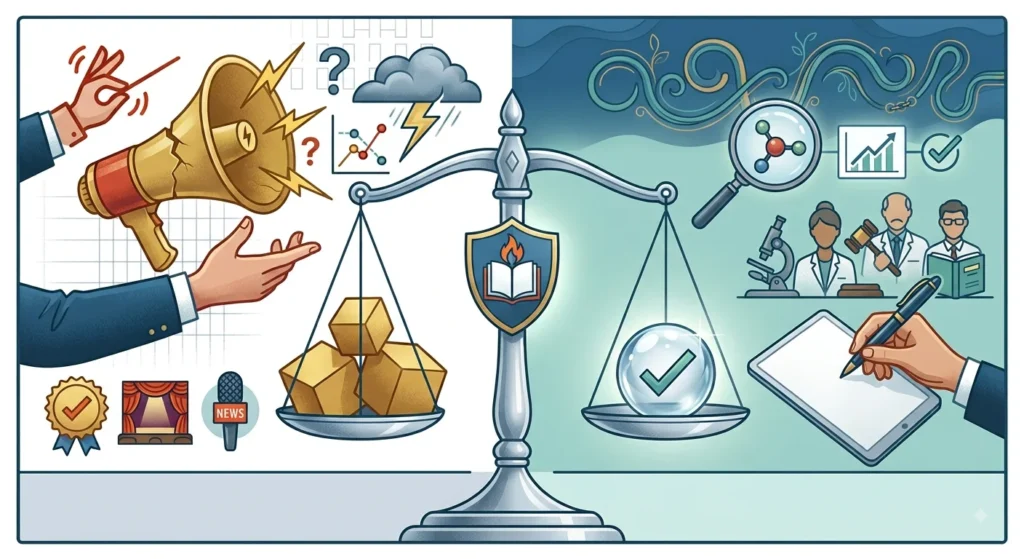
Although absolutely true is grammatically correct, it doesn’t belong in every sentence. The best writers choose words based on purpose, audience, and context. When used thoughtfully, this phrase adds confidence and clarity. When overused, it can weaken your message.
The key is knowing when emphasis genuinely helps the reader.
Confirming Facts
One of the most common uses of absolutely true is confirming information that is supported by reliable evidence. In these situations, the phrase reassures the listener that the statement is accurate.
Examples include:
- “The report is absolutely true according to the official records.”
- “Everything the witness described is absolutely true.”
- “The research findings are absolutely true based on the available data.”
Notice that each statement is backed by evidence. The phrase reinforces confidence without replacing proof.
Expressing Strong Agreement
People often use absolutely true when they strongly agree with someone else’s opinion or observation.
For example:
“Exercise improves both physical and mental health.”
A natural response would be:
“That’s absolutely true.”
This sounds warmer and more convincing than simply replying, “That’s true.”
Emphasizing Certainty
Sometimes a speaker wants to remove any uncertainty.
Imagine discussing travel safety with a friend.
One person says:
“Planning makes international travel much easier.”
The reply might be:
“That’s absolutely true. It saves both time and money.”
Here, the phrase signals complete confidence before adding an explanation.
Responding to Statements and Opinions
English speakers regularly use absolutely true during conversations because it keeps communication friendly while showing agreement.
Common situations include:
- Workplace discussions
- Classroom conversations
- Interviews
- Public speaking
- Family conversations
- Podcasts
- Business meetings
Rather than sounding robotic, the phrase feels conversational when used naturally.
Situations Where the Phrase Works Best
The expression works especially well when you want to:
- Reinforce a fact.
- Show complete agreement.
- Strengthen an important point.
- Confirm accurate information.
- Respond confidently in conversation.
- Support a statement before presenting evidence.
Examples of “Absolutely True” in Sentences
Seeing the phrase in different contexts makes it easier to understand how naturally it fits into modern English.
Everyday Conversation Examples
People use absolutely true most often during casual conversations.
Examples:
- “That’s absolutely true. I’ve had the same experience.”
- “Your advice is absolutely true, and it helped me a lot.”
- “Everything she said was absolutely true.”
The wording feels natural because everyday speech often includes intensifiers.
Professional Writing Examples
Business communication usually values clarity. Even so, there are situations where absolutely true works well.
Examples:
- “The client’s feedback is absolutely true, and we should address these concerns.”
- “Your observation is absolutely true, which is why we recommend updating the process.”
- “The audit confirms that the statement is absolutely true.”
Professional writing should still avoid unnecessary repetition. Use emphasis only when it serves a purpose.
Academic and Educational Examples
Academic writing generally favors precise language, but instructors and students still use the phrase in discussions.
Examples:
- “That conclusion is absolutely true based on the experimental results.”
- “The historical evidence makes this statement absolutely true.”
In formal research papers, many writers simply choose accurate, supported, or factually correct instead.
Journalism and Media Examples
Journalists typically let evidence speak for itself. However, interviews and quotations often contain absolutely true because they reflect natural speech.
Example:
“Everything in the documentary is absolutely true,” the historian explained.
The phrase accurately represents the speaker’s confidence.
Examples by Tone
| Tone | Example |
| Casual | “That’s absolutely true!” |
| Professional | “Your assessment is absolutely true.” |
| Educational | “The conclusion appears absolutely true based on the evidence.” |
| Conversational | “That’s absolutely true, and I’ve seen it happen.” |
| Persuasive | “The statement is absolutely true, as the data clearly shows.” |
When “Absolutely True” May Sound Unnecessary
Although the phrase is correct, good writing also values balance.
Adding emphasis to every statement eventually reduces its impact.
Situations Where “True” Alone Is Enough
Sometimes true already communicates everything your reader needs.
Instead of writing:
“It is absolutely true that water freezes at 32°F (0°C).”
Simply writing:
“It is true that water freezes at 32°F (0°C).”
works just as well because the scientific fact already speaks for itself.
Avoiding Overemphasis
Many beginning writers believe stronger words automatically create stronger writing.
The opposite is often true.
Consider this paragraph:
“The results are absolutely true. The report is absolutely accurate. The findings are absolutely clear.”
Repeating intensifiers makes the writing feel exaggerated.
A better version is:
“The results are accurate. The report clearly explains the findings, and the evidence supports every conclusion.”
The second version sounds more confident because the facts do the work.
Writing With Precision
Professional writing should prioritize precision over dramatic language.
Instead of relying on emphasis, consider using evidence.
For example:
Instead of:
“The conclusion is absolutely true.”
Try:
“The conclusion is supported by five independent studies.”
Specific information creates stronger credibility than repeated intensifiers.
A Practical Example
Imagine writing a product review.
Weak version:
“This software is absolutely amazing, absolutely useful, and absolutely perfect.”
Better version:
“The software reduced processing time by 35%, simplified reporting, and eliminated several manual tasks.”
Readers trust measurable results more than emotional emphasis.
A Useful Rule
A simple guideline is:
- Use absolutely true when you want to emphasize certainty.
- Use true when emphasis adds no value.
- Let evidence support important claims whenever possible.
Alternatives to “Absolutely True”
English offers many alternatives that communicate similar ideas while matching different writing styles and tones.
Choosing the right expression depends on your audience.
Completely True
This alternative sounds natural in both speech and writing.
Example:
“Everything you explained is completely true.”
Entirely True
Entirely true feels slightly more formal.
Example:
“The witness provided an entirely true account.”
Certainly True
This phrase sounds polite and measured.
Example:
“That observation is certainly true.”
Undeniably True
Use this expression when evidence leaves little room for disagreement.
Example:
“The benefits are undeniably true.”
Unquestionably True
This option emphasizes overwhelming certainty.
Example:
“The historical records make this claim unquestionably true.”
Factually Correct
Many professional writers prefer factually correct because it focuses on evidence rather than emotion.
Example:
“The statement is factually correct.”
Comparison Table of Alternatives
| Alternative | Formality | Best Use |
| Completely true | Medium | Everyday writing |
| Entirely true | Formal | Business communication |
| Certainly true | Medium | Professional discussions |
| Undeniably true | Formal | Evidence-based arguments |
| Unquestionably true | Formal | Strong conclusions |
| Factually correct | Very formal | Academic and technical writing |
Which Alternative Should You Choose?
Use this quick guide:
| Goal | Best Choice |
| Casual conversation | Absolutely true |
| Workplace communication | Completely true or Certainly true |
| Academic writing | Factually correct |
| Journalism | Supported by evidence or Factually correct |
| Persuasive writing | Undeniably true |
Choosing the right phrase isn’t about finding one expression that’s always better. It’s about selecting the wording that best fits your audience, purpose, and level of formality. Strong writing depends on clarity, evidence, and thoughtful word choice—not simply stronger adjectives or adverbs.
“Absolutely True” vs. Similar Expressions
Many English phrases appear to have the same meaning as absolutely true, but each carries its own nuance. Choosing the right expression depends on whether you’re emphasizing truth, agreement, accuracy, or certainty.
Understanding these differences will help you sound more natural in both speech and writing.
Absolutely True vs. Absolutely Right
Although people often use these expressions interchangeably, they are not identical.
Absolutely true focuses on whether a statement is factually correct.
Absolutely right focuses on whether a person is correct in what they said or did.
For example:
Absolutely true
“Everything in the report is absolutely true.”
The emphasis is on the accuracy of the information.
Absolutely right
“You’re absolutely right about the deadline.”
The emphasis is on agreeing with another person’s opinion or statement.
| Phrase | Main Focus | Best Used For |
| Absolutely true | Truth, facts | Statements, evidence, reports |
| Absolutely right | Agreement | Conversations, opinions, advice |
Absolutely True vs. Completely True
These expressions are extremely close in meaning.
However, completely true often sounds slightly more neutral, while absolutely true sounds stronger and more conversational.
Examples:
- “That’s completely true.”
- “That’s absolutely true.”
Both are correct, but the second usually carries more emotional emphasis.
Absolutely True vs. Certainly True
Certainly true sounds more measured and formal.
You might hear it during presentations, interviews, or professional discussions.
Example:
“That observation is certainly true, although more research is needed.”
This wording leaves room for further discussion while still agreeing.
Absolutely True vs. Undoubtedly True
Undoubtedly true places greater emphasis on evidence.
Example:
“The historical records make this claim undoubtedly true.”
This expression often appears in academic writing, historical analysis, and formal reports.
Absolutely True vs. Factually Correct
Although both expressions refer to accuracy, factually correct is usually the better choice when discussing research, science, law, or technical subjects.
Compare these examples:
“The statement is absolutely true.”
“The statement is factually correct according to the latest census data.”
The second sentence sounds more objective because it points readers toward evidence instead of relying on emphasis.
Quick Comparison Table
| Expression | Tone | Best Context |
| Absolutely true | Conversational | Everyday speech |
| Completely true | Neutral | General writing |
| Certainly true | Professional | Business communication |
| Undoubtedly true | Formal | Evidence-based discussion |
| Factually correct | Technical | Academic and scientific writing |
| Absolutely right | Agreement | Conversations and opinions |
Is “Absolutely True” Appropriate in Formal Writing?
Many writers assume the phrase should never appear in formal documents. That isn’t entirely accurate.
Whether absolutely true belongs in formal writing depends on the document’s purpose and audience.
Business Communication
Business writing values clarity, professionalism, and credibility.
The phrase can work well when responding to comments or acknowledging valid observations.
Example:
“Your assessment is absolutely true, and the management team has already begun addressing the issue.”
However, reports often become stronger when they include supporting evidence instead of relying solely on emphasis.
Better example:
“Your assessment is supported by customer feedback collected during the past six months.”
Academic Writing
Academic writing places evidence above emotion.
Because of this, researchers usually avoid unnecessary intensifiers.
Instead of writing:
“This conclusion is absolutely true.”
Most academic authors prefer:
- The findings support this conclusion.
- The evidence confirms the hypothesis.
- The results demonstrate consistent accuracy.
These alternatives sound more objective and align with scholarly writing standards.
Journalism and Reporting
Journalists strive for neutrality.
Rather than declaring something absolutely true, reporters usually attribute statements to reliable sources.
Example:
“Court documents confirm the allegations.”
This approach lets evidence speak for itself.
When journalists quote someone directly, they preserve the speaker’s original wording.
Example:
“Everything I said is absolutely true,” the witness stated.
Legal Writing
Legal professionals generally avoid emotional intensifiers.
Instead of saying a claim is absolutely true, legal documents rely on:
- Verified evidence
- Sworn testimony
- Official records
- Documented facts
Precision matters far more than emphasis.
Casual and Informal Communication
This is where absolutely true feels most natural.
You’ll hear it in:
- Family discussions
- Friendly debates
- Podcasts
- Interviews
- Social media
- Television shows
- Everyday conversations
Because the goal is conversation rather than technical precision, the phrase sounds perfectly normal.
Quick Decision Guide
| Situation | Recommended? | Better Alternative (if needed) |
| Casual conversation | ✅ Yes | Absolutely true |
| Business email | ✅ Sometimes | Completely true |
| Academic paper | ❌ Usually no | Factually correct |
| Research article | ❌ No | Supported by evidence |
| News reporting | ⚠ Rarely | According to verified sources |
| Legal document | ❌ No | Verified or documented |
Common Mistakes Related to “Absolutely True”
Even though the phrase is correct, writers sometimes misuse it.
Avoiding these mistakes will make your writing stronger and more credible.
Overusing Intensifiers
Words like absolutely, totally, completely, and perfectly lose their impact when they appear too often.
Poor example:
“The report is absolutely true, the data is absolutely correct, and the conclusion is certain.”
Improved version:
“The report is accurate, the data is reliable, and the conclusion is supported by strong evidence.”
The second example feels more professional because each sentence contributes new information.
Treating Opinions as Facts
One common mistake is presenting personal opinions as though they were proven facts.
Incorrect:
“My favorite movie is absolutely true.”
The sentence doesn’t make sense because preferences cannot be true or false.
Correct:
“Everything described in the documentary is absolutely true.”
Facts and opinions serve different purposes, so use the phrase only when discussing claims that can be verified.
Using Certainty Without Evidence
Confidence should never replace proof.
Instead of saying:
“This theory is absolutely true.”
Consider writing:
“Several independent studies support this theory.”
Evidence builds trust far more effectively than strong wording alone.
Ignoring Context
Language changes depending on where it’s used.
A phrase that sounds natural during a conversation may sound unnecessary in a research paper.
Always consider:
- Your audience
- Your purpose
- The level of formality
- The available evidence
Matching your language to the situation makes your writing more effective.
Replacing Evidence With Emphasis
Strong writers understand an important principle:
Evidence convinces. Emphasis reinforces.
Whenever possible, present facts first and use emphasis only when it genuinely improves clarity.
Practical Writing Tips
Keep these guidelines in mind:
- Use absolutely true sparingly.
- Support important claims with evidence.
- Avoid stacking multiple intensifiers together.
- Match your wording to the audience.
- Let clarity take priority over dramatic language.
Following these habits produces writing that sounds confident, credible, and professional without becoming repetitive or exaggerated.
What Style Guides and Dictionaries Suggest
One of the most common questions about “absolutely true” is whether dictionaries or style guides consider it correct. The answer is reassuring: major dictionaries recognize both “absolutely” and “true” as standard English words, and modern grammar references do not classify the phrase as grammatically incorrect. The discussion is usually about style, not grammar.
In other words, you are not breaking an English grammar rule by saying absolutely true. Instead, you should decide whether the extra emphasis improves your sentence.
How Modern English Treats Intensifiers
Words such as absolutely, completely, entirely, fully, perfectly, and totally are known as intensifiers. Their purpose is to strengthen meaning rather than introduce new information.
For example, native speakers naturally say:
- Absolutely correct
- Completely satisfied
- Entirely reasonable
- Perfectly normal
- Fully prepared
- Totally different
These combinations appear every day in conversations, books, newspapers, presentations, podcasts, and television interviews.
The same principle explains why absolutely true sounds natural to most English speakers.
Descriptive vs. Prescriptive Grammar
Understanding this difference helps explain why some people disagree about the phrase.
Descriptive Grammar
Descriptive grammar studies how people actually use language.
If millions of educated speakers regularly use absolutely true in meaningful and understandable ways, descriptive linguists accept it as part of modern English.
Their focus is communication.
Prescriptive Grammar
Prescriptive grammar focuses on rules and style recommendations.
Some traditional writers argue that true is already absolute, so adding absolutely creates unnecessary emphasis.
From this perspective, simpler wording may be preferable in formal documents.
Neither approach is entirely right or wrong. They simply evaluate language from different viewpoints.
What Dictionaries Tell Us
Most dictionaries define:
| Word | Meaning |
| Absolutely | Completely; totally; without doubt |
| True | In accordance with fact or reality; accurate; not false |
When combined, the words naturally communicate complete confidence that something is factual.
Notice that dictionaries explain each word independently. Whether they appear together depends on usage rather than a special dictionary entry.
What Professional Editors Usually Recommend
Experienced editors often ask one simple question:
Does the extra word improve the sentence?
If it absolutely adds useful emphasis, keep it.
If removing it makes no difference, consider simplifying the sentence.
Compare these examples.
Good
“That’s absolutely true, and the latest survey confirms it.”
The evidence follows the emphasis.
Better for technical writing
“The latest survey confirms the statement.”
Here, the facts already provide enough confidence.
Real-World Usage Patterns
Language evolves because speakers shape it over time.
Today, absolutely true appears across many forms of communication.
Common places include:
- Business meetings
- Television interviews
- Podcasts
- News quotations
- Books
- Public speeches
- Classroom discussions
- Social media
- Customer reviews
Although the level of formality varies, readers rarely misunderstand the phrase.
How Native English Speakers Actually Use “Absolutely True”
Looking at everyday communication reveals why the phrase remains so popular.
Native speakers rarely think about grammar rules while talking. Instead, they choose expressions that sound natural and clearly communicate their intentions.
Spoken English
Casual conversation is where absolutely true appears most often.
Examples include:
“That’s absolutely true.”
“You’re absolutely true about that point.”
“Everything she mentioned is absolutely true.”
These replies feel friendly, confident, and conversational.
American English vs. British English
Both American English and British English accept absolutely true.
The phrase sounds natural in both varieties of English, although individual speakers may prefer different intensifiers.
For example:
| American English | British English |
| Absolutely true | Absolutely true |
| Totally true | Quite true |
| Completely true | Entirely true |
The differences are usually stylistic rather than grammatical.
Media and Journalism Examples
News organizations generally avoid inserting their own opinions into reporting.
Instead, journalists often quote speakers directly.
For example:
“Everything in my testimony is absolutely true,” the witness said.
This approach accurately reflects the speaker’s original words while maintaining journalistic neutrality.
Online Communication
Social media has increased the popularity of conversational expressions.
You’ll often see comments such as:
- “That’s absolutely true!”
- “This is absolutely true, and more people need to hear it.”
- “Couldn’t agree more. Absolutely true.”
The phrase is short, expressive, and easy to understand, making it ideal for online discussions.
Professional Presentations
Business leaders and public speakers also use the phrase when reinforcing an important point.
Imagine a company meeting.
A team member says:
“Customer retention has improved because of the new onboarding process.”
The manager responds:
“That’s absolutely true. Customer retention increased by 18% over the past year.”
Notice what makes this effective.
The phrase expresses confidence, while measurable data provides credibility.
A Short Case Study: Why Context Matters
Consider two different writers discussing the same topic.
Writer A
“Climate change is absolutely true.”
Although the sentence communicates confidence, it provides no supporting evidence.
Writer B
“Climate change is supported by decades of peer-reviewed research, long-term temperature records, satellite observations, and independent scientific assessments.”
The second statement is much stronger because it relies on evidence rather than emphasis.
This illustrates an important writing principle:
Strong evidence always carries more weight than strong wording.
Quote to Remember
“Good writing earns trust through evidence. Great writing combines evidence with clear language.”
Keeping this principle in mind helps you decide whether absolutely true strengthens your message or whether your facts already speak for themselves.
Practical Checklist
Before using absolutely true, ask yourself:
- Does the sentence need extra emphasis?
- Will the audience expect formal or conversational language?
- Have I provided supporting evidence?
- Would removing absolutely change the meaning?
- Does the phrase improve clarity?
If the answer is yes, the phrase is probably an effective choice.
If not, a simpler expression may produce cleaner, stronger writing.
Conclusion About Is It Correct to Say “Absolutely True”?
The phrase “absolutely true” is both grammatically correct and widely accepted in modern English. While some people consider it slightly redundant because true already expresses certainty, the phrase serves an important purpose by adding emphasis and reinforcing confidence. In everyday conversations, business discussions, and many forms of writing, it sounds natural and helps communicate a stronger level of agreement or certainty. The key is knowing when to use it and when a simpler word like true or a more precise alternative such as factually correct fits better. Good writing always balances clarity, context, and purpose. Instead of relying on emphasis alone, support important statements with reliable evidence whenever possible. By understanding the grammar, meaning, and proper usage of “absolutely true,” you can communicate more confidently, write more naturally, and choose the expression that best matches your audience and situation.
FAQs
Is it correct to say “absolutely true”?
Yes, “absolutely true” is grammatically correct. The word absolutely is an adverb that modifies the adjective true, making the phrase acceptable in standard English. It is commonly used to emphasize certainty and is widely understood in both spoken and written communication.
Is “absolutely true” considered redundant?
Some grammar enthusiasts consider it slightly redundant because something is generally either true or false. However, modern English often uses intensifiers to express confidence and emphasis. In everyday communication, the phrase is natural and widely accepted by native speakers.
Can I use “absolutely true” in formal writing?
Yes, but use it carefully. In business writing, presentations, or professional emails, it usually sounds appropriate. In academic, scientific, or legal writing, more precise expressions such as factually correct or supported by evidence are often better choices.
What does “absolutely true” mean?
The phrase means something is completely true or beyond doubt. It emphasizes the speaker’s confidence in the accuracy of a statement rather than changing the actual meaning of the word true.
Is “absolutely true” common in everyday English?
Yes. Native English speakers frequently use “absolutely true” in conversations, interviews, meetings, and social media. It is a natural way to show strong agreement or confirm that a statement is accurate.
What is the difference between “absolutely true” and “absolutely right”?
Absolutely true refers to factual accuracy, while absolutely right usually agrees with another person’s opinion or statement. Although they are similar, they are used in different contexts depending on the meaning you want to convey.
What are the best alternatives to “absolutely true”?
Some excellent alternatives include completely true, entirely true, certainly true, undeniably true, and factually correct. The best option depends on whether your writing is casual, professional, or highly formal.
Should I avoid using “absolutely true”?
Not necessarily. The phrase is perfectly acceptable when emphasis improves the sentence. However, avoid overusing intensifiers because repeated emphasis can make writing feel exaggerated. Let facts and evidence support your strongest arguments whenever possible.
Can “absolutely” modify the word “true”?
Yes. English grammar allows adverbs such as absolutely to modify adjectives like true. This structure is standard and appears in many common expressions, including absolutely correct and absolutely certain.
Why do native speakers say “absolutely true”?
Native speakers often use the phrase to express complete confidence and reinforce agreement. It adds emphasis, makes conversations sound more natural, and clearly shows that the speaker does not doubt the truth of the statement.